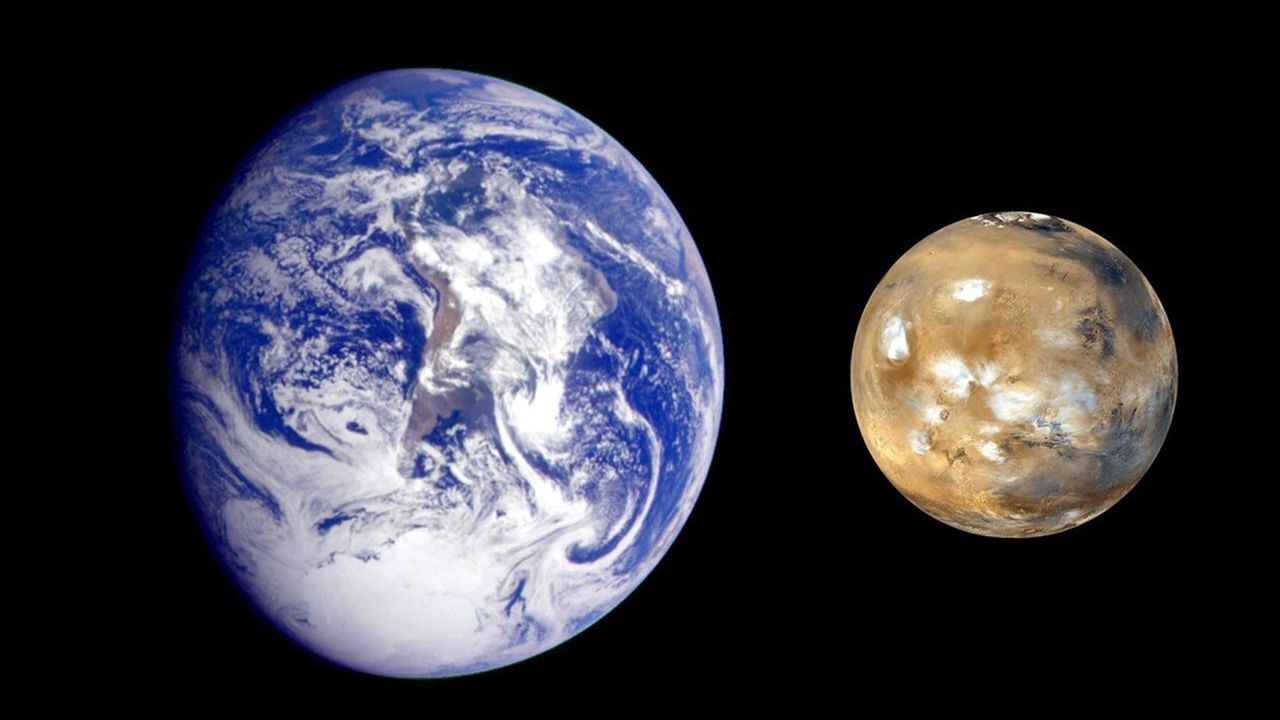
Mars' gravity has a surprisingly large influence on Earth, affecting our planet's tilt and orbit and thereby contributing to climate cycles lasting hundreds of thousands to millions of years, new simulations have shown.
It has long been known that Earth's long-term climate is governed by the Milankovitch cycles, long-term variations in our planet's orbit and tilt governed by the gravitational pull of other planets in the solar system. Venus, which is the closest planet to Earth, and Jupiter, the most massive planet in the solar system, are the main culprits, dragging Earth around over millennia with their gravity. Mars, too, has some effect; previous studies looking at sediment laid down on Earth's ocean floor have suggested the possibility of climate changes resulting from gravitational interactions with Mars. However, the effect of Mars' gravity on Earth had not been quantified until now.