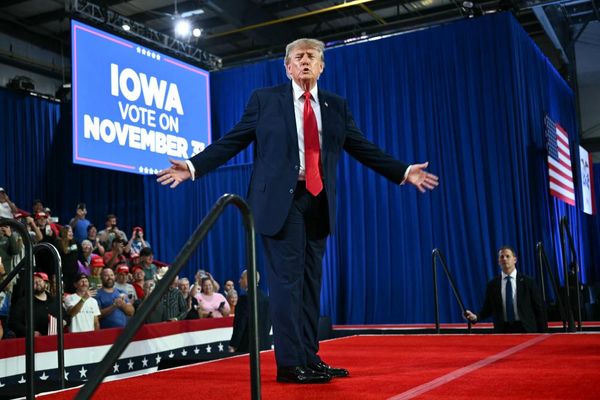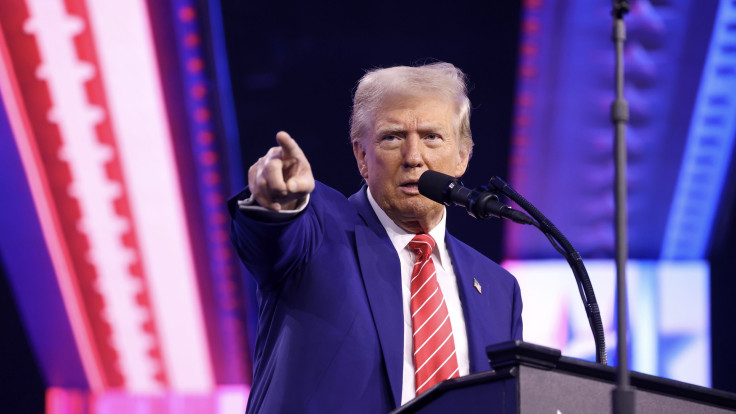
President Donald Trump sharply rebuked a reporter when he was asked how much longer the war involving Iran would continue, turning a question about public concern into a heated on-camera clash at the White House. The tense moment, quickly shared online, drew attention because Trump answered by invoking Vietnam, one of the longest and most politically fraught conflicts in modern American history.
The exchange came as Trump continued to defend his handling of the Iran conflict and signalled that he did not intend to be rushed into setting a firm end point. The administration had previously estimated the operation would take four to six weeks, leading to questions as it stretched beyond that timeline. In the same round of remarks, he pushed back on the idea of setting a firm timeline, arguing that previous American wars lasted far longer.
Trump's Response Put The Iran War Timeline At The Centre Of The Briefing
When the reporter asked, 'Excuse me, what do you say to the American people who question how much longer this will take', Trump cut in with a personal rebuke rather than a direct timetable. He replied, 'You are such a disgrace. Do you know what I just said? Vietnam. How many years was Vietnam?'
Trump then repeated the comparison as the reporter tried to respond, pressing the point with the same refrain about Vietnam's length. He later added, 'I took the country out militarily in the first four weeks', framing the current operation as comparatively swift.
The remarks underscored how central the question of duration has become as the administration faces scrutiny over how long military pressure on Iran could continue. Trump has already said he does not want to feel rushed and has pointed to earlier conflicts, including Iraq, the Second World War and the Korean War, to argue that wars are not resolved on a fixed political schedule.
Why Trump's Vietnam Comparison Carries Political Weight
Trump's reference was striking because the Vietnam War stretched from 1954 to 1975, with large-scale US combat involvement escalating in the mid-1960s and lasting for years. When he brought up Vietnam, it seemed like he was answering a question about current military plans by pointing to a past war famous for dragging on, being massive in scale and deeply dividing the country back home.
That comparison also stood out because the reporter's question focused on public patience, not only battlefield progress. Trump's answer did not set out a specific benchmark for ending the Iran conflict, but instead suggested that complaints about timing should be measured against the length of previous wars.
His broader comments this week follow previous statements where he emphasised that his primary goal in the conflict is to prevent Iran from obtaining a nuclear weapon, while expressing a desire to negotiate a favourable peace deal with Tehran.
In other recent remarks, Trump has claimed that Iran's military has been severely degraded and asserted that the country's leadership is deeply divided as the administration pursues an agreement.
WOW! Trump just lost it when he was asked: “What do you say to the American people who question how much longer this (war in Iran) will take?”
— Ed Krassenstein (@EdKrassen) April 23, 2026
Trump: “You are such a disgrace? Do you know what I just said? Vietnam! How many years was Vietnam? How many years was Vietnam? I took… pic.twitter.com/fiLqGmmx2v
What The Clash Reveals About Pressure On Trump Over Iran
The exchange highlighted a familiar dynamic in Trump's public appearances, where questions about military objectives can quickly become confrontations over tone, loyalty and media coverage. It also showed that concerns about mission length remain politically sensitive as the White House tries to project control while avoiding the image of an open-ended war.
A video clip capturing both the question and Trump's response was later shared online, giving wider audiences a direct look at the exchange. What remained unresolved was the substance of the original question: how long the administration believes the Iran war could last, and what conditions would define its end.