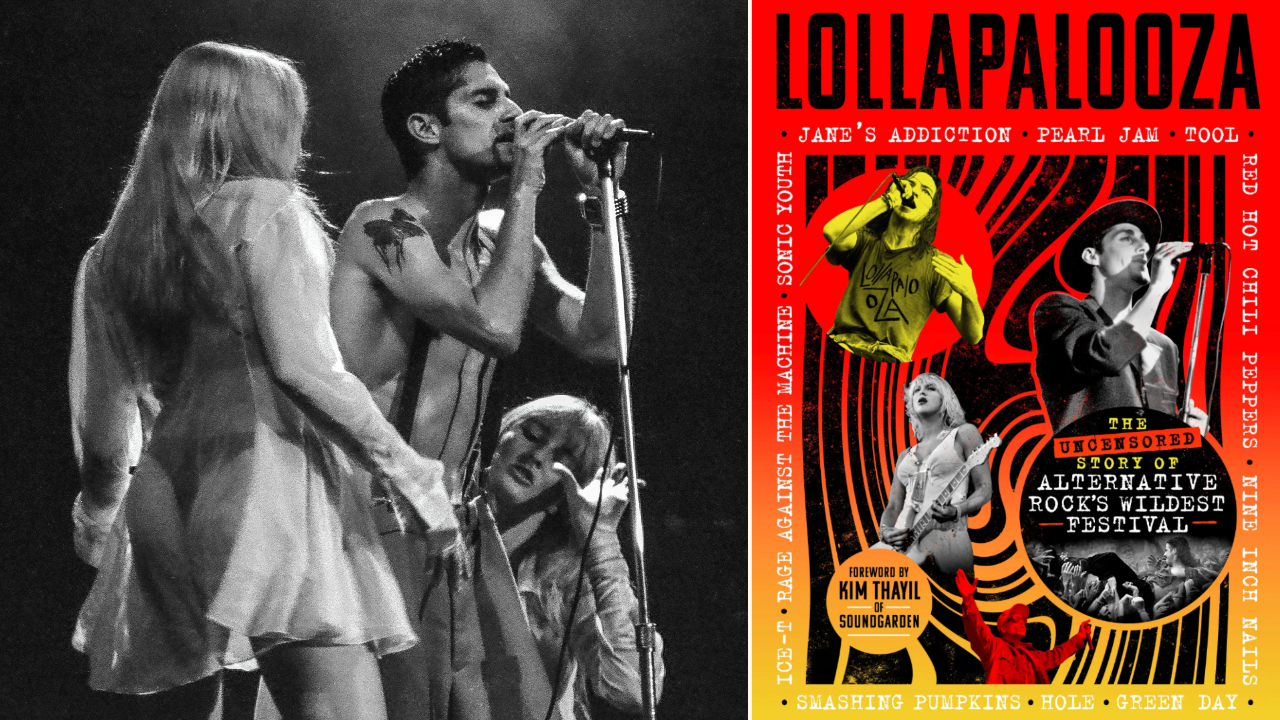
Inspired by a 1990 trip to England's Reading festival - which his band ultimately couldn't play as he'd lost his voice - Perry Farrell Lollapalooza conceived as a farewell tour for a dope-sick and rapidly disintegrating Jane’s Addiction, but it became so much more. The curtain dropped on its inaugural staging in the summer of 1991 less than one month before the release of Nirvana's Nevermind, and having already helped lay the foundations for a musical and cultural revolution with Jane's, between 1991 and 1997, Farrell's travelling circus (and attendant freak show) helped boost the rise of 'alternative' rock to unimaginable heights. Co-written by Richard Bienstock and Tom Beaujour, Lollapalooza: The Uncensored History of Alternative Rock's Wildest Festival is an oral history of a genuinely game-changing endeavour, featuring interviews with artists, agents, promoters, crew members, journalists and more, and it's a fabulously entertaining read.
"I'll be brutally honest with you, we didn't have a clue about what the hell we were doing," admits Don Muller, Jane's Addiction's agent, and one of the festival co-founders. "Zero. If anybody says differently, they're lying." But this leap into the unknown was a gamble which paid off fabulously. It's not that the likes of Pearl Jam, Soundgarden, Red Hot Chili Peppers, Smashing Pumpkins or the Beastie Boys couldn't have succeeded without playing the festival, but performing to amphitheater-sized, sometimes stadium-sized, crowds didn't hurt. And for the likes of Nine Inch Nails, Rage Against The Machine, Tool, and Green Day, the platform provided by Lollapalooza rapidly accelerated their ascent, even if Perry Farrell ("a fucking asshole, straight up", says Billie Joe Armstrong) didn't originally want the fast-rising Californian pop-punks on his bill as he viewed them as a "boy band".