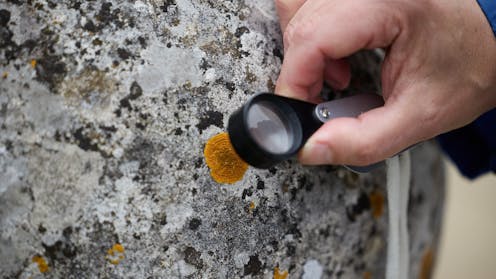
Lichens on stone, those “still explosions” as the great American poet Elizabeth Bishop named them, remain unseen to most, which is remarkable when you consider how commonplace they are. It seems these ecologically and culturally significant whatever-they-ares unfairly fall victim to something akin to plant blindness, a known phenomenon and tendency of people to overlook plants, which many of us – when we first encounter lichens – identify them as, even though that’s not what they are at all.
Part of the problem is that they’re not studied in schools because they’re awkward outsiders and are not perceived to fit in with the objectives of the science curriculum. So I was surprised to see lichens leap into the public imagination following the Just Stop Oil protest at Stonehenge at the summer solstice in June, 2024.