
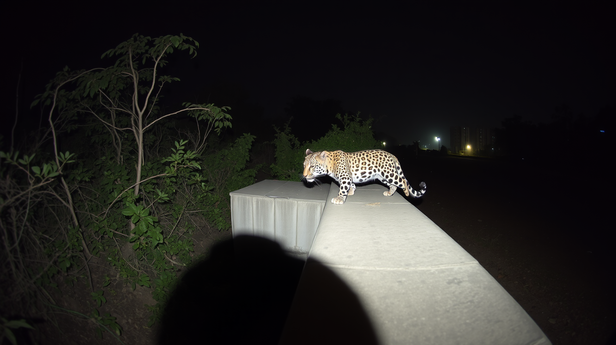
The Biology That Makes Invisibility Possible
Leopards see in light conditions six times dimmer than what a human eye needs to function. Their retinas carry a high density of rod cells and a reflective layer called the tapetum lucidum, which bounces available light back through the photoreceptors a second time. At 2 a.m. on an unlit road on the fringe of Aarey Colony, a leopard walking between parked tempos is not being stealthy by effort, it is operating in its optimal sensory range while the neighbourhood sleeps.