
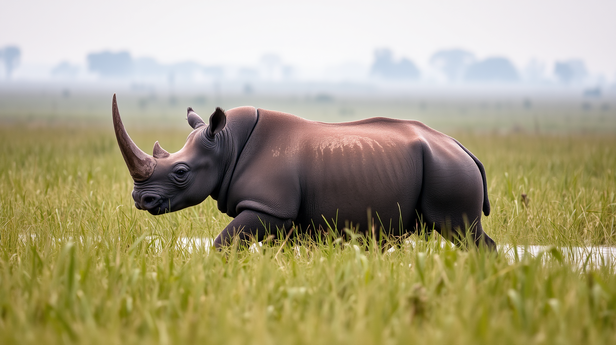
A Species That Nearly Disappeared
At the start of the 20th century, the greater one-horned rhinoceros, Rhinoceros unicornis, had been hunted so relentlessly across the Indian subcontinent that fewer than 200 individuals remained, almost all of them concentrated in the tall elephant-grass floodplains of what is now Kaziranga. Trophy hunting under colonial administration had gutted populations that once ranged from the Indus to Myanmar. The animal's single horn, made entirely of keratin, the same protein in human fingernails, was worth more on black markets than its weight in gold, and that price made it a target across every habitat it occupied.