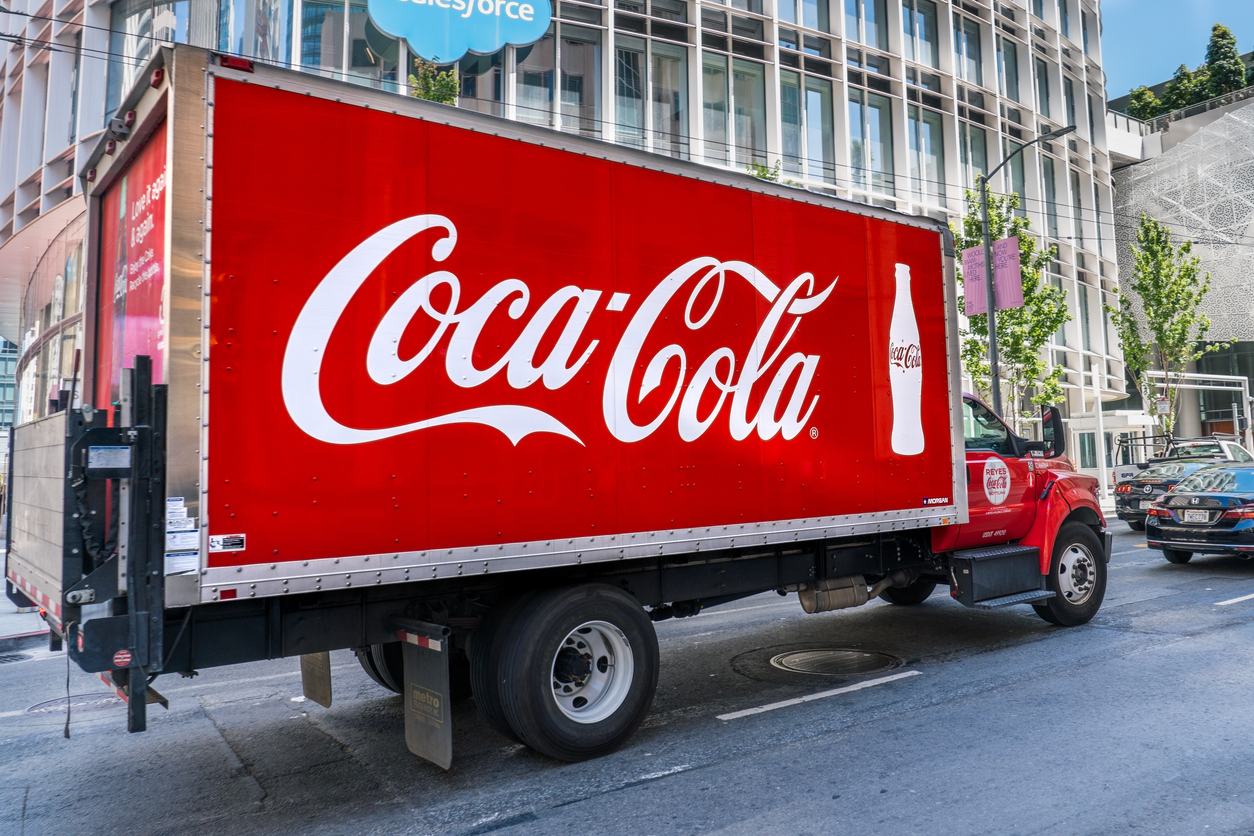
Atlanta, Georgia-based The Coca-Cola Company (KO) is a beverage company with a market cap of $346.5 billion. It manufactures and sells various nonalcoholic beverages.
Companies worth $200 billion or more are typically classified as “mega-cap stocks,” and KO fits the label perfectly, with its market cap exceeding this threshold, underscoring its size, influence, and dominance within the beverages - non-alcoholic industry. The company operates in over 200 countries with one of the world’s most efficient bottling and supply chain systems, giving it a strong competitive moat. Its specialty is brand building and marketing excellence, with iconic products like Coca-Cola, Sprite, Fanta, and Minute Maid driving consistent consumer demand
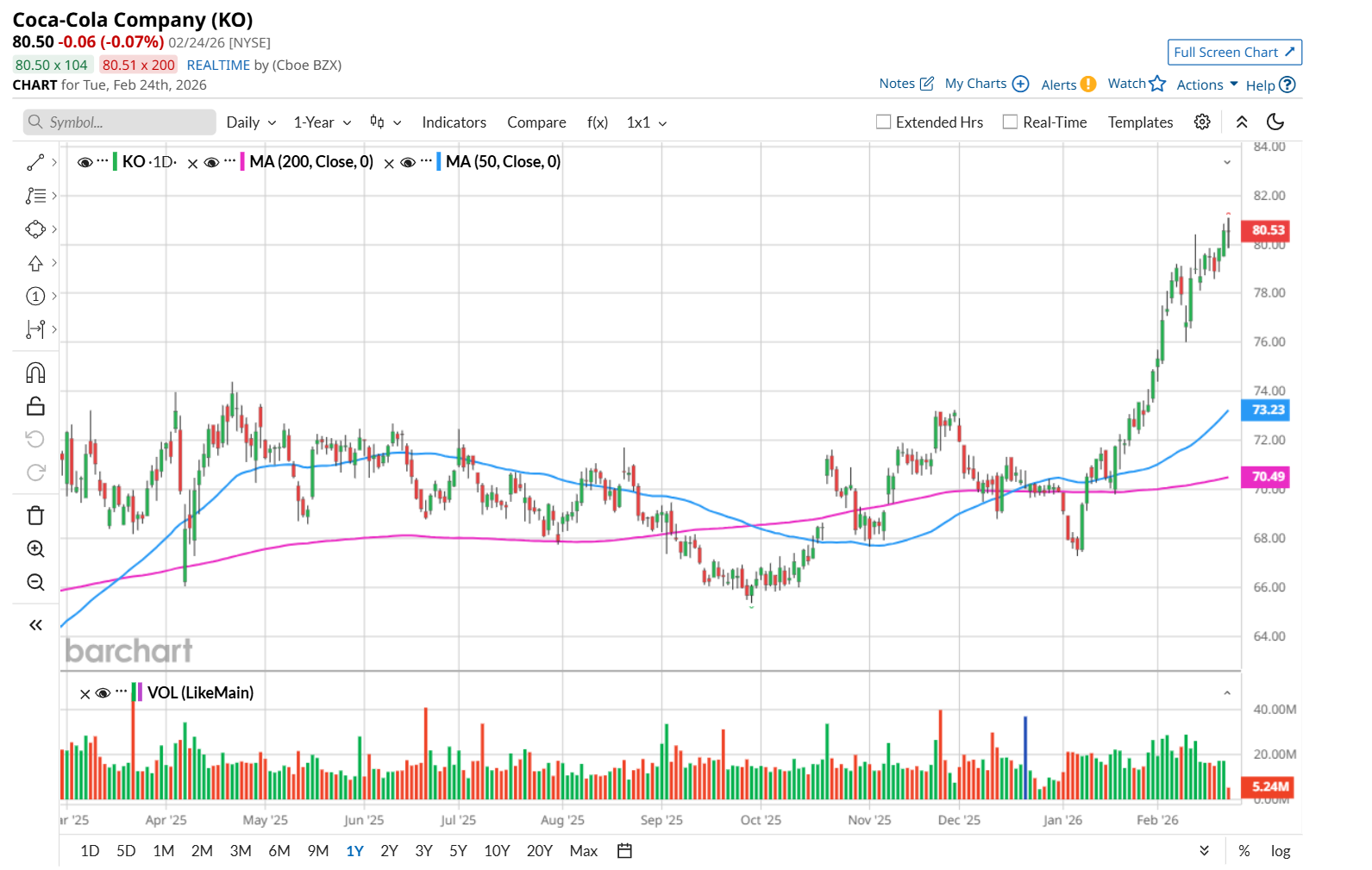
This beverage giant has touched its 52-week high of $81.09 in the last trading session. Shares of KO have soared 11.1% over the past three months, outpacing the First Trust Nasdaq Food & Beverage ETF’s (FTXG) 10.6% rise during the same time frame.
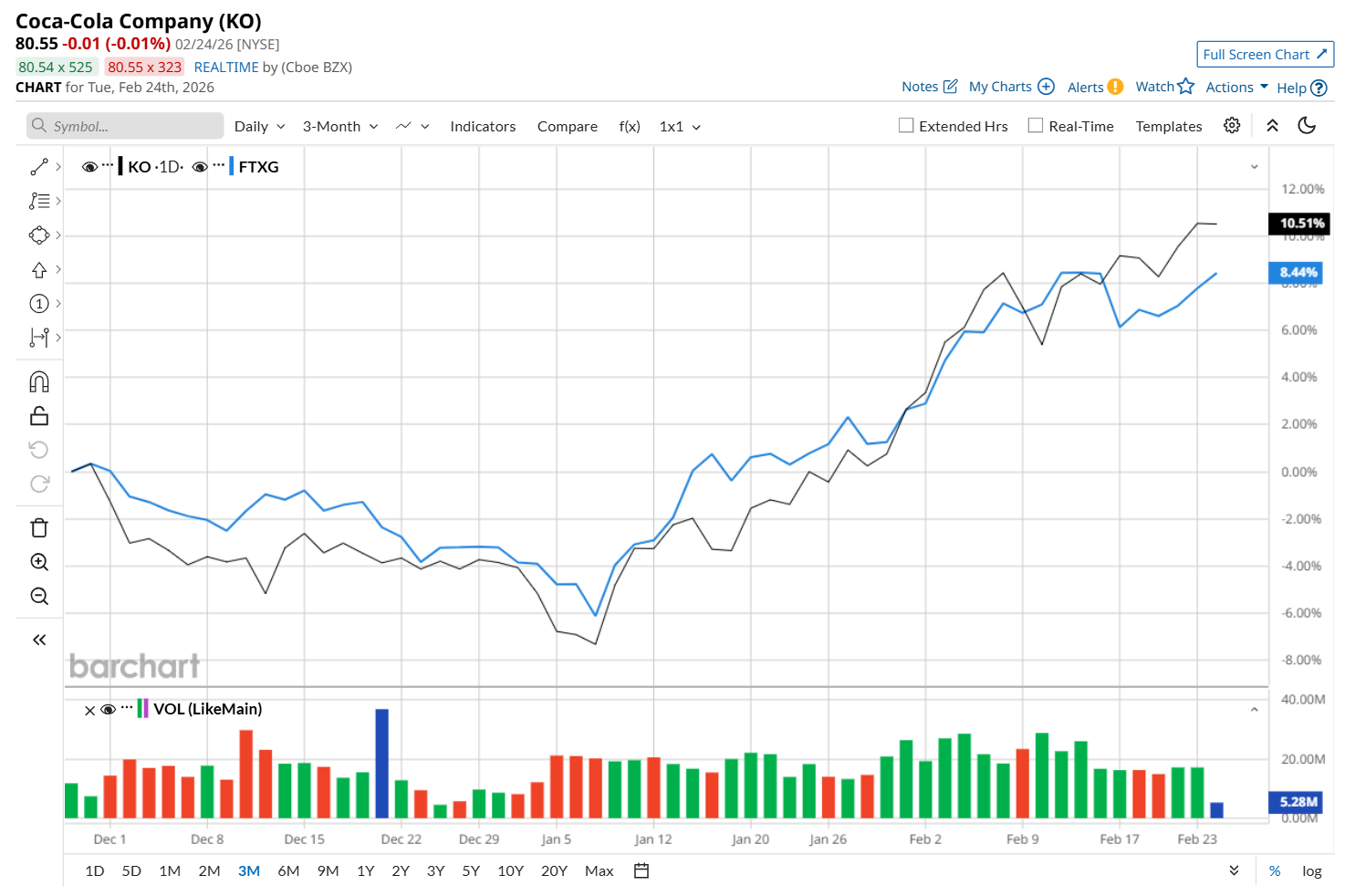
Moreover, on a YTD basis, KO shares are up 15.1%, compared to FTXG’s 13.1% return. In the longer term, KO has surged 14% over the past 52 weeks, outpacing FTXG’s 1.1% gain over the same period.
To confirm its bullish trend, KO has been trading above its 200-day and 50-day moving averages since early January.
On Feb. 10, KO shares plunged 1.5% after delivering mixed Q4 results. The company’s net revenue grew nearly 2% year-over-year to $11.8 billion, and organic revenues increased 5%, driven by a 4% increase in concentrate sales and 1% growth in price/mix. Yet, its top line missed consensus estimates by 1.9%. However, its adjusted EPS of $0.58 topped analyst expectations by a penny.
KO has also outperformed its rival, PepsiCo, Inc. (PEP), which rose 9.8% over the past 52 weeks. However, it has lagged PEP’s 17.8% YTD uptick.
Given KO’s recent outperformance, analysts remain highly optimistic about its prospects. The stock has a consensus rating of “Strong Buy” from the 24 analysts covering it, and the mean price target of $83.61 suggests a 3.7% premium to its current price levels.