
Get all your news in one place.
100's of premium titles.
One app.
Start reading
Livingetc
Livingetc
James Cunningham

How Interior Designers Display Family Photographs in Ways That Actually Feel Elevated, Never Tacky

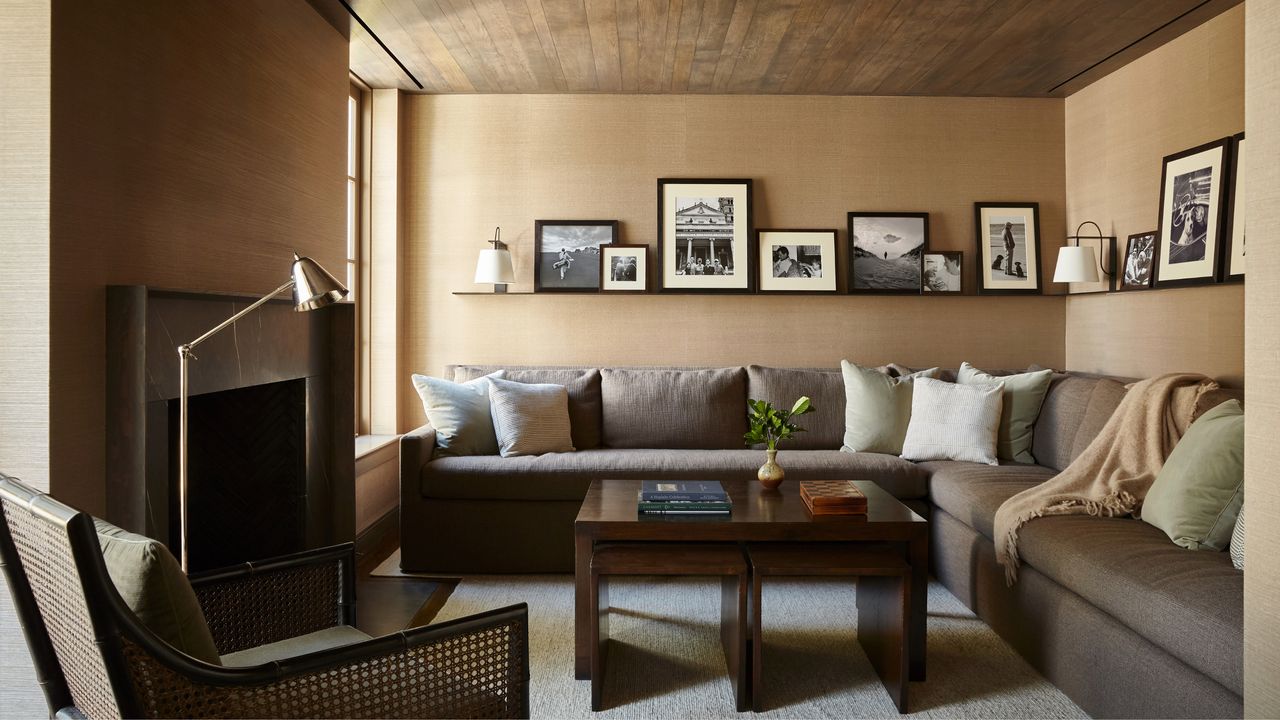
Contemporary living room with photo ledge above corner sofa.

While everyone snaps away on their phones and shares images online, there’s been a quiet resurgence of the printed photograph. Whether that’s down to screen fatigue (understandable) or something far deeper, people are once again appreciating the family photo as a physical object rather than a fleeting image on their camera rolls.

Speaking from experience, there’s a big difference between knowing how to hang art and displaying family photos in a way that looks good. Paintings and art prints often arrive framed, which removes at least some of the guesswork, but they can vary widely in shape and size. Photographs, on the other hand, tend to be more uniform, again opening up a whole variety of options — should you group them? Hang them one-by-one? Create a gallery wall?

So, what are non-tacky ways designers like to display family photos, and how can you capture these ideas in your own home? Let's find out.

1. Highlight a Moment

One favorite photograph can become a focal point for a modern bedroom's nightstand. (Image credit: Rebecca Hope, Project: Rebecca Udall)

Some photos deserve pride of place. “Displaying one photograph individually allows it to take on greater significance in your space,” says Sophie Pringle, founder of Pringle & Pringle. “A single family photo can make a beautiful statement.”

For maximum impact, display that single image in a prominent position. “You want it to be somewhere that feels personal to you and that you’ll enjoy every day,” suggests Sophie. A bedside table, desk, or console is likely to make the most sense depending on the context of your chosen image.

When you’re only displaying one family photo, the frame becomes more important than it otherwise might. “The frame has the power to turn your family photo into a decorative object in its own right,” the interior designer explains. “It should fit within your space’s wider design story, so look at your existing palette and the materials you’ve used."

She suggests timber, brass, or tortoiseshell frames for warmth and character, "while contemporary spaces are suited to metallic or cleaner-lined designs," she adds.

If you're only displaying one photo, you might as well choose a statement frame. This wavy design features red brushstrokes applied by hand.

2. Curate a Black-and-White Gallery Wall

The key to a gallery-style arrangement is curation rather than crowding. (Image credit: The White Company)

Gallery walls have long been a go-to for displaying family photos, but interior designers are now steering clear of eclectic, mixed-and-matched arrangements. Instead, more streamlined displays are bringing a simpler, elevated look to family home projects.

“A gallery wall can turn a collection of memories into something much more, but they work far better when they feel intentional, not accidental,” agrees Katerina Tchevytchalova, founder of K’Arte Design. Map out your arrangement on the floor, but try a few different compositions before settling on your final decision.

“The best always have a unifying thread that makes them curated rather than chaotic,” adds Katerina. “That could be a consistent frame finish, a shared mount color, or simply a considered starting point that everything else builds around.”

Consider opting for black-and-white printing, too, which can bring a uniform look to images shot at different times and across a variety of places.

3. Lean In

A floating picture ledge allows for a flexible display of framed photographs. (Image credit: Brie Williams, Project: Ruard Veltman Architecture + Interiors)

If you like displaying photographs in proper frames, but enjoy rotating their arrangement, a floating shelf beautifully balances practicality with flexibility. "Leaning frames, rather than wall mounting them, allow pieces to rotate over time without damaging paint or wallpaper," explains Maggie Mardre from Ruard Veltman Architecture + Interiors.

For a design-led approach, opt for a subtle ledge (like this one from John Lewis) rather than a deep shelf — this keeps the focus firmly on the family photos, rather than allowing the surface to become cluttered with other objects or decorative accessories.

“In this project, wrapping the steel ledge around the room also creates a linear visual element, adding structure to the display of layered frames,” says Maggie. “When mixing different sizes, always create a balanced composition rather than a chaotic one.”

4. Go Beyond the Basic

Bespoke frames can make a casual cluster of family photos look much more considered. (Image credit: Em Reid, Project: MORA Interiors)

From Polaroid exposures to vintage prints, memories aren’t always captured in 4x6. Whether you’re arranging a cluster on a mantel or hanging just one on a wall, family photos beyond the typical dimensions can be trickier to display stylishly.

“People are now using photo booths to capture milestones like holidays, engagements, and new babies,” says Shauna Moran, founder of MORA Interiors. “The less traditional the piece you’re framing, the more elevated the frame needs to be to give it weight. I’d also suggest that the smaller the photo is, the bigger the mount should be.”

If you’re framing a quirky format, don’t feel like you have to play it too safe. “Have fun with the framing,” instructs Shauna. “Go for something unexpected with mount colors, placement of the photo, or aperture shape. You’ll be giving your special memory the attention-to-detail it deserves.”

Designed especially for photobooth strips, this colorful frame will bring an elegantly playful look to your memories.

Just like a locket, this pretty gold frame feels fitting for those few seconds that feel most memorable.

While lots of people feel the need to supersize family photos, sometimes keeping them smaller can actually have more impact.

5. Pin Up

A fabric-covered pinboard can work surprisingly well in elegant spaces. (Image credit: Astrid Templier, Project: Rebecca Hughes Interiors)

You may prefer to rotate family photographs regularly, in which case frames might be a hindrance rather than a key design tool. “A fabric pinboard is a personal and relaxed way to display family photographs, exactly because it allows your space to evolve naturally over time,” believes Rebecca Hughes.

Of course, not all pinboards are created equally. “For this space, we selected a fabric with a subtle geometric pattern, giving the board visual presence without overwhelming,” the interior designer explains. “As the motif has movement and texture, it disguises pin marks beautifully and prevents the board from feeling too utilitarian.”

If you’re considering a similar approach, why not layer in other elements rather than just family photos? Using a pinboard [like this one from Pottery Barn] as a visual scrapbook can add a further layer of interest, turning the display into something truly interactive — postcards, invitations, and even children’s artwork all make worthy additions to the mix.


Whether you’re showing off a single meaningful image or building a display with lots of different family photos, the key is to do it with something of a curator’s eye. Interior designers know that the best ways to display family photos involve thoughtful compositions and careful hanging.

Looking for more inspiration? Discover how cool people frame their pictures, and subscribe to our newsletter for even more design ideas and decorating advice.

Oka Talasa Photo Frame MORA Raven Mulberry & Candy Single Photobooth Strip Urban Outfitters Amelia Instax Photo Frame YumraPrintsAndFrames Polaroid Photo Frame
Sign up to read this article
Read news from 100's of titles, curated specifically for you.
Already a member? Sign in here
Related Stories
Top stories on inkl right now
One subscription that gives you access to news from hundreds of sites
Already a member? Sign in here
Our Picks
Fourteen days free
Download the app
One app. One membership.
100+ trusted global sources.