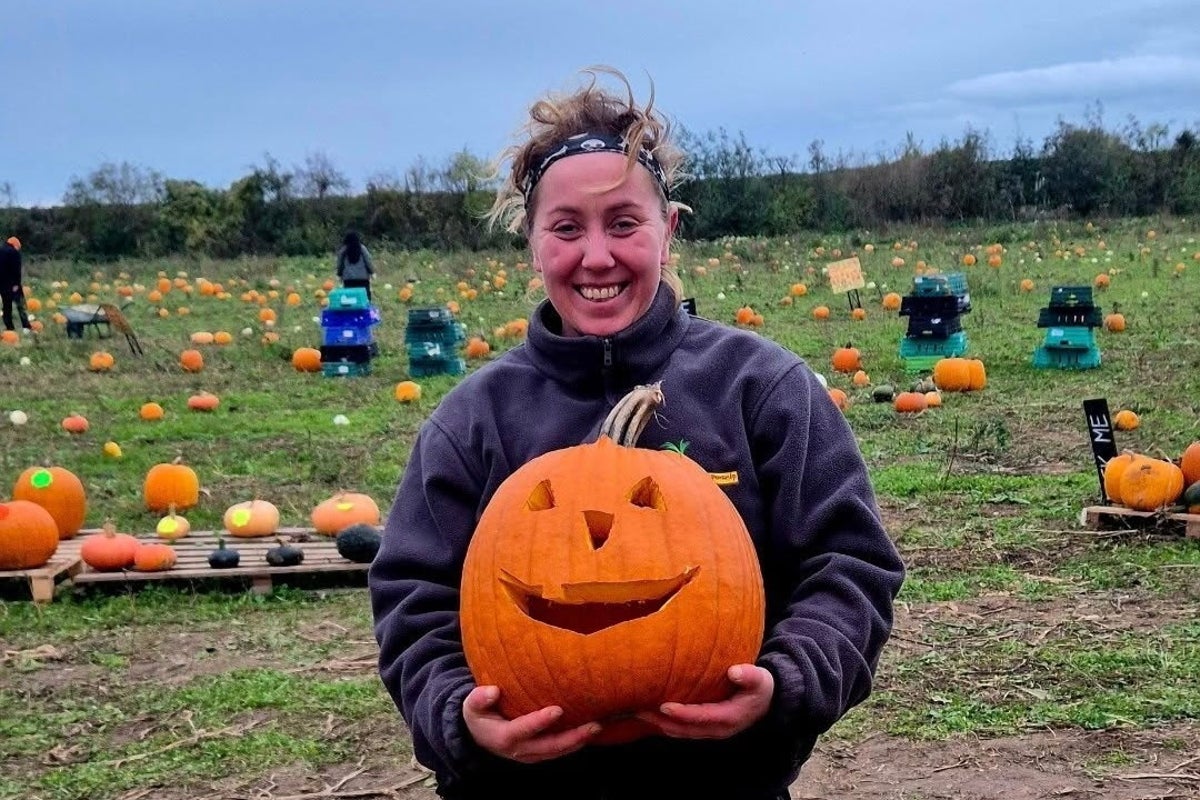
“Most years, I’m growing 10,000 pumpkins. This year – I’ve gotten 25,” Suffolk-based farmer Andrew King says.
Pumpkin picking is a beloved autumn tradition for many across the UK – something that will be evident to anyone whose social media feeds are filled with photographs of smiling families on a trip to their local farm at this time of year.
But King is among dozens of growers facing a devastating harvest after an unrelenting summer wiped out entire fields of pumpkin crops.
“It is just that bad,” he adds: “We could just see the pumpkins dying.”
He isn't alone. For small, independent operations, the looming climate uncertainty threatens the very heart of their seasonal trade. Laura Brady, owner of Wonky Parsnip farm in Faversham, Kent, shares a similar sense of anxiety.
“We’re not even going to open up this year, and it’s really gutting because pumpkin picking is our favourite thing to do,” Brady says.
“We will try again next year, but with these droughts, it’s definitely made us think about what we’re going to do in the future – not just with pumpkins, but across the whole farm.”
Across the country, pumpkin farms are being forced to pull the plug on their seasonal events as the lingering effects of record heat continue to scorch the agricultural sector.
Five back-to-back heatwaves and a prolonged drought have crushed crop yields, bringing the annual 'pick-your-own' rush to a grinding halt.
Over at Broadditch Farm in Kent, owner John Harris describes the weather as nothing short of catastrophic.
“Normally, on my five to six acres, I’m growing about 25,000 pumpkins,” Harris says: “This year, I reckon I’ve only got a couple thousand. So yeah – we’ve seen a huge impact. On the back of a very poor harvest two years running, this is quite a blow.”
But while the news that pumpkin picking is off the table has been a shock for many, farmers across the country had already anticipated the possibility.
“Normally, we sow the seeds in mid-May,” Harris explains: “But when we started planting this year, there just wasn’t enough moisture – we were looking at six inches of dry soil.”
Unable to supply the thousands of visitors who flock to his fields every October, Broadditch Farm has had to make the difficult decision to cancel its pumpkin picking season entirely. While the farm has pivoted to offer alternative autumn activities, Mr Harris is acutely aware that the climate is shifting beneath his feet.
“Us farmers are an optimistic bunch, but the trend is clearly going this way – we’re seeing drier and drier summers,” he says. “And now there’s talk of this 'Super El Niño' on its way.
“It looks like we might have to start growing other things altogether.”
His fears are backed by stark scientific warnings. Analysis from the Government Office for Science suggested the strong El Nino expected this winter could create a variety of severe weather conditions across the UK in the coming months.
Back in Suffolk, Andrew King’s pumpkin patch at Ruffins Farm still sits quiet. Speaking about the toll the weather has taken, King said: “It has hit us 100 per cent – the patch is closed.”
But beyond the heavy financial toll of a lost harvest, King mourns the loss of the community spirit that autumn usually brings to his land.
“We still want to grow them,” Mr King insists, refusing to give up entirely. “It’s really important to get kids to come down, learn about farming, and spend the day outdoors. So we will drill for them again next year.”
But optimism only goes so far without systemic support.
When asked what needs to happen to safeguard the future of British farming, King’s message was simple: “I know there’s not a lot that can fix this quickly.
“But I’d want the government to really acknowledge the pain going through the farming community right now. It’s not easy.”