
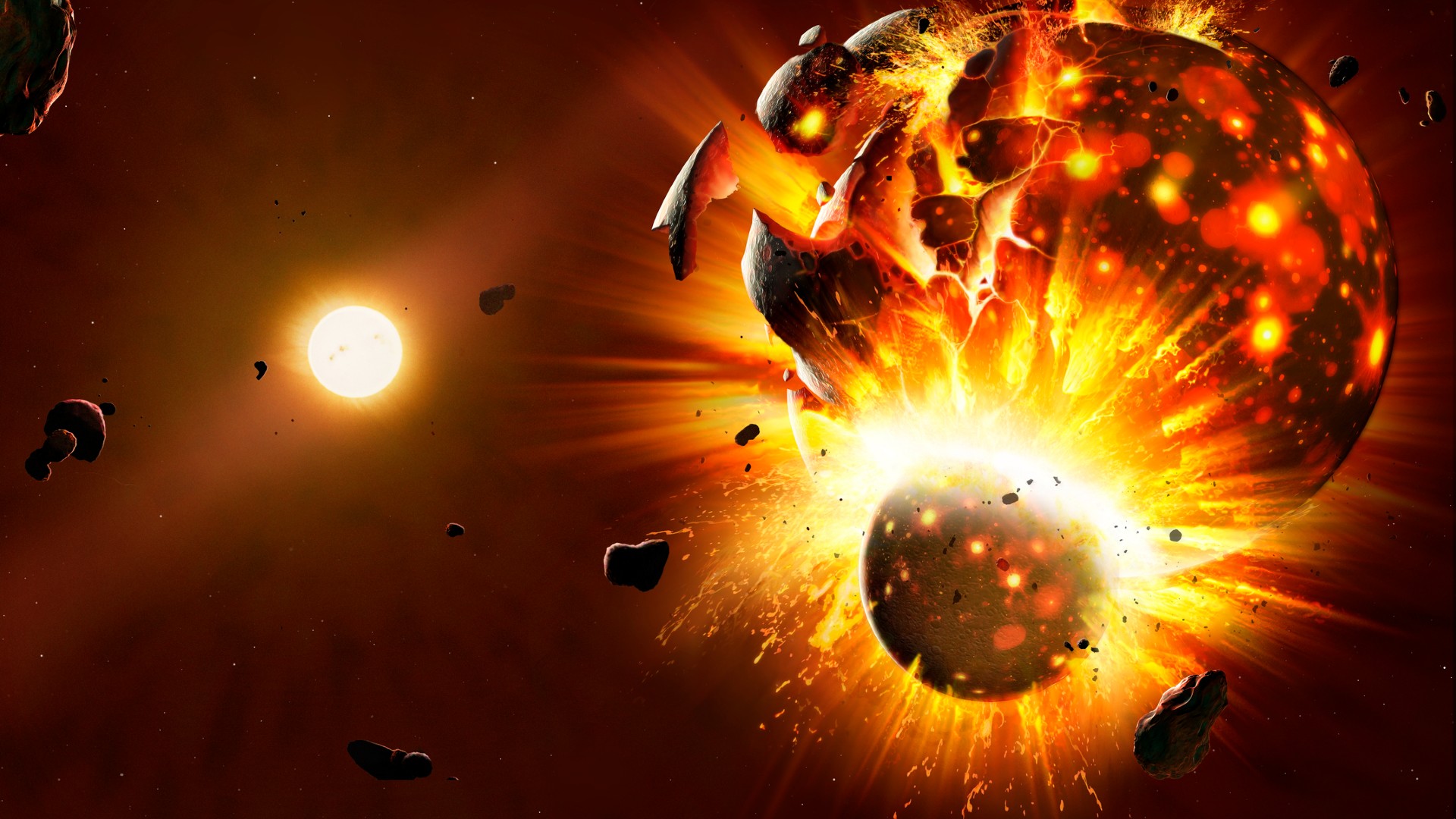
If you want to build a planet, you're going to have to get your hands dirty. That's the lesson from a recent paper, which outlines just how vital giant impacts are to the formation of planets.
Astronomers still aren't exactly sure how planets get their start. Initially, star systems are just clouds of gas and dust swirling around a newborn star. Some of that gas coalesces to form the seeds of planets. Over millions of years, trillions of those seeds merge, becoming ever larger and attracting their neighbors. At a critical stage in the development of the system, thousands — maybe even millions — of planetesimals, each one no bigger than a few hundred kilometers across, orbit the star.














