The troubled Australian National University has secured a highly regarded public servant to guide it through a major crisis of governance.
Economist Dr Gordon de Brouwer assumes the role of chancellor this week. He brings invaluable experience to the university council, having served as the Australian Public Service Commissioner and holding senior roles at Treasury, the Reserve Bank, and the Department of Prime Minister and Cabinet.
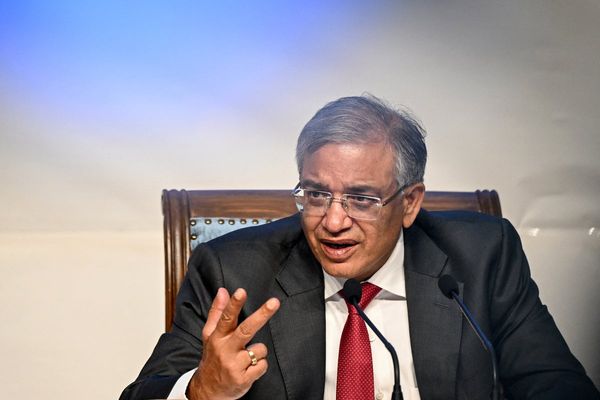
Holding a doctorate in economics, Dr de Brouwer has the skills to stem severe financial losses and his appointment warrants optimism. That said, the staggering scale of the task ahead cannot be overstated.
The ANU has suffered serious reputational, institutional, and fiscal damage over the past decade. It is battered and bruised.
The Auditor-General recently condemned chaotic cost-cutting measures and sudden departures at the highest levels of administration. The field audit noted the university spent $35.9 million to cut salary costs by $74.8 million, an approach it determined was executed without sufficient understanding of the problem or the implementation risks.
In her response before resigning, former chancellor Julie Bishop argued the $250 million savings plan materially improved the financial position, although the audit found it lacked clear evidence.
This dysfunction culminated in a $424,227 termination payout to the former vice-chancellor, who quit after less than two years.
While Dr de Brouwer arrives without the political baggage of his predecessor, he must manage an organisation in disarray. The 2025 annual report exposes an underlying operating deficit of $29.4 million. Furthermore, the university faces market concentration risks. It reaped $296 million in tuition fees from international students, who made up 52 per cent of new enrolments last year alone.
This reliance heavily intersects with foreign relations. The ANU has more research collaborations with China than any other nation, holding 48 active agreements. Conversely, it signed far fewer partnerships with Five Eyes allies. Over the weekend, Foreign Minister Penny Wong intervened, terminating the Joint Science College with Shandong University on national security grounds. It seems remarkable that arrangement proceeded for so long given the previous chancellor was a former foreign minister herself.
Adding to the turbulence, the administration faced intense criticism over its handling of anti-Semitism on campus and pro-Palestinian protests post-October 7.
The university controversially backed out of adopting the definition of anti-Semitism agreed to by the Group of Eight universities. Instead, the academic board endorsed an amended approach, pushing the issue to committees and working groups to address racism in all its forms.
The administration also failed to act regarding adverse findings against former council members following an independent investigation.
Dr de Brouwer faces a monumental rebuilding effort. He must work alongside interim vice-chancellor Rebekah Brown to restore confidence, establish strong governance, and forge a compelling shared strategy.
The national university holds a unique and vital position in Australia, receiving specific federal funding to maintain concentrations of excellence in research and education.
The new chancellor assumes control at a time of profound geopolitical and economic change. He must navigate these complexities, repair fractured relationships with government regulators, and ensure the university remains a trusted national institution.
The path forward requires steady leadership and a complete departure from the destabilising scandals of recent years.