
Get all your news in one place.
100's of premium titles.
One app.
Start reading
Space
Space
Science
Samantha Mathewson

How do supermassive black holes grow? AI finds 7 spacetime-warping 'quasars' that could help solve the mystery

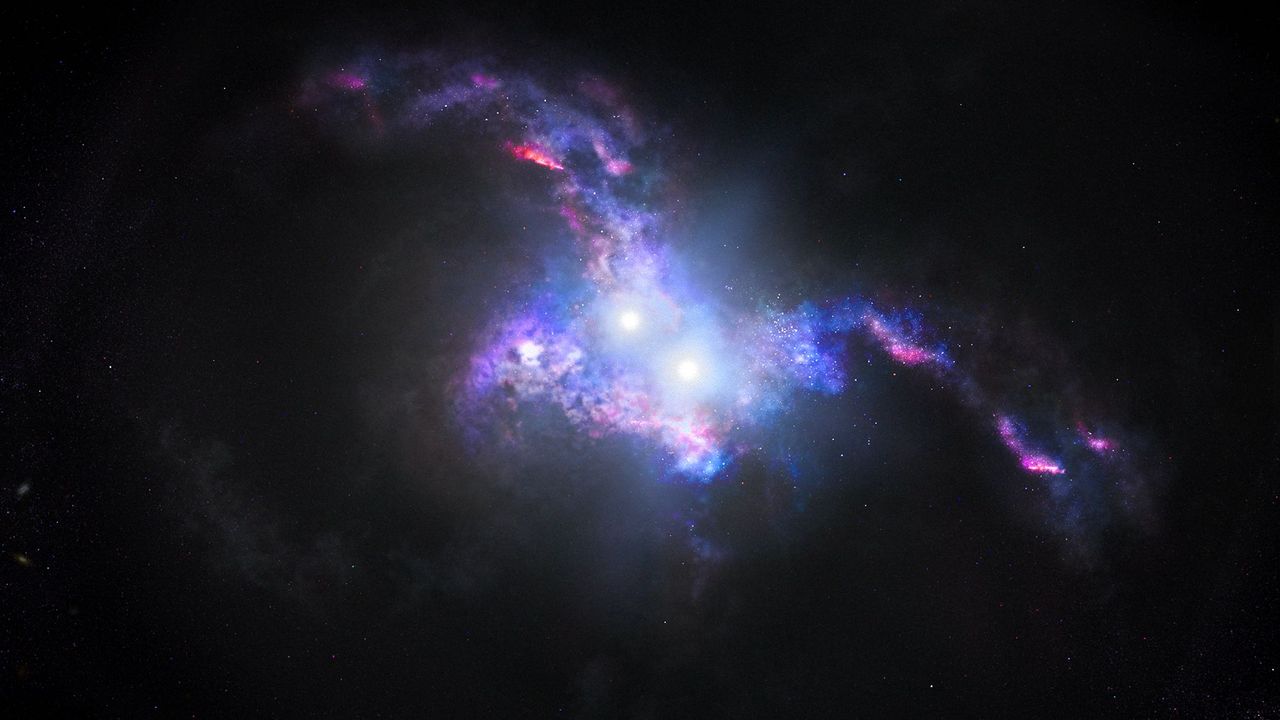
A visual showing a purple crack in a dark section of space. At the center, two very bright white dots.

Some of the brightest objects in the universe may also hold the key to understanding how galaxies evolve — especially when gravity transforms them into giant cosmic magnifying glasses.

Using artificial intelligence to search through data from the Dark Energy Spectroscopic Instrument (DESI), astronomers have identified seven promising candidates for quasars acting as gravitational lenses — natural cosmic magnifying glasses created when a massive object's gravity bends and magnifies light from a more distant object.

Sign up to read this article
Read news from 100's of titles, curated specifically for you.
Already a member? Sign in here
Related Stories
Top stories on inkl right now
One subscription that gives you access to news from hundreds of sites
Already a member? Sign in here
Our Picks
Fourteen days free
Download the app
One app. One membership.
100+ trusted global sources.