
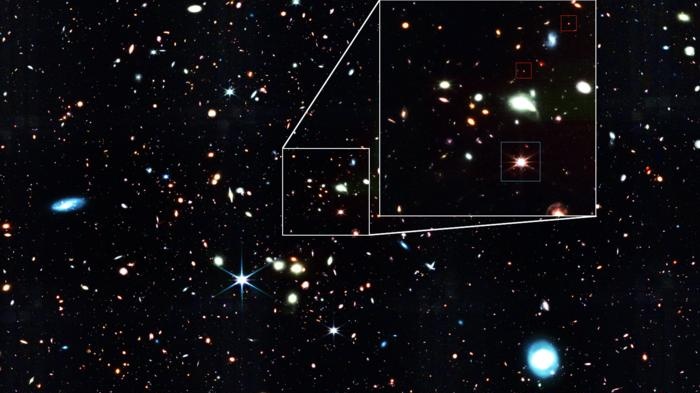
Usually, the most thrilling black-hole news surrounds the biggest, baddest and most violent voids we can imagine. I'm talking about the supermassive black holes boasting billions of times the mass of the sun; the ones called quasars that eat up surrounding matter and spew out the excess so aggressively they create light patterns that outshine even the galaxies they live in. You know the ones.
However, on Thursday (March 7), scientists released a study that serves as a reminder: The baddie black holes aren't the only ones worth thinking about. With the help of the trusty James Webb Space Telescope, this team identified a population of those luminescent quasars that aren't characteristically enormous. They are quite huge, to be clear, as they are still supermassive black holes — they're just not that huge.










