
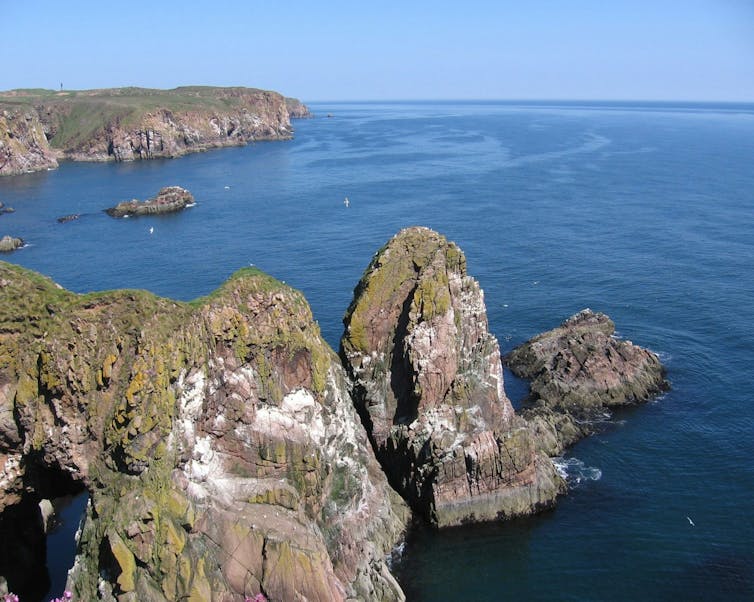
The living world is profoundly affected by human activities. One eighth of species are currently threatened with extinction in the near future, largely due to climate change. Faced with the degradation of their habitat, the species that will survive will be those that are able to adapt. Our team of researchers is trying to gain a better understanding of how seasonal migration patterns are changing in the face of climate change by studying crested cormorants (Gulosus aristotelis). Long-term migration monitoring of this species, classified as endangered in the UK, began around fifteen years ago along the Scottish coast.
In response to rising temperatures (estimated at + 1.45C above pre-industrial levels in 2023), many plant and animal species in temperate zones are moving to higher altitudes or towards the poles, where temperatures are cooler. For many others, the annual events in their life cycle, such as migration, emergence from hibernation or reproduction, occur earlier in the year. Although such adaptations could theoretically be made possible by genetic evolution, they currently appear to be very rare in nature.













