
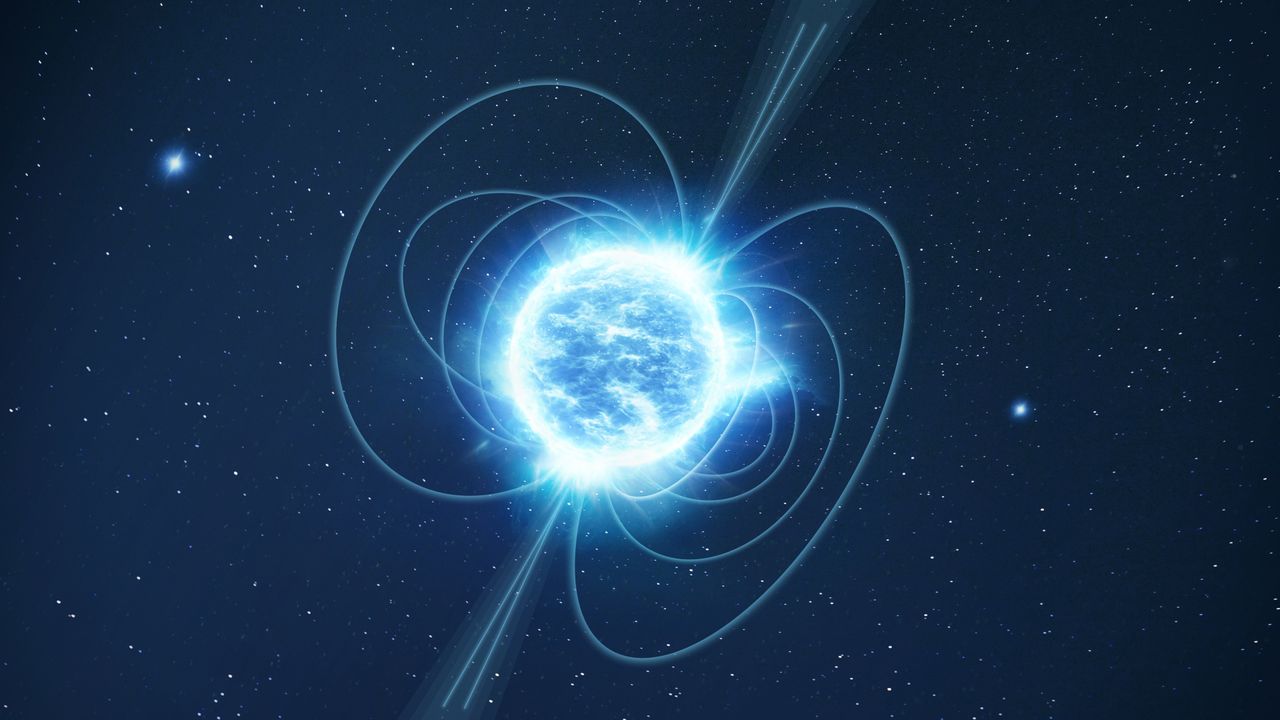
By developing a new theoretical relation describing just how compact neutron stars — which are the remnants of massive stars that have gone supernova — can get, researchers have found a way to test the properties of nuclear physics under very extreme conditions.
As the collapsed core of a massive star, a neutron star is a small but incredibly dense object, packing up to three times the mass of our sun into a small volume. Models predict that neutron stars are about a dozen or so miles across, but their exact radius has always been unclear.














