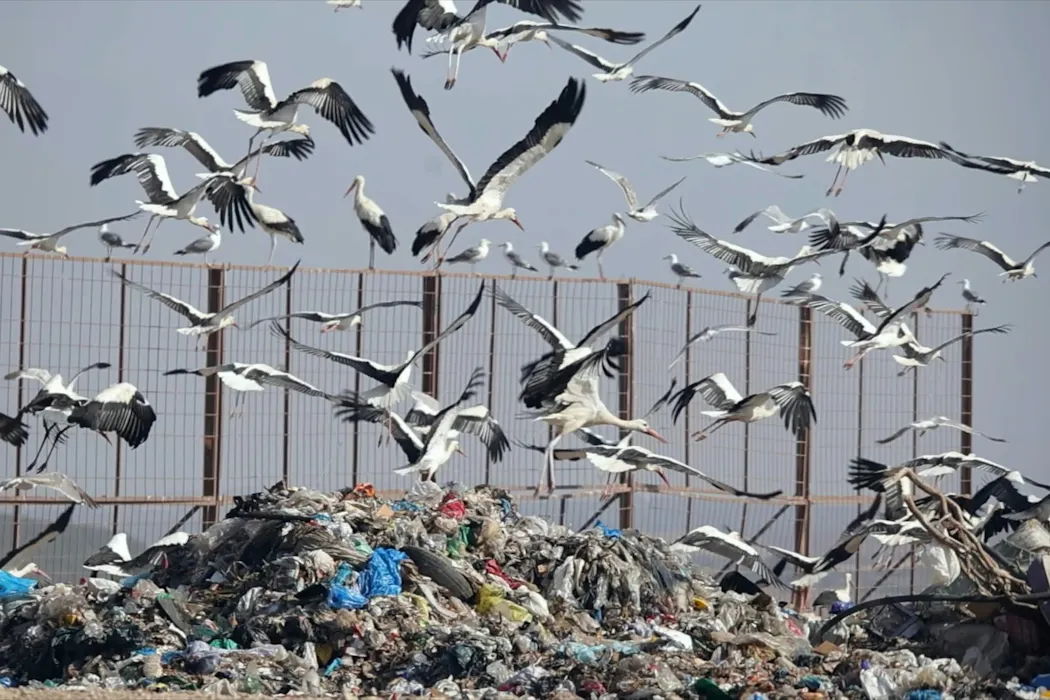
Hungry gulls do not only steal our chips and sandwiches. They learn our habits, and look for reliable sources of food. That includes waste treatment centres, landfill or anywhere food waste is concentrated. Many gull populations have moved inland from the coast to exploit these sources of food.
Wherever our waste is processed, gulls and other birds can forage. At landfills, gulls feed on waste before it is covered up. If there are plastic or glass pieces covered in food that are small enough, gulls will swallow them whole. Only the food itself gets digested, and when the gull flies back to its roost site, the waste gets regurgitated, polluting that site. This movement of pollutants is known as “biovectoring”.