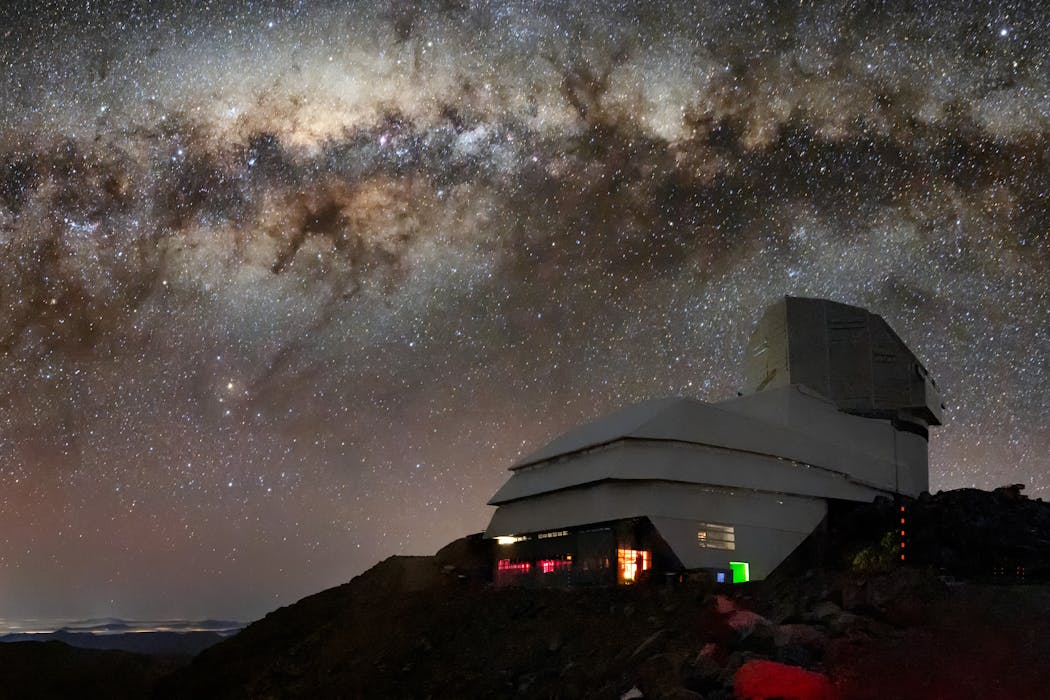
Science in the modern era is increasingly reliant on enormous datasets and automated analysis. In astronomy, the Vera C. Rubin Observatory’s Legacy Survey of Space and Time (LSST) – a ten-year survey covering the entire southern sky almost a thousand times over the next decade – will test the limits of this reliance.
The Rubin observatory, located on a mountaintop called Cerro Pachón in Chile, is expected to catalogue the night sky in exquisite detail. The observatory aims to answer a number of questions about the universe by studying different phenomena in the sky, including supernovae (exploding stars), asteroids, dark matter and the properties of our own galaxy.