
Get all your news in one place.
100's of premium titles.
One app.
Start reading
Creative Bloq
Creative Bloq
Technology
Joe Foley

How Avatar: The Last Airbender made water, earth and air appear to bend

Avatar The Last Airbender.

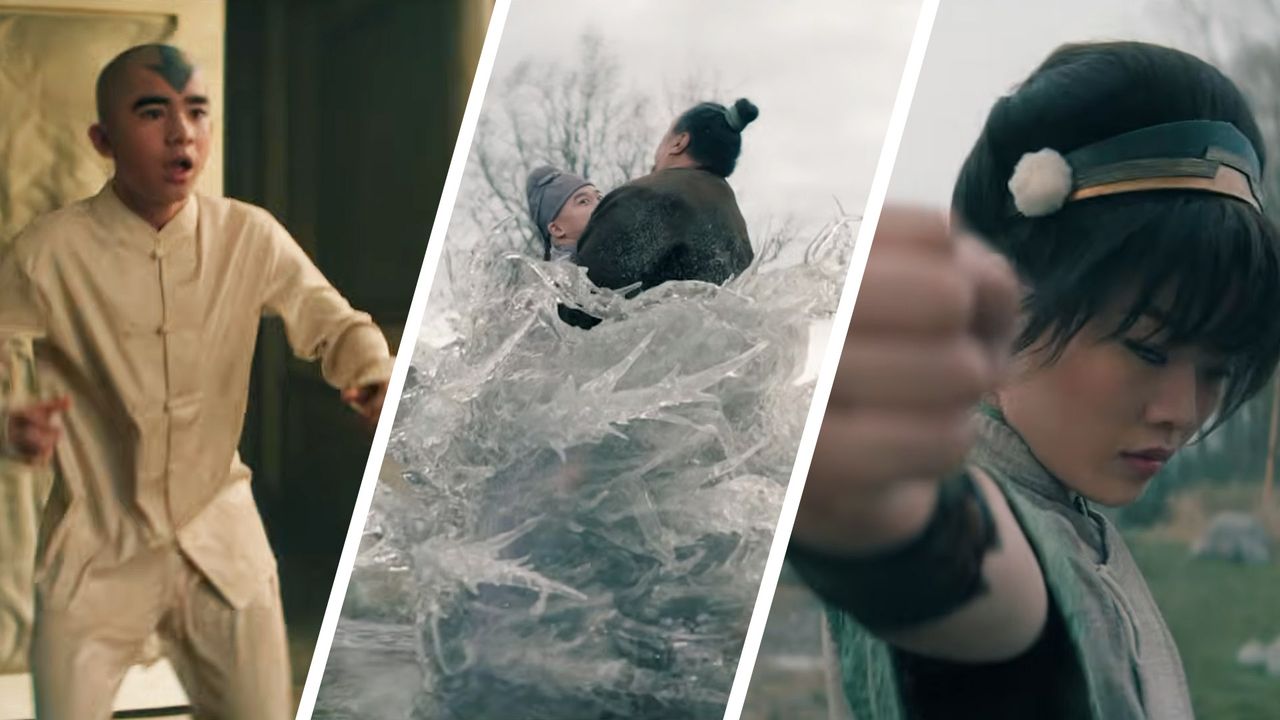
The second season of the live-action Avatar: The Last Airbender on Netflix has wowed audiences all over again with its visual effects and action sequences. Most impressive of all is still how the series depicts each nation's powers.

Earthbending feels genuinely heavy and chaotic. Firebending casts interactive light onto actors' skin, making flames feel physically present. Most stunning of all is the titular power of airbending since air by definition is invisible.
If you've wondered how it was all done, you're in luck. The video below shows how the VFX studio Outpost achieved some of the most striking effects, including earth, water and airbending.

If you've not seen the Netflix series or the original animation, Avatar: The Last Airbender is set in a world divided into four nations based on the classical elements: the Water Tribes, the Earth Kingdom, the Fire Nation, and the Air Nomads. In each nation, people known as benders can manipulate one of the four elements. The story follows the journey of twelve-year-old Aang, the last survivor of the Air Nomads and the next 'avatar', who is the only bender who can master all four elements.

The breakdown above focuses on how Outpost VFX brought the elemental bending effects to life in the second season.

Outpost also worked on season one, particularly on the epic Aang and King Bumi battle sequence in episode four. Producer Caitlin Gilbert said at the time that the complex sequence involving earth, air and waterbending presented a "slew of creative challenges", requiring multi-layered sims in which each layer interacts or collides with the others.

For the airbending power itself, the solution was to avoid relying on a visible "magic wind" effect that might have looked generic. Instead, inspiration was found in the heat distortion produced by F-22 Raptor jet engines. By displacing surrounding environmental particles, airbending was given a tangible weight and velocity.

“When it came to the airbending, we were briefed on creating something that would be similar to the look of air around a jet engine,” Caitlin explained in a blog post. “It was in this sequence that the airbending look was developed to then be used throughout the rest of the series.”

VFX Supervisor, Laurent Joel Gillet, added: “The airbending look was a challenge as we don’t see air movement in the real world, only elements flying through it. We needed to find ways of making that motion visible. The director and client-side production team had a very clear idea of where they wanted to go with it which made it a lot easier for us to translate those ideas into effects on screen.”

As for the characteristics of the earthbending, Laurent said the team looked at many different types of ground and soil. “We started originally with a very sandy look with buried hard rocks, but we ended up going towards a more amalgamated dry sand look which crumbles as it breaks. The rocks themselves needed to look like compacted dry soil which partially crumbles as they were thrown around.”

For more VFX inspiration, see our pick of the best CGI movie moments.

Sign up to read this article
Read news from 100's of titles, curated specifically for you.
Already a member? Sign in here
Related Stories
Top stories on inkl right now
One subscription that gives you access to news from hundreds of sites
Already a member? Sign in here
Our Picks
Fourteen days free
Download the app
One app. One membership.
100+ trusted global sources.