
Get all your news in one place.
100's of premium titles.
One app.
Start reading
The Conversation
The Conversation
Artemis Spyrou, Professor of Nuclear Physics, Michigan State University

How a disgruntled scientist looking to prove his food wasn't fresh discovered radioactive tracers and won a Nobel Prize 80 years ago

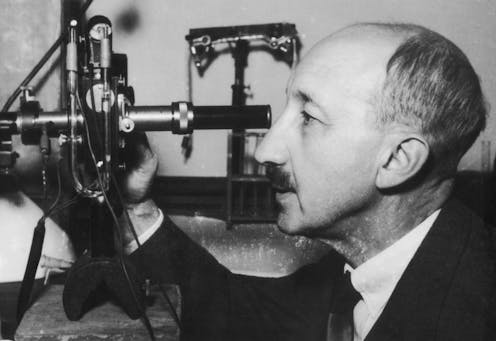
George De Hevesy working in his lab at Stockholm University in 1944. Keystone Features/Hulton Archive via Getty Images

Each October, the Nobel Prizes celebrate a handful of groundbreaking scientific achievements. And while many of the awarded discoveries revolutionize the field of science, some originate in unconventional places. For George de Hevesy, the 1943 Nobel Laureate in chemistry who discovered radioactive tracers, that place was a boarding house cafeteria in Manchester, U.K., in 1911.
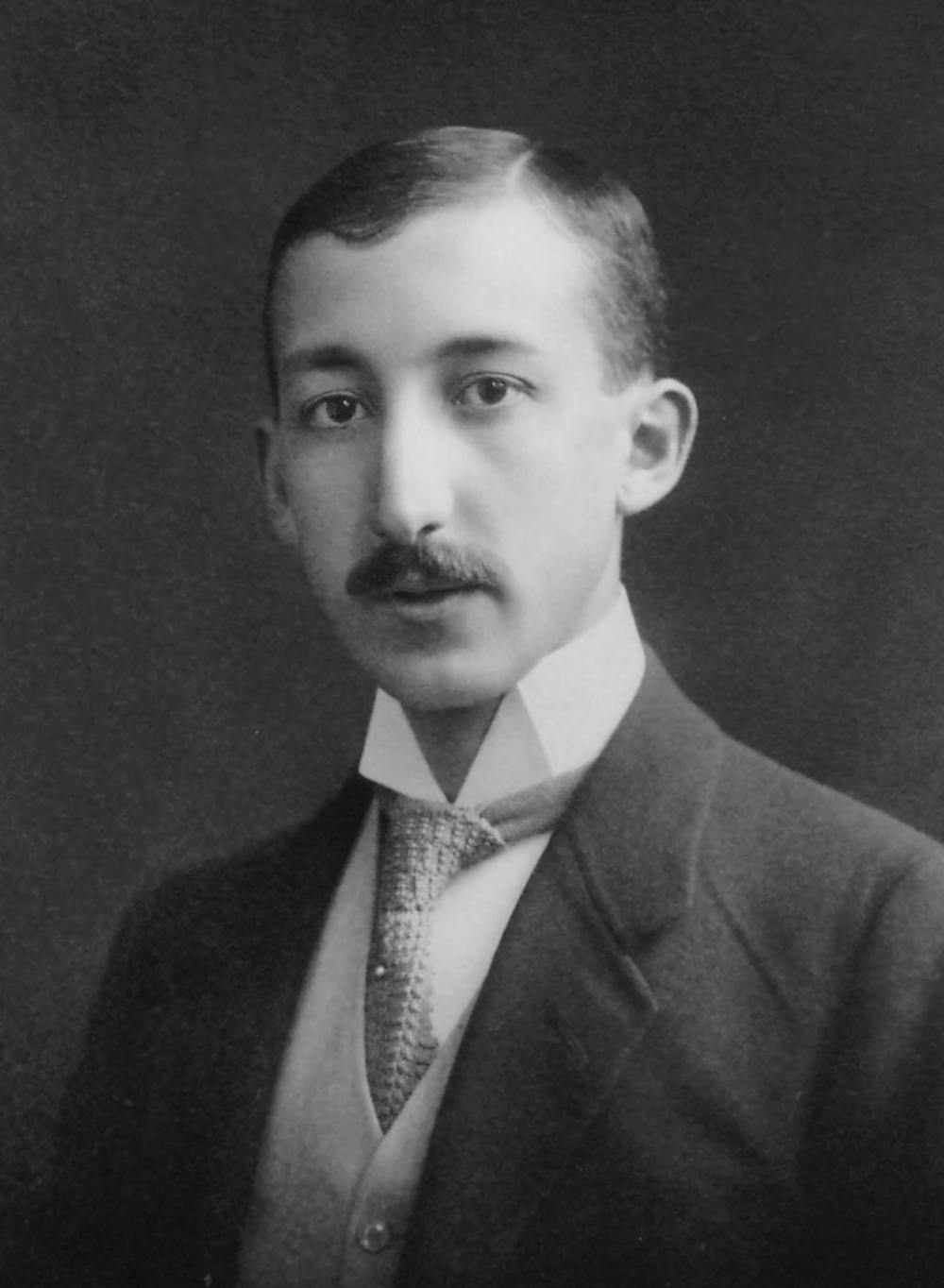

A black and white headshot of a young man with a mustache wearing a suit.
Hungarian chemist George de Hevesy. Magnus Manske
Sign up to read this article
Read news from 100's of titles, curated specifically for you.
Already a member? Sign in here
Related Stories
Top stories on inkl right now
One subscription that gives you access to news from hundreds of sites
Already a member? Sign in here
Our Picks
Fourteen days free
Download the app
One app. One membership.
100+ trusted global sources.







