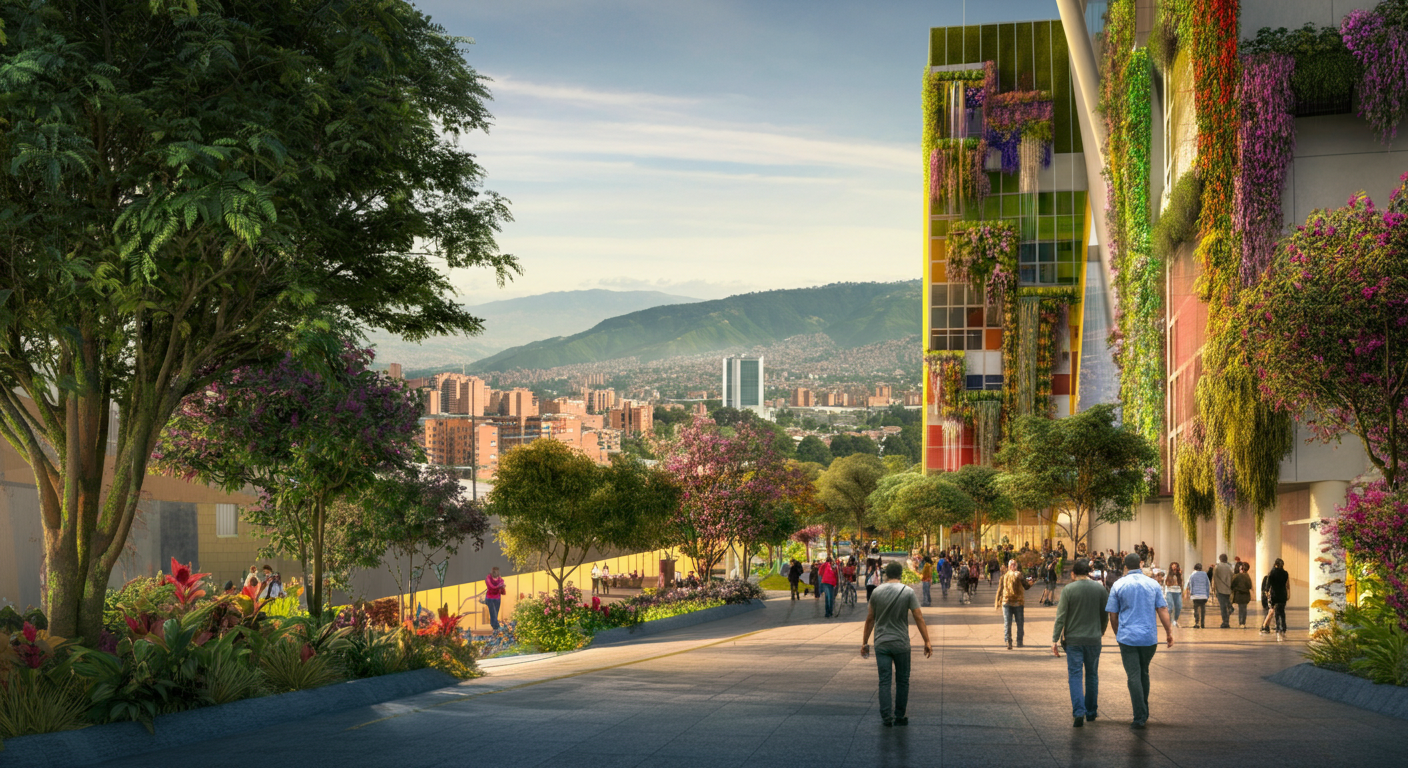
For decades, cities around the world have struggled with a growing problem known as the urban heat island effect. As concrete, asphalt and buildings replace natural vegetation, urban areas absorb and retain more heat than their surrounding countryside, making summers increasingly uncomfortable and, in some cases, dangerous. While many cities rely on expensive cooling infrastructure to tackle rising temperatures, one Colombian city chose a different path. Instead of adding more air conditioners, it added nature. By planting more than 2.5 million plants and approximately 880,000 trees, the city transformed roadsides, waterways and public spaces into living green corridors. The result was remarkable: average temperatures in some of the hottest areas fell by up to 2°C, demonstrating how urban forests can become a powerful tool against climate change and extreme heat. Its success offers a compelling blueprint for other cities seeking sustainable and cost-effective ways to adapt to a warming world.
Get breaking news anytime, anywhere. Download the TOI app now!