Get all your news in one place.
100's of premium titles.
One app.
Start reading
The Times of India
The Times of India
World
TOI World Desk

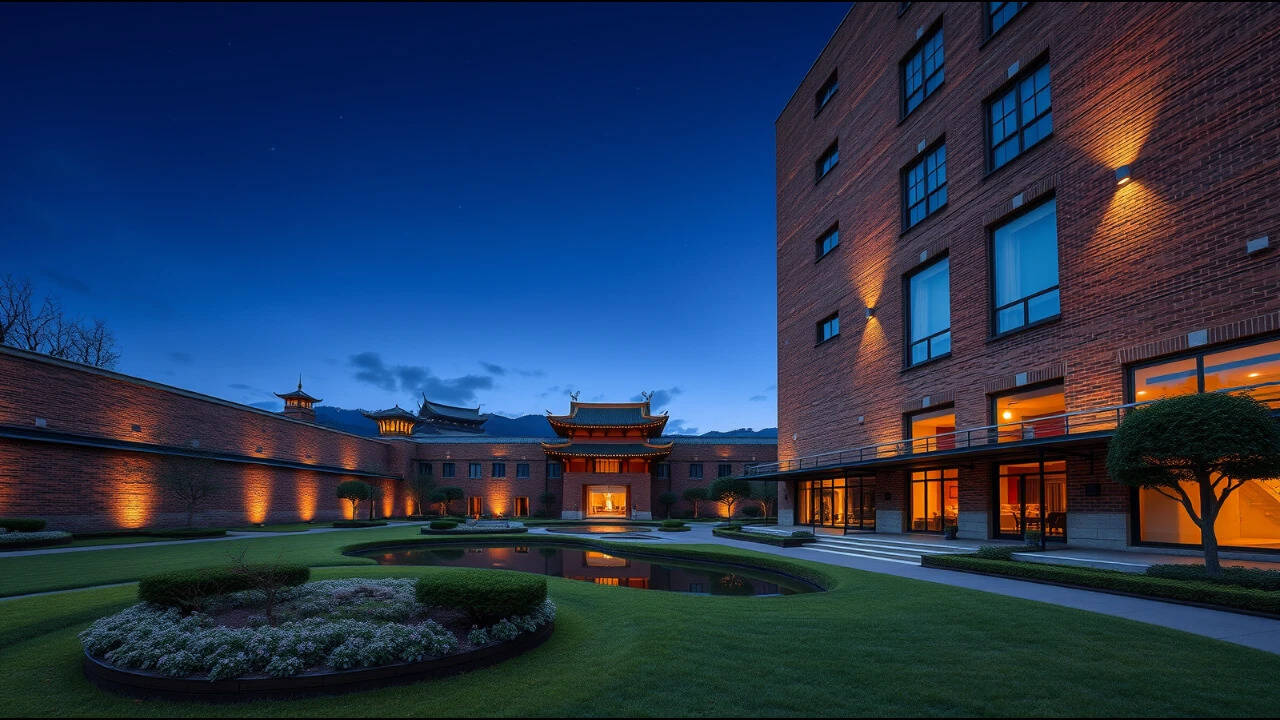
How a 1908 prison became Japan's most unusual luxury hotel after nearly a decade of restoration

In February 2017, Japan formally closed the Nara Prison, a red brick correctional facility that had operated continuously for well over a century in the ancient city of Nara. Rather than demolishing the structure, the Japanese government designated it a National Important Cultural Property the same year it closed, recognising the building as one of the finest surviving examples of Meiji-era prison architecture in the country. Nearly a decade later, following roughly seven years of restoration work, the site reopened in June 2026 as Hoshinoya Nara Prison, a 48-suite luxury hotel built directly inside the original cellblocks, alongside a companion museum exploring the building's history as a working prison.

Get breaking news anytime, anywhere. Download the TOI app now!

Why Nara Prison was considered architecturally significant enough to save

According to Hoshino Resorts' own official account of the property , the former Nara Prison was completed in 1908 and was one of five major prisons built by the Meiji government as part of a broader effort to modernise Japan's legal and correctional system to international standards. Designed by government architect Keijiro Yamashita, the complex followed the Haviland System, a layout in which multiple cell block wings radiate outward from a central guard tower, allowing a small number of staff to oversee the entire facility at once, a design approach that went on to influence the layout of other modern prisons across Japan.

Of the five so-called Five Great Prisons of Meiji built during this period, Nara Prison is the only one that survives today in a largely intact, unaltered form, according to Hoshino Resorts' account of the Nara Prison Museum , making it a uniquely well-preserved physical record of Japan's early modern correctional history.

Why the prison eventually closed after more than a century of use

Nara Prison operated under several different names and purposes over its long working life. It initially housed adult inmates before being renamed Nara Juvenile Prison in the late 1940s, when it began housing younger inmates specifically between the ages of 16 and 26, with an institutional focus shifting toward rehabilitation and education rather than purely punitive detention.

By the 2010s, the building's age had become an operational liability. Decades of exposure to earthquakes and typhoons had gradually weakened its structural integrity, and rather than continuing to house inmates inside an ageing facility with growing seismic safety concerns, Japanese authorities made the decision to close the prison entirely in 2017, formally ending its use as a correctional facility after more than 100 years of continuous operation.

How the site was transformed into a hotel and museum

Converting a former prison into a functioning luxury hotel required extensive, carefully managed restoration work. According to Hoshino Resorts, the project spanned approximately seven years and was carried out in direct collaboration with the Japanese government and heritage conservation specialists, reflecting the building's protected status as a nationally designated cultural property, which placed strict limits on how much of its original architecture and structure could be altered.

The finished hotel occupies four of the site's five original cell block wings, converted into 48 guest suites, each combining several former solitary confinement cells into a single larger room that blends the building's original century-old brickwork with contemporary interior design. The fifth wing, along with the original guard station, has instead been preserved largely unchanged and now forms the core of the separate Nara Prison Museum, which opened to the public in April 2026 ahead of the hotel itself.

What the project represents for heritage preservation in Japan

Hoshino Resorts has described the project as an example of what it calls a cycle of heritage, an approach in which tourism revenue is used to directly fund and sustain the long-term preservation of a historically significant building, rather than allowing the structure to fall into disrepair or be demolished once its original function ends. Hoshino Resorts chief executive Yoshiharu Hoshino has spoken publicly about resisting purely space-efficient redevelopment of older buildings, arguing that adapting historic structures for new uses is one of the clearest ways to give them a genuine future rather than simply preserving them as static, unused monuments.

The hotel officially opened to guests on 25 June 2026, becoming what Hoshino Resorts describes as Japan's first hotel built inside a former prison. Located within walking distance of Nara's Todaiji Temple and the city's well known free roaming deer population, the property adds an unusual new category of heritage tourism to a region already built around centuries of preserved history, offering visitors the specific and unusual experience of spending the night inside a cell block that, until 2017, was still in active use as a working correctional facility.

Sign up to read this article
Read news from 100's of titles, curated specifically for you.
Already a member? Sign in here
Related Stories
Top stories on inkl right now
One subscription that gives you access to news from hundreds of sites
Already a member? Sign in here
Our Picks
Fourteen days free
Download the app
One app. One membership.
100+ trusted global sources.