
Get all your news in one place.
100's of premium titles.
One app.
Start reading
Space
Space
Science
Keith Cooper

How 2 quasars at the dawn of time could be a Rosetta stone for the early universe

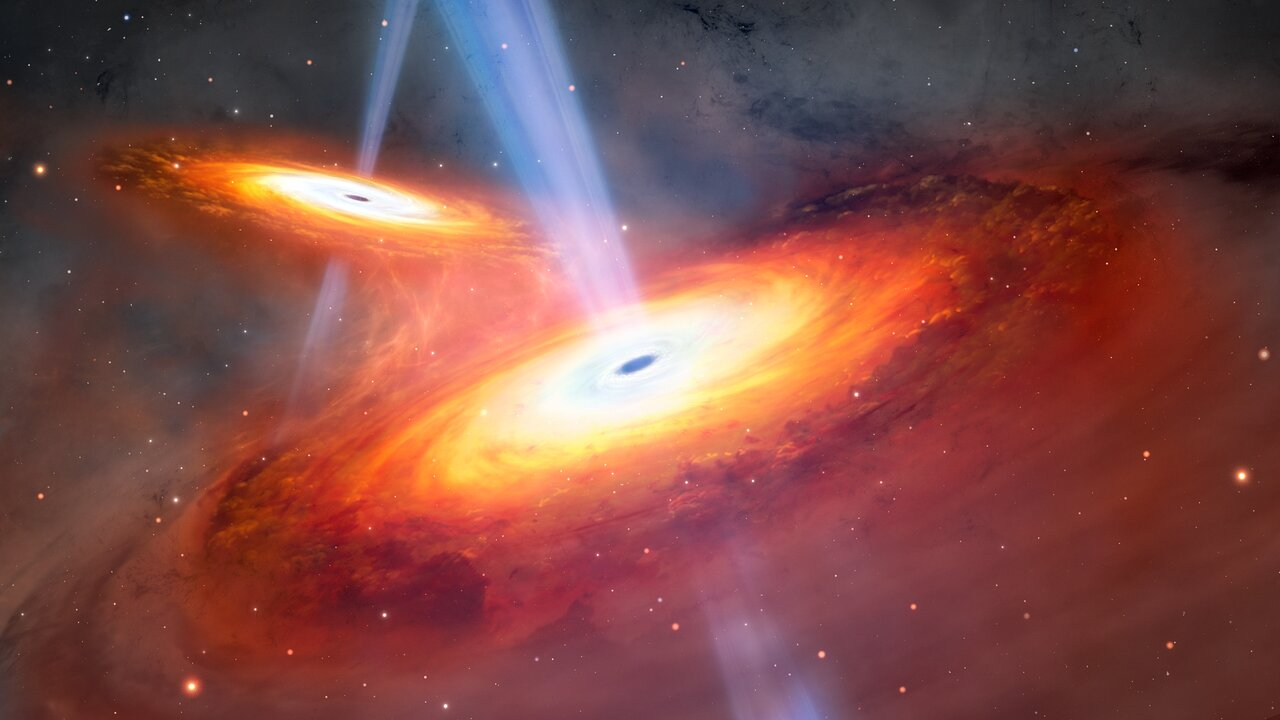
This illustration depicts two quasars in the process of merging. Using both the Gemini North telescope and the Subaru Telescope, a team of astronomers have discovered a pair of merging quasars seen only 900 million years after the Big Bang. Not only is this the most distant pair of merging quasars ever found, but also the first confirmed pair found in the period of the universe known as cosmic dawn.

A double quasar spiraling toward a great merger has been discovered lighting up the "cosmic dawn," just 900 million years after the Big Bang.


Sign up to read this article
Read news from 100's of titles, curated specifically for you.
Already a member? Sign in here
Related Stories
Top stories on inkl right now
One subscription that gives you access to news from hundreds of sites
Already a member? Sign in here
Our Picks
Fourteen days free
Download the app
One app. One membership.
100+ trusted global sources.






