
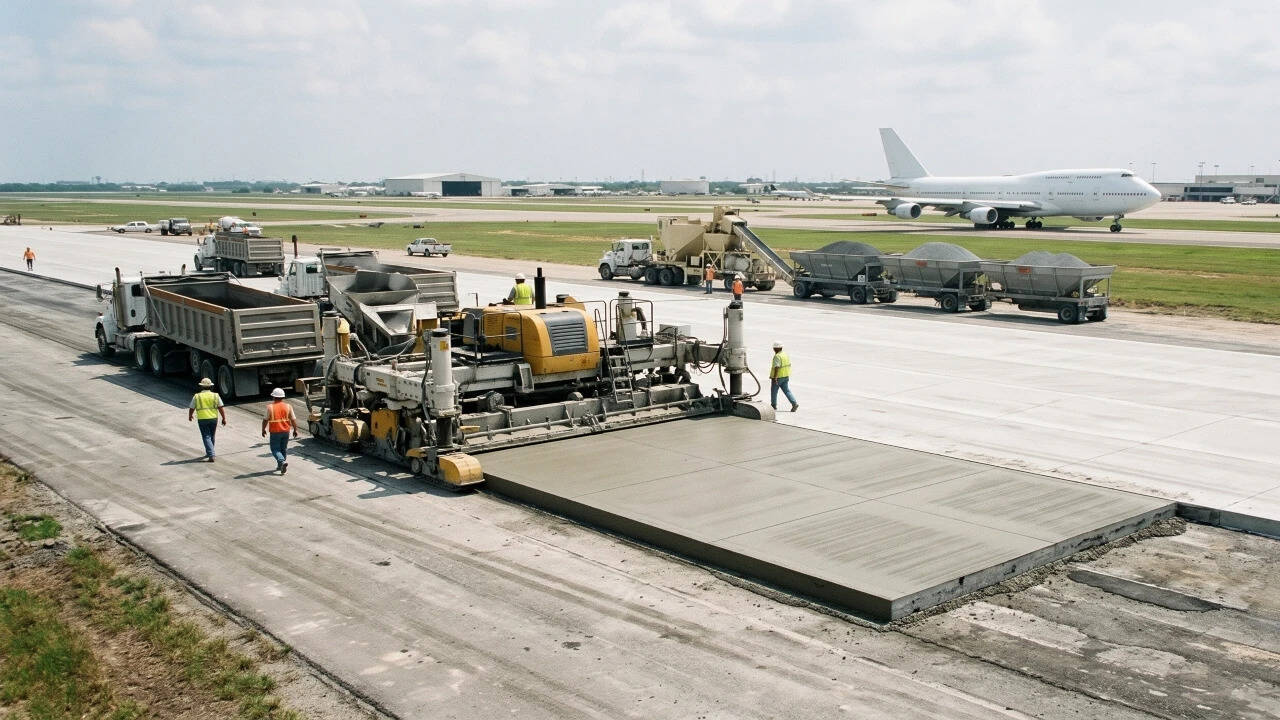
Runway concrete must do more than hold up aircraft. It must hold up to repeated heavy loads, resist moisture and be structurally sound for years, which makes the choice of cementitious materials very critical. Engineers at Houston’s George Bush Intercontinental Airport sought to meet those criteria while substituting half of the traditional cement with industrial by-products. Runway 15R-33L opened to air traffic on June 13, 2002. The runway was 10,000 feet long and 150 feet wide, designed to take Boeing 747s, Antonov 124s and other big aircraft. Its most remarkable feature, however, was hidden in the concrete: half of the cementitious material was composed of 25% Class F fly ash and 25% blast-furnace slag.
Get breaking news anytime, anywhere. Download the TOI app now!












