
Closing summary
Our live coverage is ending now. In the meantime, you can find all of our live US politics coverage here. Here is a summary of the key developments from today:
Donald Trump signed an executive order meant to expand the power of Elon Musk’s governmental cost-cutting program, the so-called “department of government efficiency”, or Doge. The new order requires agencies to create a centralized system to record and justify payments, which may be made public for transparency – an initiative that would be monitored by Musk’s team.
The Trump administration said it is eliminating more than 90% of the US Agency for International Development’s foreign aid contracts and $60bn in overall US assistance around the world.
Fired USAid employees and advocates for people with HIV staged a protest in a Capitol office building, warning that Donald Trump’s drive to dismantle the agency tasked with implementing Washington’s foreign aid agenda imperils the fight against the virus.
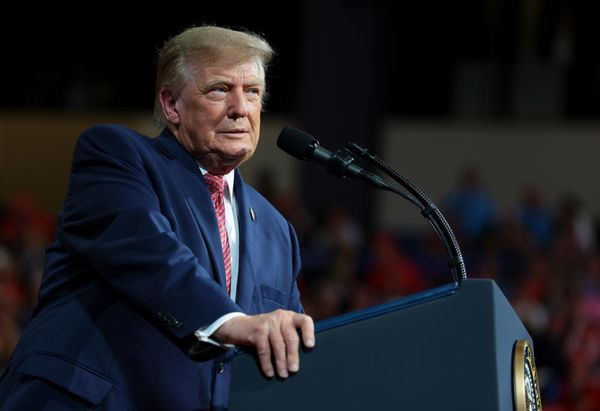
Trump announced that Ukrainian President Volodymyr Zelenskyy will visit Washington DC to sign the rare earth minerals agreement. He praised Doge, claiming, without evidence, that it has saved billions.
Elon Musk also delivered remarks and warned that without cost-cutting, the country could go “bankrupt” describing himself as “tech support”. He acknowledged mistakes made by Doge, such as when they accidentally cancelled an Ebola prevention effort, but he said, they “restored it immediately and there was no interruption”.
Trump also mentioned that the Environmental Protection Agency might cut up to 65% of its employees and declined to comment in response to a question about whether he would ever allow China to take control of Taiwan by force.
Trump said that tariffs on Canada and Mexico will continue, and that a 25% tariff on the European Union was coming soon.
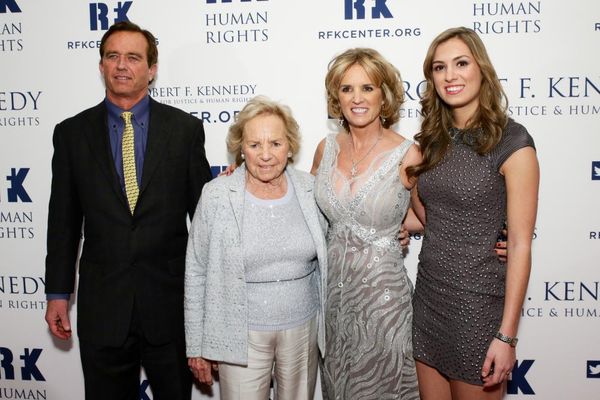
Health Secretary Robert F Kennedy said that two people had died from a measles outbreak, but did not provide details about the deaths. Earlier on Wednesday, it was reported that one child had died of measles.
The Guardian’s political correspondent, Lauren Gambino, writes about the latest executive order meant to expand the power of Elon Musk’s governmental cost-cutting program:
The order is part of a much broader effort by the White House to dramatically reduce the size of the federal workforce, which the Trump administration has cast as an impediment to realizing his sprawling agenda. On Wednesday, the Office of Management and Budget and the Office of Personnel Management sent a seven-page memo directing agency leaders to develop plans to implement “large-scale reductions” by 13 March, according to the Associated Press.
“We’re cutting down the size of government. We have to,” Trump said earlier on Wednesday during the first cabinet meeting of his second term. “We’re bloated. We’re sloppy. We have a lot of people that aren’t doing their job.”
The administration already moved to fire thousands of probationary employees who were not yet entitled to civil service protections. The president on Wednesday said that the Environmental Protection Agency plans to cut up to 65% of its employees. Employees at the labor department and the Social Security Administration are also reportedly bracing for dramatic downsizings.
Addressing the cabinet meeting on Wednesday, Musk conceded that Doge had made some mistakes in its rapid-fire approach to shrinking and in some cases attempting to entirely eliminate agencies. He conceded that Doge “won’t be perfect”, including when it “accidentally” cancelled an Ebola-prevention effort that the tech billionaire insisted had been restored “immediately” and with “no interruption”.
An official with the US Agency for International Development (USAid), one of Doge’s first targets, disputed Musk’s claim, telling the AP that agency funds for Ebola response had not been released since Trump froze foreign aid last month.
Under the new Doge-related executive order, the General Services Administration has 60 days to submit a plan for offloading any government real estate “deemed by the agency as no longer needed”.
The directive also places a 30-day freeze on all government-issued credit cards, effective immediately, unless they are used for disaster relief and other critical services, or an exception is made by a supervisor. Federally funded travel for conferences and other “non-essential purposes” will be subject to new reporting requirements.
Read more on the executive order:
Updated