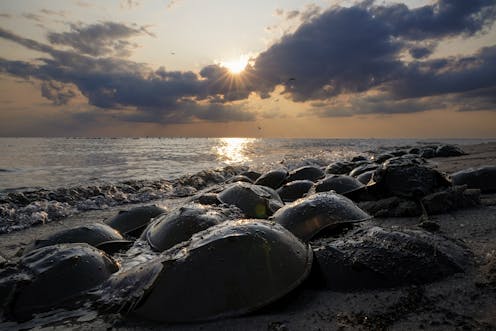
If you have ever gotten a vaccine or received an intravenous drug and did not come down with a potentially life-threatening fever, you can thank a horseshoe crab (Limulus polyphemus).
How can animals that are often called living fossils, because they have barely changed over millions of years, be so important in modern medicine? Horseshoe crab blood is used to produce a substance called limulus amebocyte lysate, or LAL, which scientists use to test for toxic substances called endotoxins in intravenous drugs.