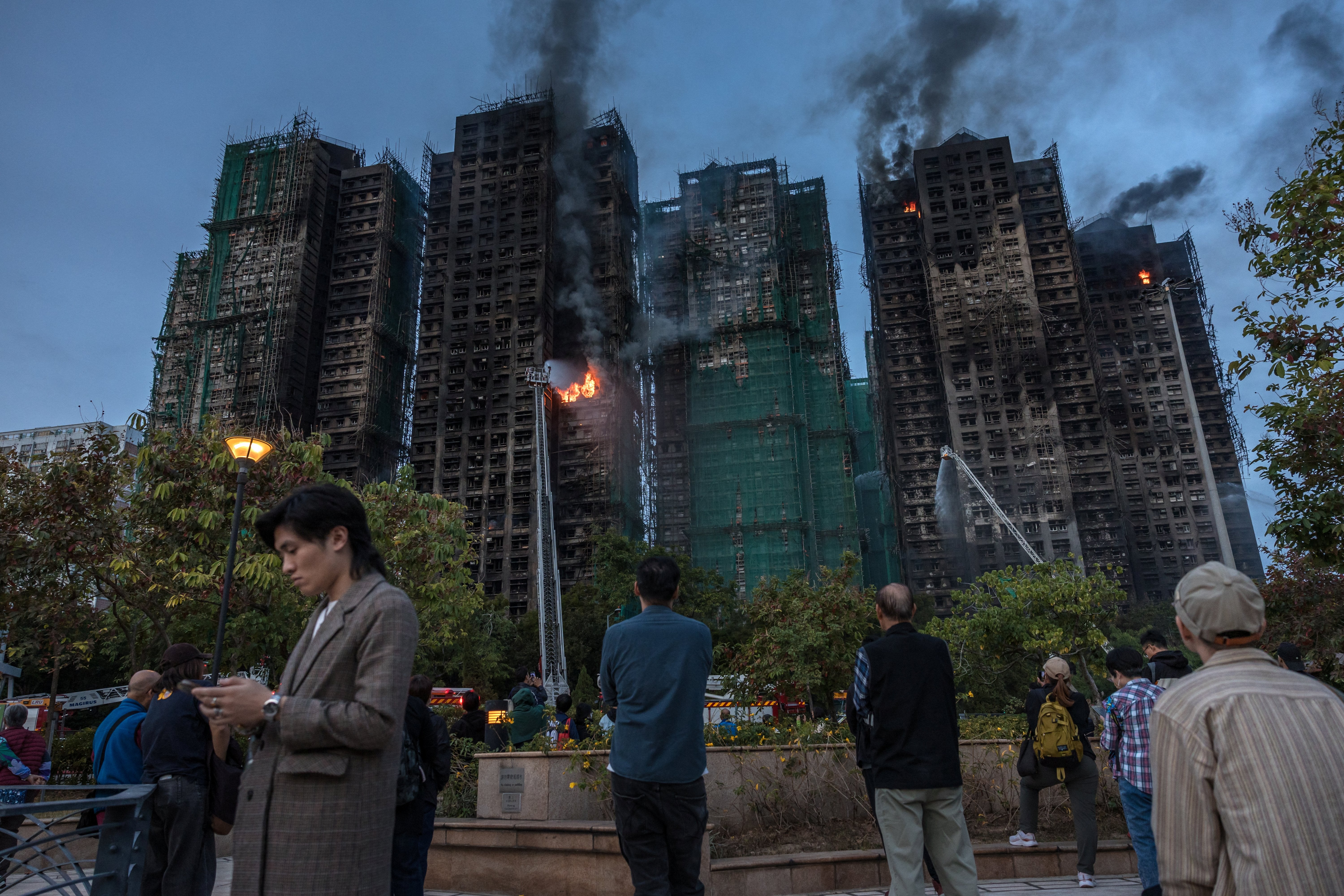
Hong Kong officials said on Monday that early findings indicated mesh sheets and Styrofoam panels used on the exterior of the Wang Fuk Court complex were major factors in the rapid spread of the blaze that killed more than 150 people last week.
The inferno tore through the Tai Po development – eight highrises housing nearly 4,800 people – in what was the Chinese city’s deadliest fire in decades.
Authorities found the flames leapt unusually fast across the scaffolding and the facade, prompting a scrutiny of renovation materials. The residential complex was undergoing extensive renovations when the fire erupted and quickly engulfed seven of the towers.
Investigators sent some 20 mesh samples from the estate for laboratory testing and seven – from four towers – failed to meet fire-retardant standards, raising fears that safety requirements could have been ignored or falsified.
Officials suspect a coordinated effort to pass off sub-standard mesh as fire-resistant material may have put thousands at risk.
In the wake of the inferno, the government launched a city-wide inspection of high-rises under renovation, focusing on whether materials advertised as flame-resistant actually complied with safety regulations.
It also pledged to tighten oversight of renovation projects, introducing stricter certification of building materials, mandatory on-site inspections, and tougher penalties for safety violations.
The reforms are intended to prevent “any repeat of such a catastrophic failure”.
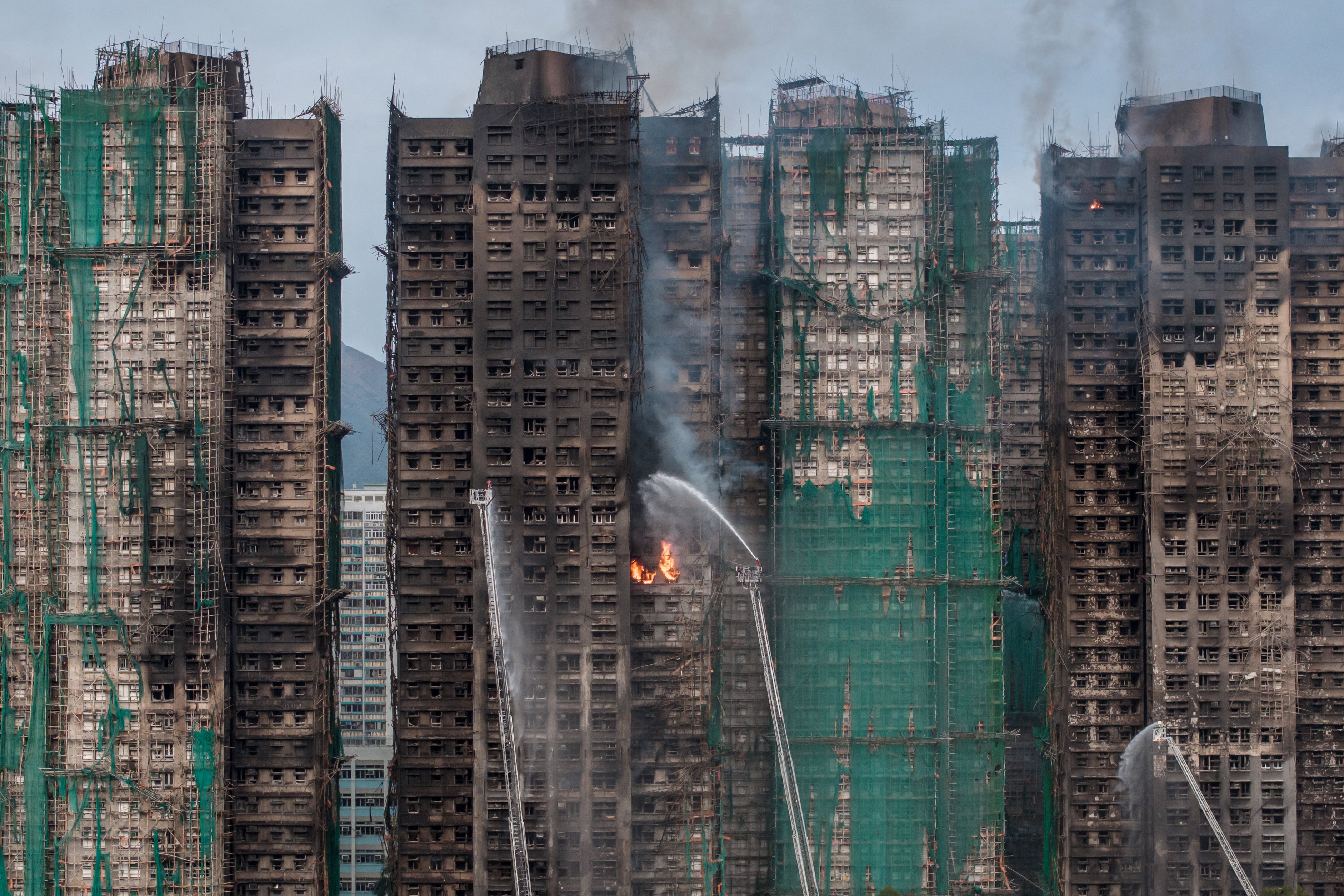
The fire killed, at last count, 151 people and has left more than 40 residents missing. “Some of the bodies have turned into ash. Therefore, we might not be able to locate all missing individuals,” police official Tsung Shuk Yin said.
Authorities arrested 13 people on suspicion of manslaughter, including individuals linked to construction firms.
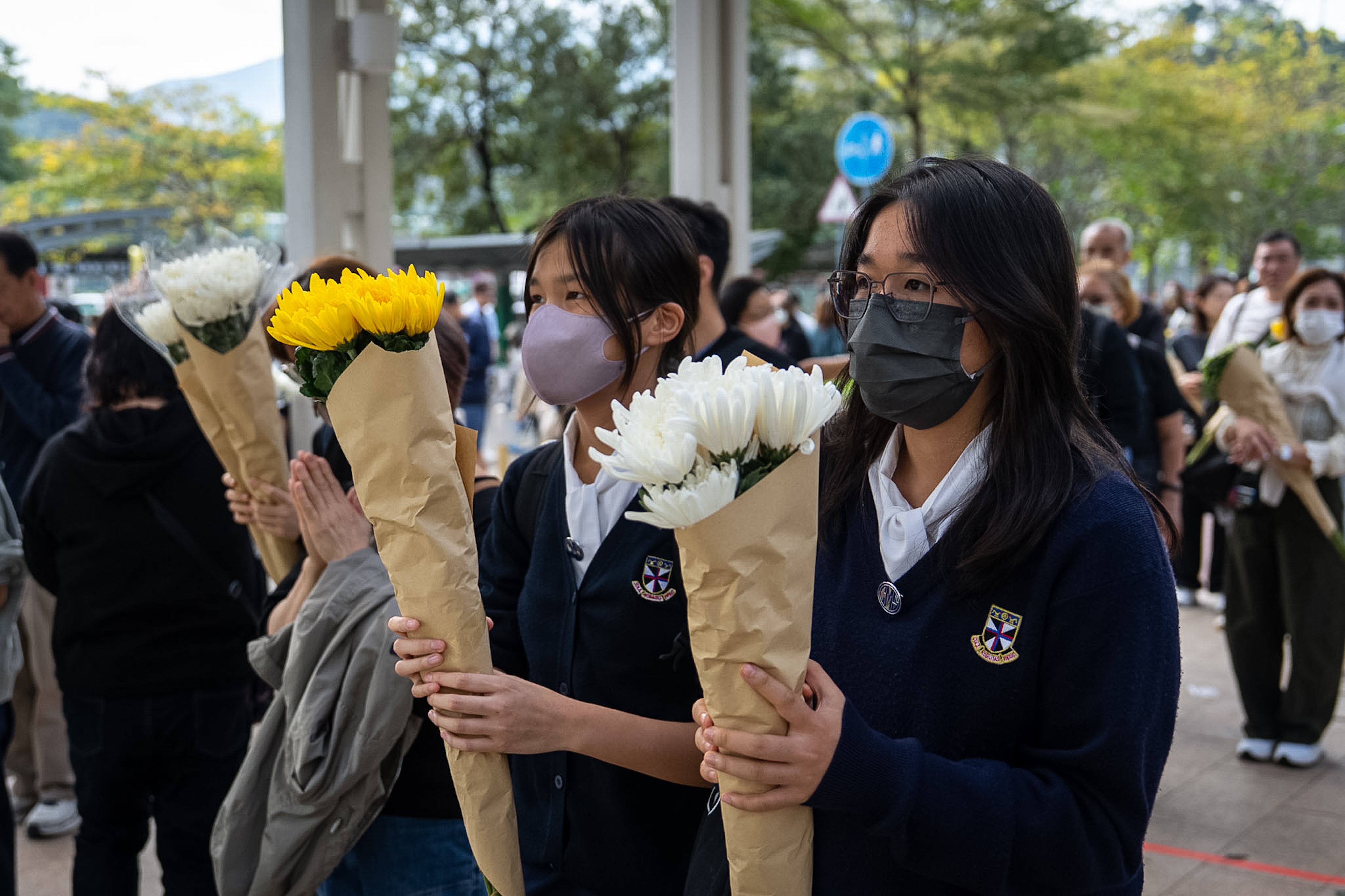
The tragedy triggered an outpouring of public support, with donations reaching HK$900m (£87m) to supplement the HK$300m in government funding to provide long-term assistance.
Survivors are being rehoused in hotels, transitional housing, and emergency shelters.
At a makeshift memorial near the burnt-out buildings, people continued to lay flowers and messages.
“When something happens, we come out to help each other,” Loretta Loh said, while paying her respects. “I have a heavy heart.”
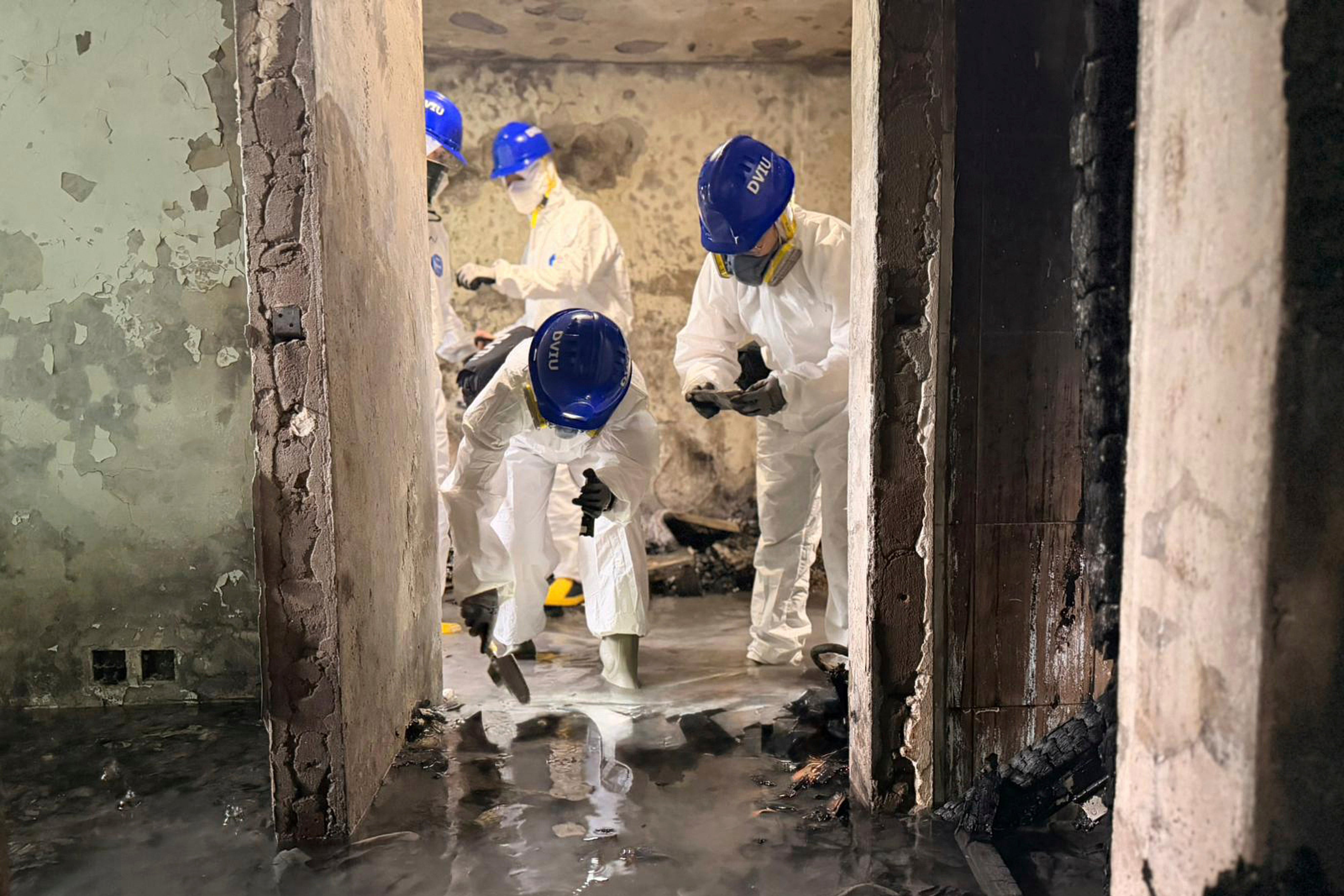
Residents had raised concerns for almost a year about the green netting covering the bamboo scaffolding during the renovations. The Labor Department acknowledged 16 inspections and warnings to contractors since July 2024, fuelling anger over whether stricter enforcement could have prevented the tragedy.
As scrutiny intensified, meanwhile, the government adopted a tougher stance against criticism. The Office for Safeguarding National Security condemned what it described as “evil schemes” that had “the ulterior motives of using the disaster to create trouble and disrupt Hong Kong”, and police arrested at least three people, including a petition organiser, on suspicion of sedition.
Police said only that “police will take actions according to actual circumstances and in accordance with the law”.
“People are angry and think that the Hong Kong government should be accountable,” Jean-Pierre Cabestan, senior research fellow at the Asia Centre, a think tank in Paris, said.
Over 120,000 home cameras in South Korea hacked to record ‘sexploitation’ footage
Japanese city posts signs in four languages warning tourists about bear attacks
Hong Kong mourns 146 dead in deadliest fire in 70 years as hundreds remain missing
Hong Kong accuses construction firm of ‘gross negligence’ after fire kills 128
Hong Kong officials warned contractors about fire safety risk days before blaze
Disney cancels Zootopia 2 premiere in Hong Kong ‘out of respect’ for fire victims