
When Brett Gould suffered a serious fall on his rural property west of Toowoomba, it took almost two days before anyone found him. His family was left wondering whether a simple phone call might have changed everything. But repeated daily check-ins had never suited Brett, who preferred living independently on his farm and disliked feeling monitored. Rather than asking his grandfather to wear another emergency device, 20-year-old university student Kai Gould looked for a solution that would fit naturally into his grandfather’s routine. The result was a smart clock that now sits on a kitchen bench, quietly confirming to family members that everything is okay with the press of a button.
Get breaking news anytime, anywhere. Download the TOI app now!
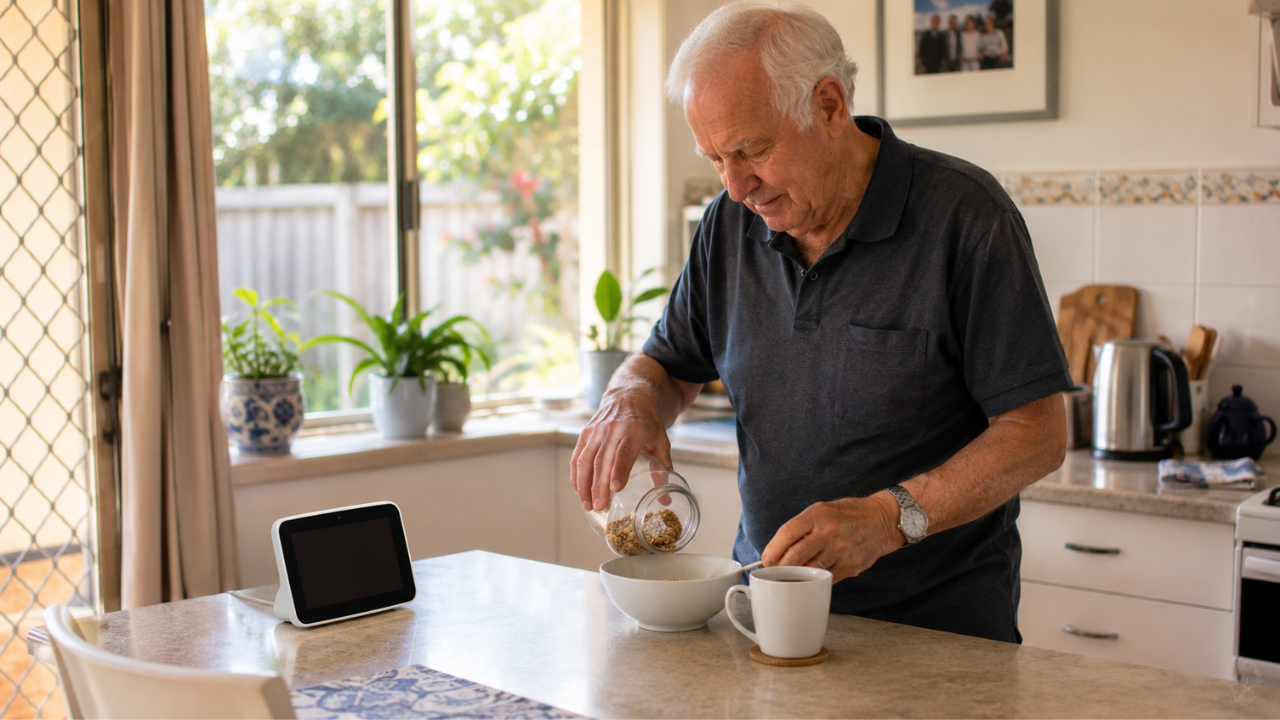
According to ABC News Australia’s original report , Kai Gould came up with the idea after his 79-year-old grandfather was left injured for nearly two days following the accident. The family had already tried wearable emergency devices, including a pendant and a smartwatch, but Brett refused to use them. Instead, Kai designed what he calls MedClock, a countertop device that fits into everyday life rather than requiring someone to remember to wear it. At preset times during the day, the clock sounds an alarm until the user presses a large button. Once pressed, the device automatically sends a text message to a nominated family member confirming that everything is alright.

Built for independence instead of constant supervision
Unlike many emergency monitoring systems, the smart clock was designed around a simple principle: older people often want support without feeling watched. According to the ABC report, Kai said the clock succeeds because his grandfather actually uses it every day. The device sits in a place he naturally visits each morning and evening, making it far easier to remember than a wearable pendant or watch. Kai’s father, Chris Gould, told ABC that the invention also changed the family’s relationship with Brett. Instead of repeatedly phoning simply to ask whether he was safe, conversations became more relaxed and social because the family already knew he had checked in through the clock.
The invention has quickly attracted interest beyond Kai’s own family. After sharing it on social media, he received thousands of reactions and enquiries from families facing similar concerns. ABC reports that several hospitals expressed interest, seven pharmacies began stocking the device, and a Sunshine Coast retirement village purchased 11 clocks for a resident trial. Kai and his father now assemble the units together in their garage while trying to keep the price affordable.
A small idea addressing a much larger challenge
The invention arrives as Australia, like many countries, faces growing pressure to help older adults remain safely in their own homes for longer. According to Geoff Rowe, chief executive of Aged and Disability Advocacy Australia, technology that supports independence without forcing people into residential aged care can play an important role. Speaking to ABC News, Rowe noted that devices such as watches or pendants only work if people remember to wear them, whereas a stationary device already integrated into a person’s daily routine may suit some older adults better. He stressed that there is no universal solution, but described Kai’s invention as a useful option for a particular group of people who value their independence.
For Kai Gould, however, the motivation has remained personal rather than commercial. Although investors have already approached him, he told ABC he wants to keep ownership of the product because many investors’ first suggestion was to increase the price, making it less affordable for older people. His grandfather’s fall exposed a gap between wanting to live independently and staying connected to family. Rather than trying to solve it with more surveillance, Kai built something much simpler: a clock that quietly asks one question every day, then lets loved ones know the answer.