The operation went perfectly. An 87-year-old man with hydrocephalus following surgery for a glioblastoma had a ventriculoperitoneal shunt placed to relieve his symptoms. He was extubated in the operating room and spent two uneventful hours in recovery.
Then staff on the surgical ward looked at his face. Both parotid glands, the large salivary glands in front of the ears, had swollen dramatically, along with his neck. His heart rate climbed to 112, his blood pressure spiked to 172 over 77, and his oxygen saturation dropped to 82 percent.
The diagnosis has an unfortunate nickname: anesthesia mumps. The case, reported by Rufina Ning of Western University and Abdul Naeem of London Health Sciences Center in London, Ontario, appears in the August issue of the Journal of Medical Cases and is, to the authors' knowledge, the first documented after a shunt insertion.
Ruling Out the Things That Kill People
The team's initial differential diagnosis was appropriately grim: postoperative hematoma, air trapped in the salivary gland, bacterial infection, a salivary stone, or anaphylaxis.
Examination of his mouth showed no pus draining from Stensen's duct, the opening through which the parotid gland empties into the mouth, though there was tenderness on both sides and visibly poor oral hygiene. Blood counts were unchanged from before surgery. Chemistry showed mild dehydration with elevated sodium and chloride. An urgent CT of the head and neck showed diffuse enlargement of both parotid glands with surrounding tissue swelling and, importantly, no hematoma. Testing for viral mumps came back negative.
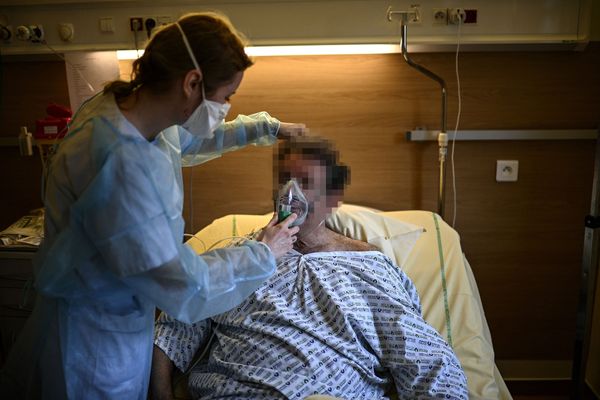
Treatment was unglamorous. He received oxygen at 3 liters per minute via nasal prongs, which restored his saturation to 100 percent, along with a liter of saline and pain medication. His vital signs returned to baseline. Over the next 24 hours,, his neck circumference increased from 41 to 46.5 centimeters, but at no point did his airway become compromised, so reintubation was not needed. A repeat CT within 48 hours showed the glands close to their normal size and his neck back to 41 centimeters. He was discharged several days later with no lasting effects.
The Suspect Was the Position of His Head
Anesthesia mumps is formally called acute transient postoperative sialadenitis. It involves swelling of one or both parotid glands without signs of infection, and it usually resolves on its own within hours to days. The authors cite a reported incidence of roughly 0.16 percent, which is part of why no analysis has pinned down specific risk factors.
The mechanisms proposed in the literature fall into three categories: patient factors such as dehydration and thickened saliva; anesthesia factors such as pressure in the mouth from straining against the breathing tube; and surgical factors such as prolonged head positioning that compresses the glands.
In this patient, several things stacked up. He had been in hospital for 40 days, had eaten inconsistently because his hydrocephalus caused periodic confusion, and had spent about 36 hours intermittently taking nothing by mouth while waiting for surgery. He had also been on dexamethasone for his brain tumor for weeks, and long-term steroid use has been associated with thicker saliva.
Then came the operation itself. Total surgical time was 135 minutes, and the anesthesia record shows his head was rotated to the right for approximately 114 minutes, held in a three-pin head holder for image-guided catheter placement. The surgeon reported no significant resistance while tunneling the shunt catheter behind the ear, which argues against direct mechanical injury to the gland. Skull base operations requiring similar head rotation have previously triggered sialadenitis, according to a systematic review in World Neurosurgery, and a single-institution case series has documented it as a rare complication in neurosurgery generally.
A Second Case Landed in the Same Issue
The condition is rare, but not so rare that it appears only once per issue. The same August volume of the journal carries a report from a team in Kosovo describing a 44-year-old woman who developed bilateral parotid swelling after spinal anesthesia for an emergency cesarean delivery.
That patient had facial swelling with pain, difficulty opening her mouth, and transient respiratory distress. Ultrasound was consistent with acute parotitis. She was treated with intravenous fluids, corticosteroids, analgesics and supportive care, and recovered completely within three days.
The two cases together illustrate why the condition is worth knowing about. Most episodes resolve without intervention, sometimes with nothing beyond warm compresses, massage and fluids. But the swelling can extend into the parapharyngeal space, and published reports document cases requiring reintubation for airway obstruction, including massive swelling after a craniotomy, along with rarer complications such as temporary facial weakness. A review in Frontiers in Surgery documented airway obstruction following a kidney operation.
These are individual case reports, and single cases cannot establish how often the condition occurs or who is most vulnerable. The Ontario authors' recommendation is aimed at clinicians: watch for it after operations involving substantial head rotation, particularly in older patients prone to dehydration and poor nutrition, and keep a low threshold for securing the airway if swelling progresses.
Key Questions Answered
What is anesthesia mumps?
It is sudden, temporary swelling of one or both parotid salivary glands after a procedure, formerly called acute transient postoperative sialadenitis. It is unrelated to the mumps virus, which tested negative here, and usually settles on its own.
How common is it?
The authors cite a reported incidence of about 0.16 percent. Because it is rare and mostly documented retrospectively, no analysis has pinned down definitive risk factors.
What likely triggered it in this patient?
The authors point to a combination: prolonged fasting, poor nutrition and hydration, poor oral hygiene, long-term steroid use, and roughly 114 minutes with his head rotated during surgery.
Is it dangerous?
Usually not, but published cases include swelling that narrowed the airway enough to require reintubation. This patient's airway was never compromised.
How is it treated?
Supportive care. This patient received oxygen, fluids, and pain control. Reported treatments elsewhere include warm compresses, massage, anti-inflammatory drugs, and steroids.
How long does it last?
In this case, the swelling was clearly improving within 24 hours, and imaging showed near-normal glands within 48 hours. The second reported case resolved within three days.