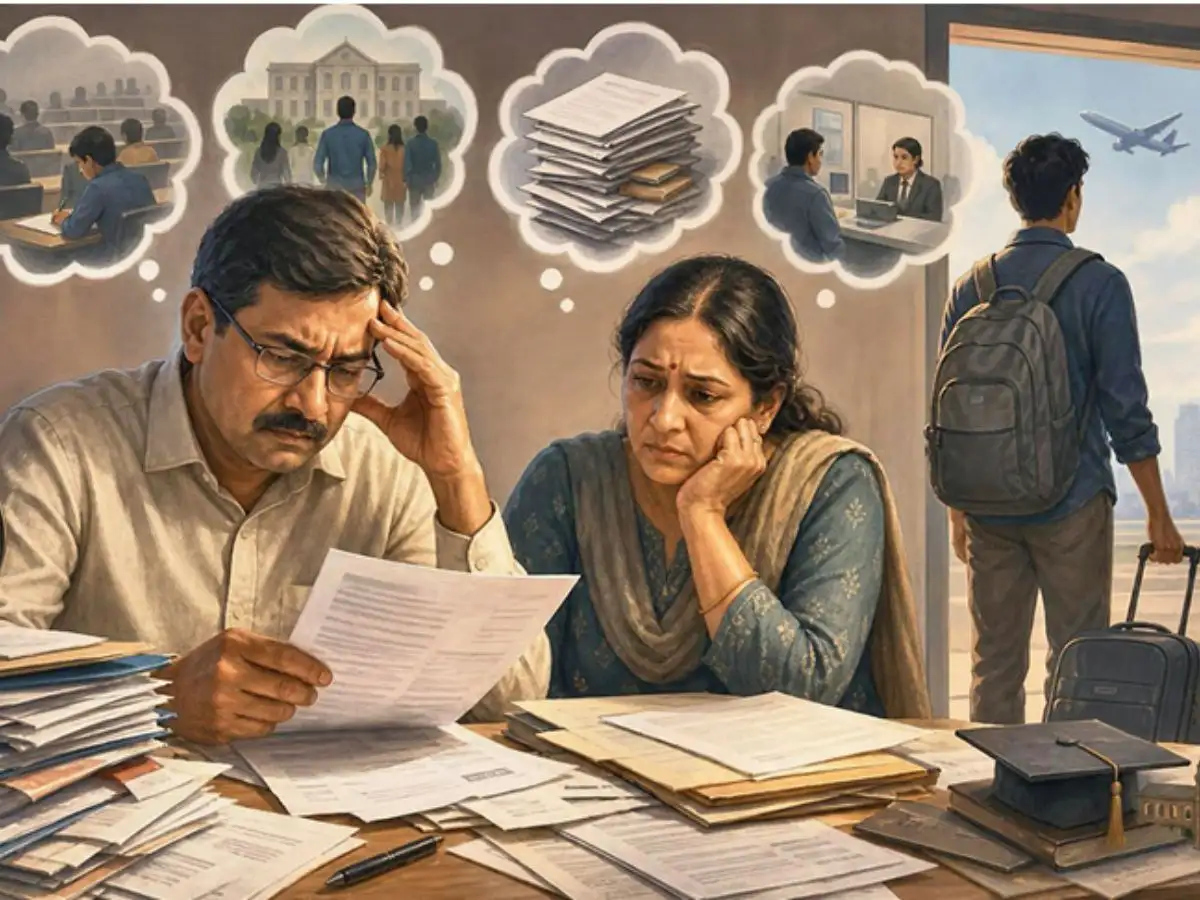
It is the season for 18-year-olds to leave home to go to college. My friends in India have accepted that a steep private education system is preferable to a punishingly competitive and scarce, even if highly reputed, public college. It is not uncommon for Indian parents to send their children abroad to study and pay the higher cost either through loans or their savings. How do Indians in the United States manage and fund their children’s higher education?
Very interestingly, the cost curve for par ents in the US has high front-ended costs, and lower costs as the child moves into the school system. By contrast, In India, costs are lower in the beginning and rise as the child grows older. Childcare in the US can be prohibitively expensive, cutting into the ability of a young couple to save for the future. It is not uncom mon for grandparents to chip in and help the young parents, given both scarcity and high cost of daycare and pre-school. In India, paid in-house help or daycare is a preferred solu tion that is both cost effective and plentifully available. The relative cost advantage curve turns in American Indians’ favour soon after.

Private vs public
American Indian parents are very strategic about their children’s education and the costs that will have to be managed. Most rely on the good quality public education system. The more affluent choose the more expensive pri vate school system, but it is not commonplace.
Parents choose a good “school district” for buying their first home after their child is born. This provides access to a reputed school at no cost to the parents. Admissions to the schools in their district is a right and is free. The property costs and taxes in these districts could be higher because of the demand, but guaranteed admission to the public school of choice is worth that incremental cost.
READ ALSO: Moving back to India? What NRIs need to know about US tax obligations
In India, parents rely primarily on the private sector. Here, costs keep rising from nursery admissions, with private schools of various accreditations mushrooming to meet the demand. State-sponsored public education does not adequately meet the standards and requirements of the population.
The US offers the IRS 529 plan, specifically to fund education. Contributions to this plan eases the tax burden for contributing parents, and is accumulated on a tax-deferred basis over the years. Withdrawals from this plan for qualified higher education costs are 100% tax-free. Most Indian parents in the US open these accounts for their children as soon as possible and begin their contributions. The investments grow in value over time and are available to fund higher education as needed.
In India, it is still an effort to convince par ents to invest in growth opportunities and eq uity funds for higher education; many choose fixed return products and spuriously crafted schemes that promise a specific payout, over simpler index funds and equity funds that of fer better capital appreciation. The lack of tax concessions is also a disadvantage as nothing lures investments like a tax benefit.
Extra-curricular route
In India, extra-curricular activities do not yet count for admissions to elite engineering and medical colleges. However, the rise in private liberal art colleges in India and the assump tion that extra-curriculars will help with admissions abroad has created the demand for sport and art activities for school children. These services are offered by private players and are expensive. However, they don’t ensure extra points for admissions to colleges abroad.
READ ALSO: Sandwich generation: How to balance retirement, children’s education and care for elderly parents
US colleges do not look at capability in mul tiple areas, but for what the university system refers to as ‘spike’. A spike refers to extra ordinary and proven capability with special ised depth in a chosen area. The standards to qualify are high, and Indians living abroad are aware of the exceptional talent needed to get admissions based on such ‘spike’. They instead focus on sport and cultural activi ties that will enable competing and securing scholarships offered for known talents in these fields. Their knowledge of scholarships and fellowships, and choice of activity that could lead to these benefits is higher than that of Indian parents sending their child abroad.
AP leg-up for American students
Children growing up in the US education sys tem are aware of the benefits of the advanced placement (AP) system in high school. Many take 8-12 AP exams while still in high school. As a result, they enter the college system with nearly a year of college credits and will either pass out soon, or be able to bundle their mas ters qualifications along with their under graduate studies. This saves costs and time, while helping with internships and jobs.
Indian high schoolers have to spend a disproportionate amount of time and effort, while parents incur the cost, to take special ised coaching for competitive exams, and to complete their high schools with grades re quired for their chosen field of study. They are unable to maximise the AP credits as much as their US counterparts.
When it is time for college admissions, Indian kids with US citizenship or residency (green card) enjoy financial concessions if they study ‘in-state’ in the public university systems. Parents strategically choose their place of work and residence to provide the maximum advantage to their children in terms of in-state admissions to reputed and highly ranked public colleges. Even in cases of admissions outside their state into other public colleges, American Indian parents are aware of the scholarships and studentships available to pursue such education. The 529 saving is also available to bridge the gaps. It is not common for American Indian children to go to private colleges with a steep fee, though rich parents tend to offer such indulgence.
In India, no such concessions exist. Except for a small number of government colleges of repute, the demand for good quality colleges far outstrips the supply. Higher education remains costly and elitist and with the advent of edupreuners, Indian children often study at universities abroad after paying a steep fee or after taking educational loans.
Higher education in the US involves student loans and debt for a section of the popula tion that does not enjoy parental support. American Indian parents are mostly an ex ception to this rule, culturally rooted in sup porting their children, strategically making their choices, and aggressively saving to fund this milestone for their children. The strong public education system in the US rewards these efforts immensely. The absence of an eq uitable and egalitarian higher education sys tem in India converts higher education into a profit opportunity for the private sector and a privilege for the moneyed Indians.
The Author is Chairperson, Centre For Investment Education and Learning