
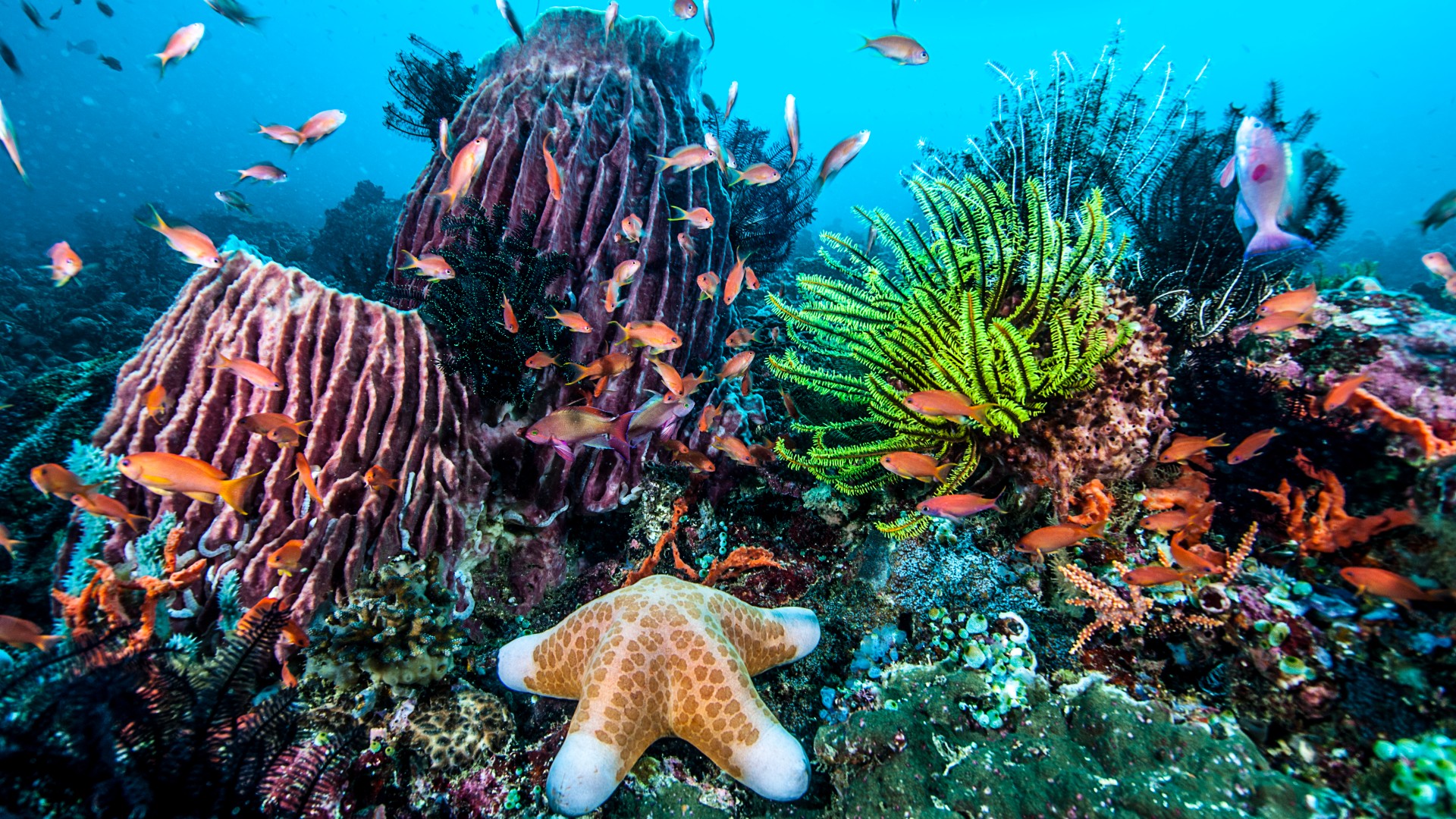
The massive slabs of slowly-moving rock just under Earth's surface — known as tectonic plates — may drive bursts of marine biodiversity every 36 million years, a new study finds.
As tectonic plates slide over the mantle, Earth's inner rocky layer above the core, they cause sea levels to rise and fall. In turn, fluctuating sea levels around continents and shallow inland seas provide new habitats for ocean life to thrive, the researchers found.














