Get all your news in one place.
100’s of premium titles.
One app.
Start reading
Evening Standard
Evening Standard
National
Tom Place

Here is why the UK’s weather has been relentlessly wet in 2026

There is no doubt about it - it has been a miserable start to the year.

Rain has fallen somewhere in the UK every single day of 2026 so far, in a historically wet start to the year, with more than 100 flood warnings in place across the country.


The Met Office have said that rainfall totals from December 1 to February 9 already exceed the average rainfall for the whole winter in a huge swathe of locations.

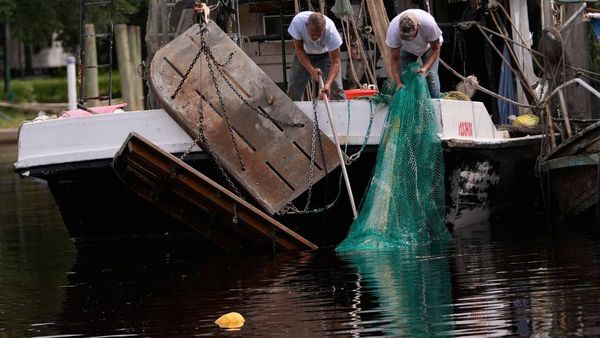
Persistent rainfall has led to heavy flooding in parts of the country, including Somerset (Ben Birchall/PA) (PA Wire)

The start of February has been particularly grim - several regions, including south and central England, eastern Scotland and northeast England have already reached or exceeded their entire February average rainfall.

But why has the weather been so shockingly bad? What weather systems are causing such downpours, and is climate change to blame? And when, oh when, will we see the sunshine again?

Why has the weather been so bad?

Atmospheric forces are behind the seemingly endless drizzle - but we need to look beyond the UK to the broader North Atlantic region for the full explanation.

The jet stream, the Atlantic air current that controls much of our weather, has been steering storms our way.

Unusually warm weather across northern Canada and Greenland, combined with abnormally cold conditions across parts of the USA, Scandinavia and northeast Europe, has strengthened the jet stream, producing a more powerful flow than normal.

Rain arriving overnight was expected to turn ‘heavy and persistent’ in parts of the south-west of England on Thursday morning, the Met Office said (Gareth Fuller/PA) (PA Wire)

On top of this, while the winter jet stream typically emerges from North America and arcs north-eastwards toward Iceland and Scotland, this year it has been pushed unusually far south into Iberia, shifting the storm track well south of the UK.

With the jet stream displaced, low‑pressure systems from the Atlantic have been steered towards southwest Europe, and when these systems reached the UK, a block of cold air over Scandinavia prevented weather systems from progressing eastwards.

That has meant they have stalled over the UK - particularly the south, southwest, Northern Ireland and eastern Scotland.

The result? Persistent cloud and rain across the country.

Neil Armstrong, a chief forecaster for the Met Office, said: “The past few weeks have felt relentlessly wet, with repeated bands of rain sweeping in from the Atlantic and creating increasingly saturated ground across large parts of the UK.

The conditions have been fuelled by a southward shift in the jet stream – a conveyor belt of fast-flowing air – steering successive areas of low pressure towards the UK.

“Cold plunges of air across North America have strengthened the temperature gradient across the north-west Atlantic, energising the jet,” Armstrong said. “A blocking high over northern Europe has prevented weather fronts from clearing, causing them to stall over the UK.”

How has recent weather compared to that in previous years?

A number of regions across the UK have recorded historically bad weather so far in 2026.

Northern Ireland had its wettest January in 149 years, while southern England endured its sixth wettest January since records began in 1836, according to the Met Office.

Moving into February, and England has already had around two thirds of its average February rainfall.

Rainfall could worsen the risk of flooding in some parts of the UK this weekend (Ben Birchall/PA) (PA Wire)

In eastern Scotland, some locations have recorded 175% to 200% of their typical February rainfall in just over a week.

North Wyke in Devon, Cardinham in Cornwall and Astwood Bank in Worcestershire have each unbelievably recorded rain every single day so far this year.

Overall, rainfall in the south-west has been 56% above the long‑term average, a figure which rises to 88% above average across the south-east and central southern England.

Reading recently recorded its longest unbroken spell of rainfall since records began more than a century ago.

Jess Neumann, a hydrologist at the University of Reading, said: “It’s been a miserable and relentlessly wet start to the year for many across the UK. It seems hard to remember that only a few months ago, large parts of the UK were experiencing drought and hosepipe bans.”

Is climate change to blame?

Fossil fuel pollution is making the jet stream more erratic, according to scientists, which means extreme weather systems can become stuck over the same areas for prolonged periods, as the UK is currently experiencing.

These ‘blocking systems’ could also become more frequent according to forecasted emissions scenarios.

Global warming is also intensifying rainfall, with warmer air holding around 7% more moisture for every 1°C rise in temperature, resulting in increasingly wet UK winters - though climate change will also bring drier summers

How is the forecast looking?

Unfortunately, it looks like we have a while until the weather clears.

The rest of this week looks as grey and damp as the year so far - but according to the Met Office, there is hope on the horizon.

By Saturday, the Met Office is predicting a brief ridge of high pressure will bring a short‑lived window of drier, brighter and colder weather.

Temperatures will fall, but conditions should feel much more pleasant compared with the relentless wet spells of recent weeks.

After that? More rain!

But while unsettled weather will continue, the Met Office says that systems should at least move through more quickly, offering some areas a much‑needed chance to dry out between fronts.

Before we know it, it will be summer again, and we’ll all be hoping for a spot of rain.

Sign up to read this article
Read news from 100’s of titles, curated specifically for you.
Already a member? Sign in here
Related Stories
Top stories on inkl right now
One subscription that gives you access to news from hundreds of sites
Already a member? Sign in here
Our Picks
Fourteen days free
Download the app
One app. One membership.
100+ trusted global sources.