Get all your news in one place.
100's of premium titles.
One app.
Start reading
The Conversation
The Conversation
Susan H. Kamei, Adjunct Professor of History and Affiliated Faculty, USC Shinso Ito Center for Japanese Religions and Cultures, USC Dornsife College of Letters, Arts and Sciences

Held captive in their own country during World War II, Japanese Americans used nature to cope with their unjustified imprisonment

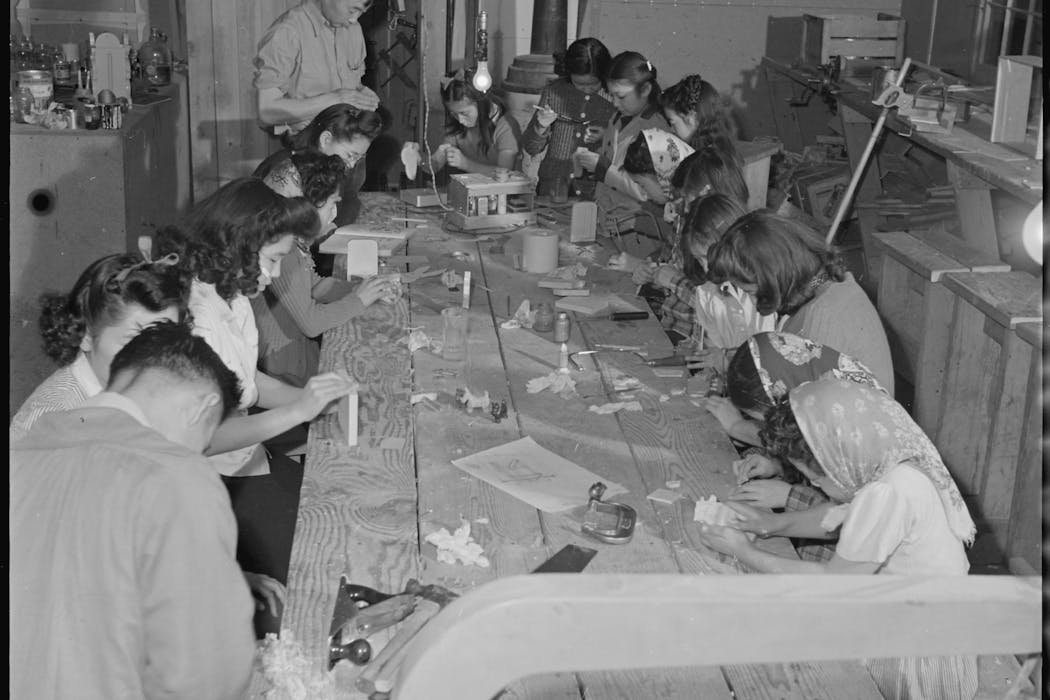
Japanese Americans incarcerated at Heart Mountain concentration camp in Wyoming took art classes at the craft shop, using what they could find. Tom Parker, War Relocation Authority, Department of the Interior, via National Archives and Records Administration

With a stroke of a presidential pen, the lives of Izumi Taniguchi, Minoru Tajii, Homei Iseyama and Peggy Yorita irreparably changed on Feb. 19, 1942. On that day, President Franklin D. Roosevelt issued Executive Order 9066, which set in motion their wartime incarceration along with other people of Japanese ancestry who were forcibly removed from their homes in parts of California, Oregon, Washington and Arizona.

To cope with their fear, anger and loss in the turbulent times, they would have to dig deep into their emotional reservoirs of resolve and ingenuity.
Sign up to read this article
Read news from 100's of titles, curated specifically for you.
Already a member? Sign in here
Related Stories
Top stories on inkl right now
One subscription that gives you access to news from hundreds of sites
Already a member? Sign in here
Our Picks
Fourteen days free
Download the app
One app. One membership.
100+ trusted global sources.