Get all your news in one place.
100's of premium titles.
One app.
Start reading
Medical Daily
Medical Daily
Cole Mercer

Heart Inflammation Was More Common After COVID Infection Than After Pfizer Vaccination in Four Million Young People

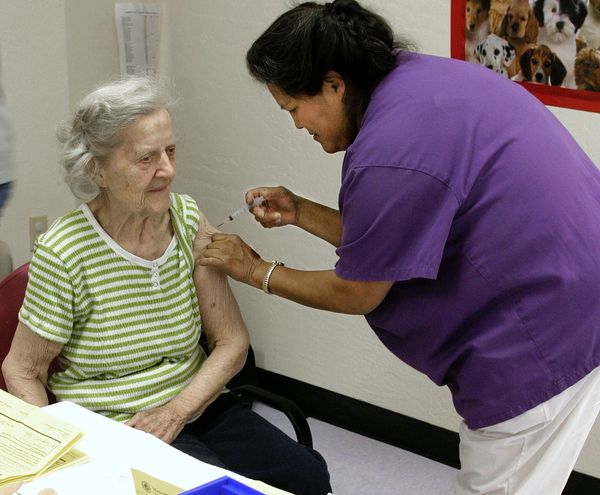
Young people who were infected with COVID-19 while unvaccinated had higher recorded rates of myocarditis, pericarditis, and death than those who received a Pfizer-BioNTech vaccine and were never infected, according to a study of nearly 4.1 million patient records published in the journal Vaccine.

The comparison at the center of that sentence is the reason the study matters. Most public arguments about vaccine-associated heart inflammation weigh vaccination against doing nothing. This analysis weighs vaccination against the realistic alternative: catching the virus without protection.

The finding lands as families make decisions about fall respiratory season shots, and it carries a specific caveat that the headline version of this story tends to drop. The study covered people aged 16 to 25. It does not speak to younger children or adolescents under 16, and parents of middle schoolers should not read it as though it does.


The Comparison That Sets This Analysis Apart

Vaccine-associated myocarditis is real. It was identified after the mRNA vaccines rolled out, occurs predominantly in young males, clusters after a second dose, and is usually mild. None of that is in dispute, and the study's authors say so plainly, describing it as a real but uncommon event.

The authors argue that assessing that risk in isolation gives families an incomplete picture because SARS-CoV-2 infection itself inflames heart tissue. Their stated aim was to place both exposures within the same health care network, using the same records and diagnostic coding, so the two risks could be compared rather than drawn from separate studies with different methods.

Researchers led by a team at SUNY Upstate Medical University conducted a retrospective, multicenter cohort study drawing on electronic health records spanning roughly five years, from late 2020 through the third quarter of 2025.


Four Groups, One Health Network, Nearly Five Years of Records

The cohort was sorted into four categories. The largest by far, about 3.6 million people, or 87.7 percent, had neither been vaccinated nor had a COVID infection recorded. A total of 248,546 people, about 6.1 percent, were unvaccinated and infected. Another 241,152, about 5.9 percent, were vaccinated and never recorded an infection. A small group of 10,677, about 0.3 percent, had hybrid immunity from infection followed by vaccination.

The pattern across those groups was consistent. Being unvaccinated and infected carried the highest risk of myocarditis, pericarditis, and death from any cause. Being vaccinated and uninfected carried the lowest risk of all three.

The authors emphasize how clinicians should present this, arguing that both absolute and relative risk belong in the conversation. Absolute risk of myocarditis was low after either exposure. The observed risk was higher after infection than after vaccination. Those two statements are compatible, and families are poorly served when either is delivered alone.

Writing for patients and families, the authors said the key message is that "myocarditis was rare after both exposures," but that the recorded events were consistently more frequent after infection than after vaccination, as CIDRAP reported.


A Retrospective Design Cannot Settle Everything

This is observational research, not a randomized trial, and its limits are structural rather than incidental. People who chose vaccination may differ from those who did not in health status, care-seeking behavior, and access, and these differences can shape outcomes independent of vaccination status.

The analysis also relies on recorded diagnoses. Mild myocarditis that never prompted a hospital visit would not appear. Infections that were never tested or never coded, which grew more common as at-home testing replaced clinical testing, would push people into the wrong group. That misclassification generally works against the infected group being fully counted.

The study examined one vaccine product, and the results should not be generalized to other formulations without separate evidence. Medical guidance has not changed because of this paper. It adds weight to an existing body of evidence rather than opening a new question.

One further caution belongs here rather than at the end. The paper has not been independently replicated, and the researchers report recorded diagnoses without adjudicating each case against imaging or cardiac testing. Studies that require confirmed myocarditis, rather than a coded diagnosis, sometimes produce different absolute rates. The direction of the comparison in this analysis is consistent with earlier research, but the precise magnitude should be treated as provisional until other groups reproduce it in different populations.


The Fall Decision Families Are Actually Facing

The practical relevance for United States households this year has less to do with the science than with access. As MedicalDaily has reported on the federal advisory gap, the process that normally sets population-level recommendations and triggers insurance coverage requirements has been disrupted, leaving families uncertain about who should be vaccinated and what it will cost.

Infectious disease specialists interviewed by CIDRAP about fall vaccine availability have said that people who want flu and COVID vaccines this fall should be able to get them and that insurance is expected to cover them. Families encountering a coverage denial can ask a pharmacist or clinician about appeals, and about local health department or federally qualified health center clinics that offer vaccines at reduced or no cost.

Risk is not uniform, and this study does not suggest it is. Young males in their late teens and early twenties carry the highest vaccine-associated myocarditis risk. People with existing cardiac conditions, immune compromise, or other chronic illnesses are at higher risk of infection. Those two groups overlap less than the online argument suggests, and the right decision for one is not automatically the right one for the other.

Chest pain, shortness of breath, palpitations, or fainting in the days after either a vaccine dose or a COVID infection warrant prompt medical evaluation. Severe chest pain or trouble breathing warrants emergency care. Nobody should start or skip a vaccine dose based on a news article, and separate research on current booster effectiveness belongs in that conversation with a clinician alongside these findings.


Key Questions Answered

What did the study compare? Recorded rates of myocarditis, pericarditis, and all-cause death among vaccinated and unvaccinated young people in the same health system, including a group that was unvaccinated and infected with SARS-CoV-2.

What ages does this apply to? People aged 16 to 25. The findings do not extend to younger children or to adolescents under 16, and should not be applied to them.

Does this mean the vaccine never causes myocarditis? No. The authors describe vaccine associated myocarditis as a real but uncommon event. The finding is that recorded rates were higher after infection than after vaccination in this population.

How large was the study? Nearly 4.1 million people, drawn from electronic health records across multiple centers over roughly five years.

What are the main limitations? It is retrospective and observational, so it cannot prove causation. Vaccinated and unvaccinated groups may differ in ways that affect outcomes, and untested or uncoded infections may be undercounted.

Has medical guidance changed because of this study? No. The findings add to existing evidence and do not alter current recommendations. Vaccination decisions should be made with a clinician.

What symptoms should prompt medical attention? Chest pain, shortness of breath, heart palpitations or fainting after a vaccine dose or a COVID infection. Severe chest pain or difficulty breathing requires emergency evaluation.

Sign up to read this article
Read news from 100's of titles, curated specifically for you.
Already a member? Sign in here
Related Stories
Top stories on inkl right now
One subscription that gives you access to news from hundreds of sites
Already a member? Sign in here
Our Picks
Fourteen days free
Download the app
One app. One membership.
100+ trusted global sources.