Get all your news in one place.
100’s of premium titles.
One app.
Start reading
Budget and the Bees
Budget and the Bees
Latrice Perez

“Healthy” Doesn’t Mean Safe: 9 Grocery Habits That Quietly Raise Your Food Poisoning Odds

food poisoning
Image source: Gemini

You wash your hands. You cook your chicken thoroughly. You think you’re safe. But the path to food poisoning often starts way before you enter the kitchen—it starts in the grocery aisle. We tend to trust that if it’s on the shelf, it’s safe. That is a dangerous assumption. The grocery store is a business, not a sterile lab, and slight lapses in temperature or handling can turn “healthy” food into a bacterial breeding ground.

We are going to look at the nine common habits that leave you vulnerable. These aren’t obvious mistakes; they are the autopilot moves we all make. Let’s reprogram your shopping trip to protect your family.
1. The Pre-Cut Fruit Trap

That plastic container of sliced melon looks convenient and healthy. It’s also a magnet for bacteria. Once the protective rind is broken, fruit becomes a petri dish, especially if it hasn’t been kept perfectly chilled. Salmonella thrives on the moist, sugary surface of cut melon. Unless you see them cut it fresh in front of you, buy the whole fruit and slice it yourself. It’s cheaper and safer.

2. “Sell By” vs. “Use By” Confusion

These dates are not suggestions, but they are also not created equal. Stores often mark down meat that is expiring that day. It’s a great deal, but only if you cook it immediately. Buying “manager’s special” meat and throwing it in your fridge for three days is a recipe for disaster. If you buy near the date, freeze it instantly or cook it that night. Bacteria don’t care about your meal plan.

3. The Reusable Bag Petri Dish

We all love being eco-friendly, but when was the last time you washed your canvas grocery bags? Be honest. Meat juices leak. Produce has dirt. If you toss fresh apples into a bag that previously held a leaking package of raw chicken, you have cross-contaminated your snack. Wash your bags regularly and dedicate specific bags for meat only.

4. Grab-and-Go Salad Bars

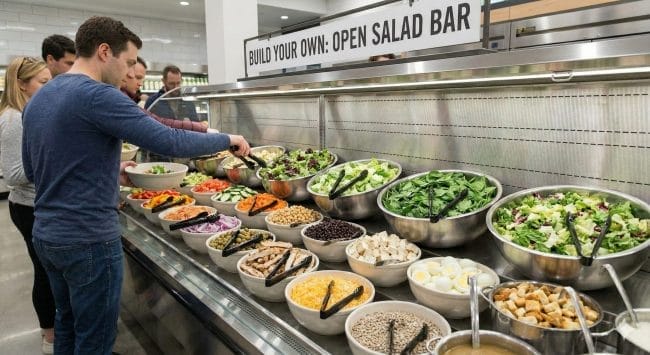
Salad bars are ground zero for contamination. Sneeze guards only do so much. You are relying on every other customer to use the tongs correctly and not touch the food. Plus, maintaining the correct temperature in those open containers is a nightmare for staff. Unless you are the first one there when it opens, skip the bar and buy the bagged salad.

5. Leaving Perishables for Last? Probably Not.

Most of us wander the store aimlessly. We pick up milk, then browse the cereal aisle, then look at candles. By the time you check out, that milk has been in your warm cart for 45 minutes. Then it sits in your hot car. Bacteria count doubles every 20 minutes at room temperature. Make a route: dry goods first, frozen and dairy absolutely last.

6. Ignoring Dented Cans

It’s tempting to grab that dented can of beans from the discount bin. Don’t. A deep dent, especially on the seam, can allow bacteria to enter. Worse, it can be a sign of botulism, a rare but deadly toxin. If the can is swollen or deeply dented, it is not worth the 50 cents you save. Put it back.

7. Buying Sprouts

Raw sprouts (alfalfa, clover) are consistently linked to food poisoning outbreaks. They need warm, humid conditions to grow—exactly the conditions bacteria love. Unlike other veggies, you can’t just wash the bacteria off because it gets inside the seeds. If you’re immunocompromised, elderly, or pregnant, simply stop eating raw sprouts. It’s not worth the risk.

8. Touching the Conveyor Belt

You put your fresh celery directly on the checkout belt. The person before you put a package of leaking ground beef there. The belt is rarely sanitized between customers. That smear of invisible bacteria is now on your celery, which you might eat raw. Use the plastic bags for produce, even if you hate the waste, or wash your produce aggressively when you get home.

9. Trusting “Pre-Washed” Greens blindly

“Triple washed” spinach sounds great. And usually, it is fine. But outbreaks still happen with bagged greens. The processing plants handle massive amounts of produce, meaning one contaminated batch spreads fast. Even if it says pre-washed, a quick rinse at home is a smart extra layer of defense. It takes ten seconds.

Take Control of Your Food Safety

Safety is a habit, not a guarantee. You don’t need to be paranoid, but you do need to be aware. The food system has cracks. By tightening up your shopping habits, you close those cracks and keep your family safe. Look at your cart differently next time.

Be honest, which of these habits are you guilty of? I admit I used to trust the “pre-washed” label blindly. Tell me which one surprised you most in the comments below.

What to Read Next…

The post “Healthy” Doesn’t Mean Safe: 9 Grocery Habits That Quietly Raise Your Food Poisoning Odds appeared first on Budget and the Bees.

Sign up to read this article
Read news from 100’s of titles, curated specifically for you.
Already a member? Sign in here
Related Stories
Top stories on inkl right now
One subscription that gives you access to news from hundreds of sites
Already a member? Sign in here
Our Picks
Fourteen days free
Download the app
One app. One membership.
100+ trusted global sources.