
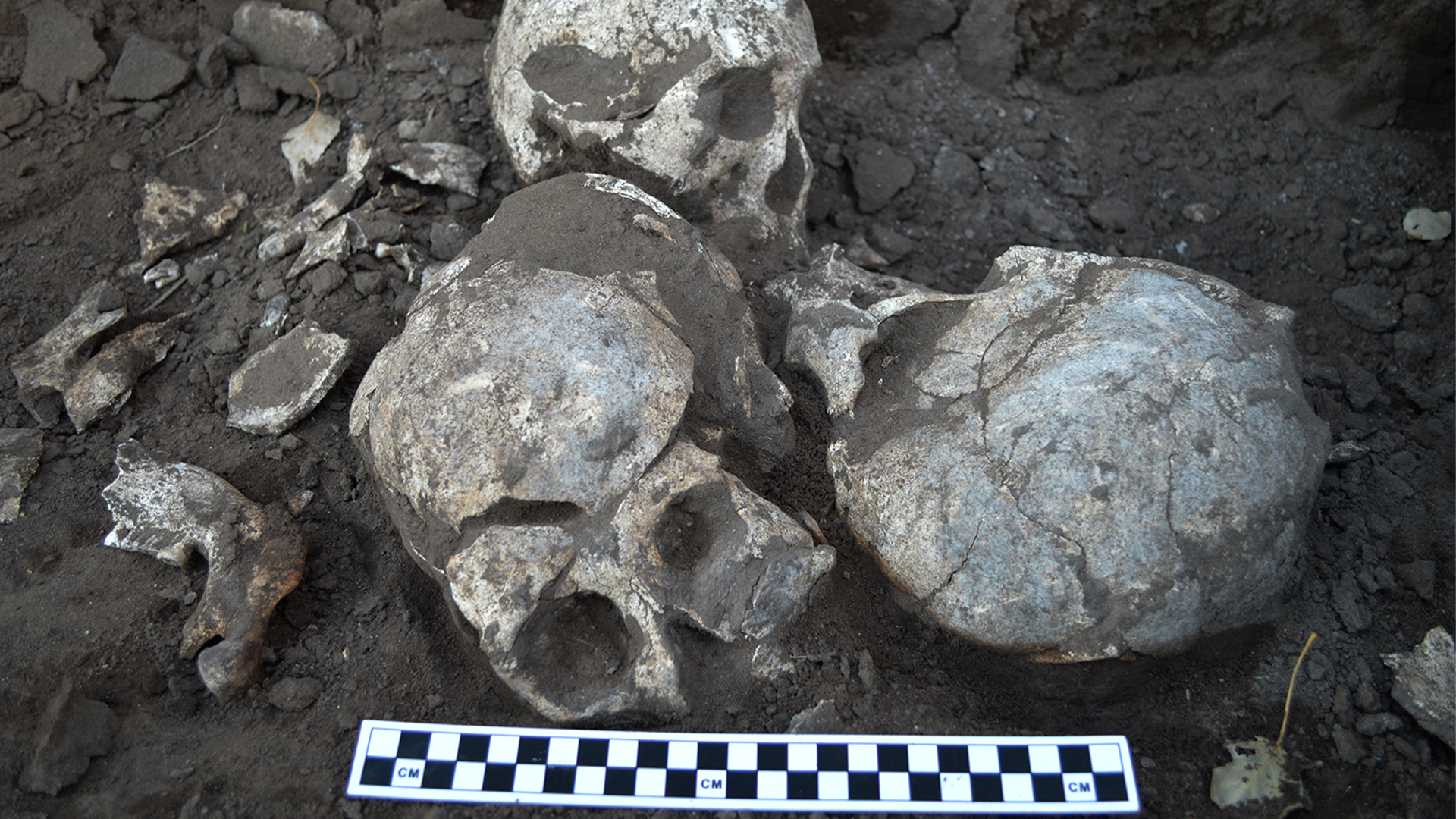
Ancient headless skeletons recovered from mass graves in China are the remains of victims who were massacred around 4,100 years ago in headhunting events, including the largest on record from Neolithic Asia, a new study finds.
Headhunting is a practice of taking the heads of enemies as trophies. Surprisingly, all of the 41 headless skeletons analyzed by the researchers belonged to women and juveniles, according to anatomical analyses. It's possible that when rivals attacked the settlement, they targeted women and children, resulting in an "interpersonal conflict with a high level of cruelty," the researchers wrote in the study. It's also possible that interlopers used a "ritual of selective decapitation" when choosing their victims, the team wrote.














