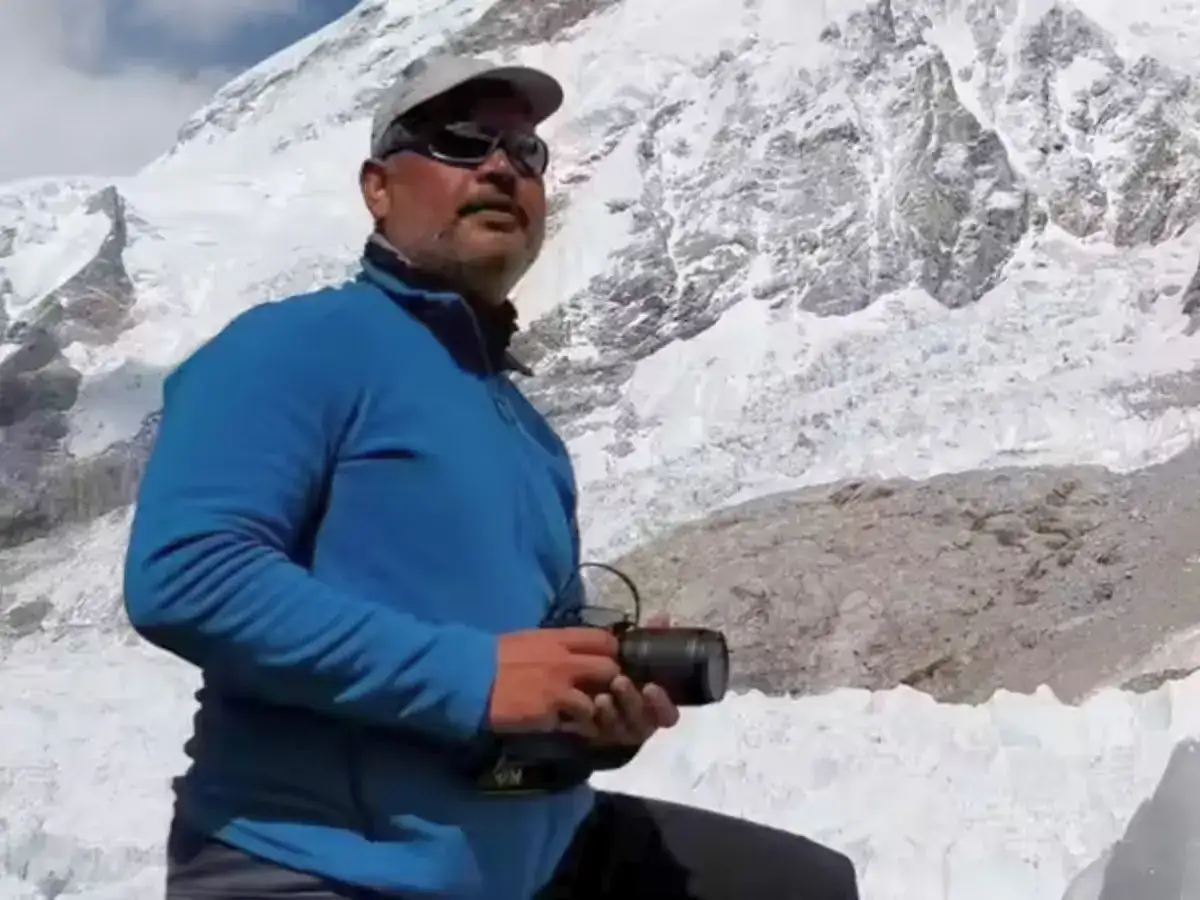
The family of Arun Kumar Tiwari, a 53-year-old Hyderabad-based tech professional who died during his descent from Mount Everest last week, has decided to leave his body on the mountain instead of attempting a recovery from the dangerous “death zone”.
Tiwari died near the Hillary Step, one of Everest’s most difficult sections, shortly after successfully reaching the summit.
According to expedition organisers, the cost and danger involved in retrieving a body from such an altitude are extremely high. Pioneer Adventure, the company handling the Indian expedition team, initially quoted around $114,000 (approximately Rs 1.1 crore) for the recovery operation before later reducing it to $94,000 (around Rs 89.7 lakh).
The company’s owner, Nivesh Karki, said body retrieval from Everest’s death zone is significantly more dangerous than the climb itself.
What happened to Arun Kumar Tiwari on Everest?
Karki said Tiwari began experiencing severe exhaustion soon after leaving Camp 4 for the final summit push. Despite repeated advice from his Sherpa guide to descend, he chose to continue climbing.
“He said there was no way he was abandoning the dream when the peak was so clearly visible and within reach,” Karki said.
Tiwari eventually reached the summit but reportedly began vomiting blood while descending near the Hillary Step, located deep inside Everest’s death zone — the region above 8,000 metres where oxygen levels are critically low and the human body rapidly deteriorates.
Sherpas attempted to revive him using supplemental oxygen, but he died at the spot.
Why is recovering bodies from Everest so difficult?
Recovery operations above 8,000 metres are considered among the most dangerous tasks on Everest.
The Hillary Step is located around 8,790 metres above sea level, just below Everest’s summit at 8,848.86 metres. Helicopters cannot operate at that altitude, meaning Sherpas would have to manually move the body across steep ridges and exposed terrain for nearly 2,400 metres before reaching a point where air evacuation becomes possible.
Karki said heavy snowfall in the days after the incident made recovery even more difficult.
“Sending Sherpas there would put more lives at risk,” he said.
Why did the family decide to leave his body on Everest?
Family members said the decision was not based only on financial reasons.
Sudhir Upadhyay, Tiwari’s brother-in-law, said the family also considered Tiwari’s spiritual connection with the Himalayas and the condition his body would be left in after such a difficult recovery process.
The family described his death in the mountains as a form of “samadhi”.
Tiwari is survived by his wife and two daughters.
He had also attempted to climb Everest in 2025 but had turned back at around 7,200 metres because of health issues.
Another Indian climber also died during descent
Tiwari was part of an Indian expedition team that also included climber Sandeep Are, who reportedly died during descent from Everest as well.
The incidents once again highlight the extreme physical risks associated with climbing the world’s highest mountain, particularly inside the “death zone,” where even experienced climbers face life-threatening conditions due to low oxygen levels and unpredictable weather.
(With TOI inputs)