
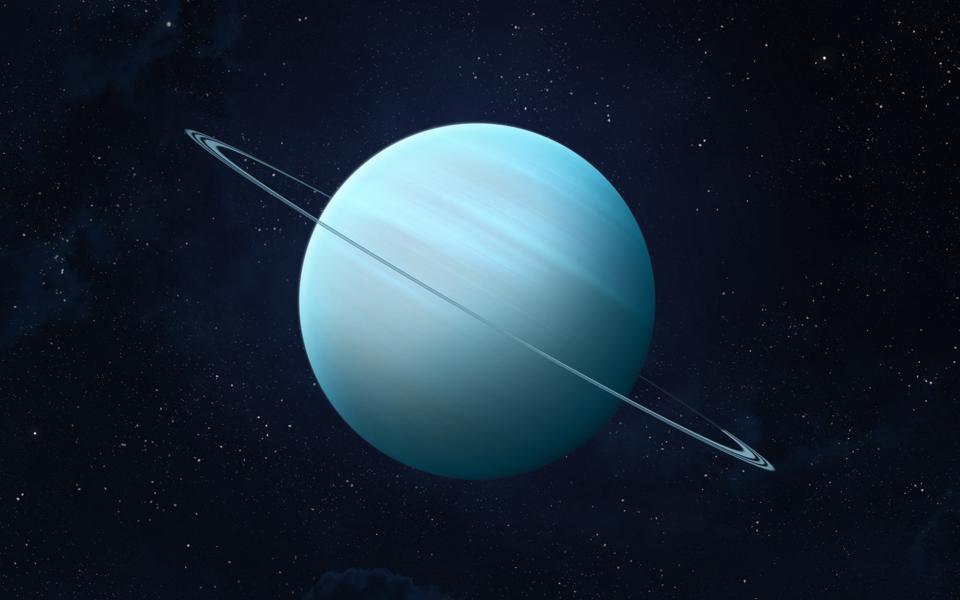
Have you ever seen Uranus? The seventh planet from the Sun will this week become a reasonably easy object to spot for anyone with any pair of binoculars or a small telescope.
Not that the third-largest planet in our Solar System is doing anything to contribute to this opportunity. On its slow 84 Earth-years orbit of the Sun it’s in the constellation of Aries and will be for years.
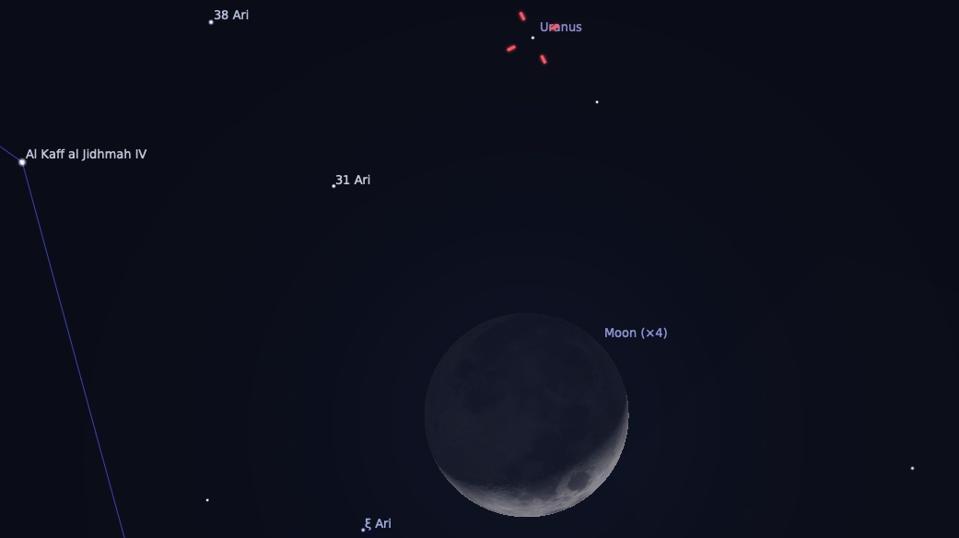
It’s our Moon that’s creating this chance, moving just a degree south of Uranus this week, thus making it relatively easy to spot if you know where—and when—to look.
Here’s how to do it:
When to look for Uranus
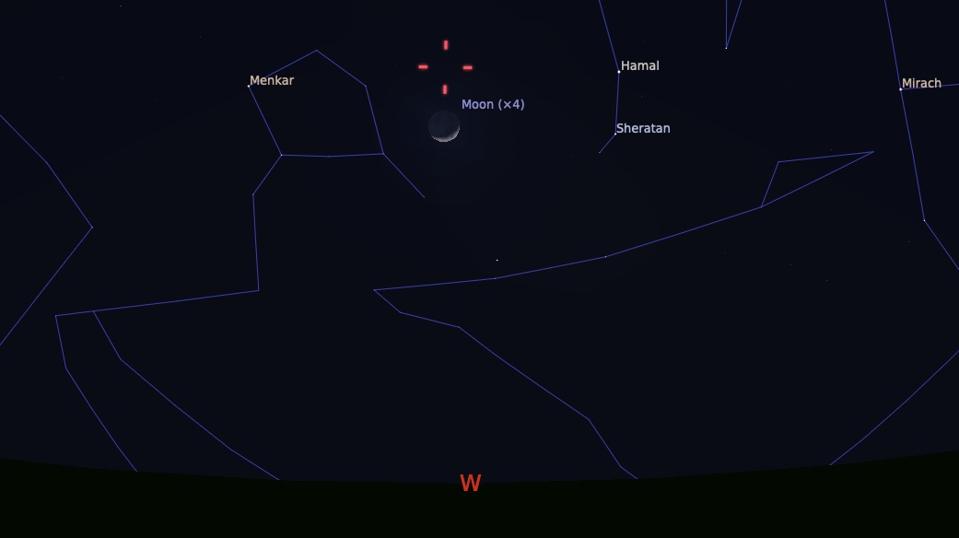
After dark on Sunday, March 6, 2022. If you look on Saturday or Monday nights Uranus will barely appear to have moved, but the Moon—your guide—will be in a different position so won’t appear not particularly close to Uranus.
Only on Sunday will Uranus appear to be about a degree north—above—the crescent Moon.
The Moon and Uranus will set about 22:30 EST so make sure you take a look long before that.
Where to look for Uranus
Just above the crescent Moon, which will be about 20% illuminated. It will be shining in the western sky right after dark, which is the best time to look for it.
How to look for Uranus
What does Uranus look like? It’ a blue-green color, which is down to the methane in its atmosphere of largely hydrogen and helium. It shines at a visual magnitude of 5.8.
However, to see it you will very likely need to use a pair of binoculars or a small telescope. With binoculars, place the crescent Moon in your field of view and range them upwards about the width of the Moon again.
That blue-ish light you see from Uranus reflected off the planet almost three hours earlier to cross about two billion miles/three billion kilometers of the Solar System. That’s about 20 times the Sun-Earth distance.
Has NASA ever visited Uranus?
Yes, but only once—a very short flyby on January 24, 1986 by NASA’s Voyager 2 probe. It gave us our only close-up images of Uranus and discovered 10 new moons.
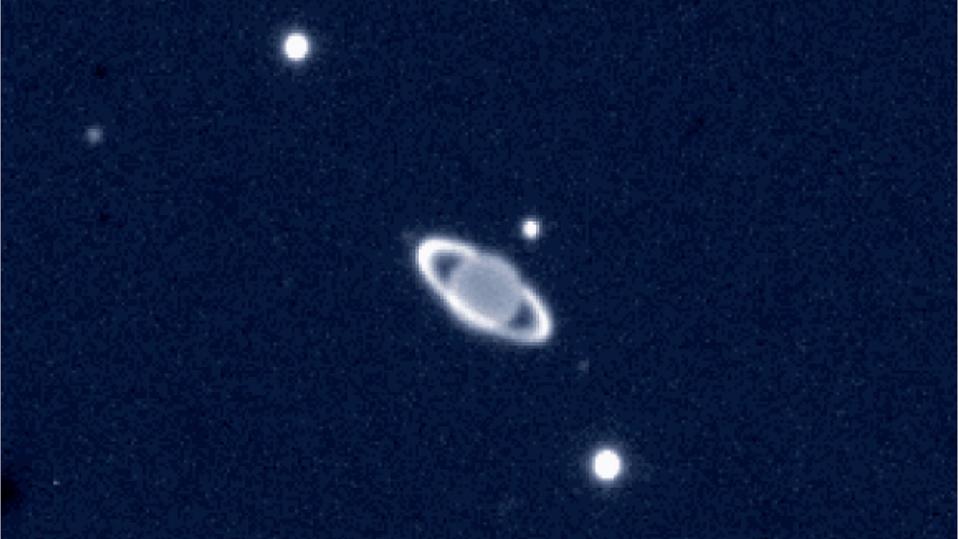
The only other images we have are from the Hubble Space Telescope and ground-based telescopes like Keck.
When are we going back to Uranus?
A Decadal Survey is due in the next few months and it’s possible that some kind of mission to Uranus will be recommended. There’s a proposal out there to send an orbiter to Uranus, which would launch between 2030 and 2034 and arrive at Uranus around 2050. Time is of the essence if NASA wants to send a mission because a gravity-assist from Jupiter is required, something that’s only possible every 12 years or so.
The James Webb Space Telescope and Uranus
Uranus has 27 moons, but four of them demand a closer look because they may host underground oceans. Cue a “Moons of Uranus” project that will use 21 hours of the new James Webb Space Telescope’s time to study Ariel, Umbriel, Titania and Oberon and look for traces of ammonia, organic molecules, carbon dioxide ice and water.
Wishing you clear skies and wide eyes.