Imagine hurtling through the void at 50 kilometres per second, a visitor from another star system that defies every rule astronomers thought they knew. First detected on July 1, 2025 by the ATLAS telescope in Chile, this roughly 20-40km-wide beast — comparable to Manhattan in scale — barrelled in on a hyperbolic trajectory from an unknown stellar neighbourhood, reaching perihelion on Nov. 30 at 1.4 AU from the sun. That's 3I/ATLAS for you — a Manhattan-sized enigma that's got Harvard's Avi Loeb convinced it might be more spaceship than comet, with its latest baffling clues keeping the world guessing.
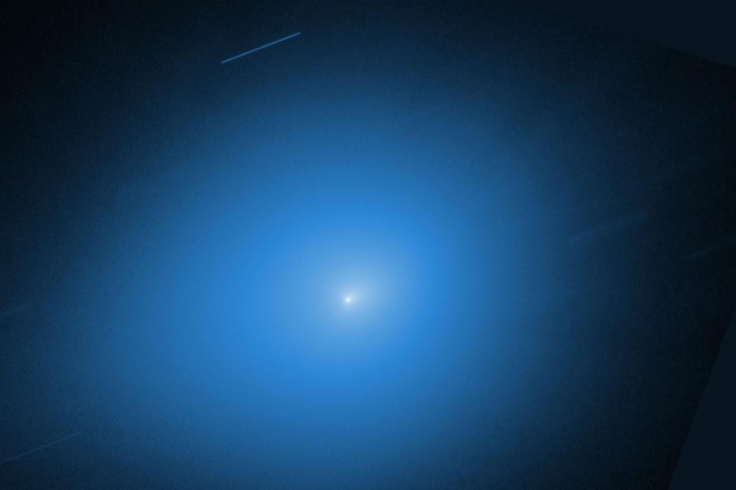
3I/ATLAS's Puzzling Metallic Secrets
Spotted back in July by the ATLAS survey in Chile, this interstellar interloper is the third of its kind to grace our solar system, following the cigar-like ʻOumuamua in 2017 and comet 2I/Borisov. Unlike ʻOumuamua's eerie lack of coma or Borisov's more predictable gas cloud, 3I/ATLAS stayed stubbornly inert until late, then erupted with a sun-facing 'anti-tail' and wild brightness fluctuations up to 10 magnitudes — far punchier than typical comets.
Unlike those, 3I/ATLAS has thrown up quirks from the start: a hyperbolic path screaming 'not from around here', extreme brightness swings, and now chemical oddities that have Loeb scratching his head. Most experts chalk it up to a comet born around some distant sun, but the Harvard astrophysicist sees red flags that scream artificial.
In his latest blog post, Loeb zeroes in on something downright weird in the object's coma — the gassy envelope around its core. 'At the distances at which comets are observed, the temperature is far too low to vaporise silicate, sulfide, and metallic grains that contain nickel and iron atoms,' he writes. 'Therefore, the presence of nickel and iron atoms in cometary coma is extremely puzzling... 3I/ATLAS, which is a C2-depleted comet, exhibits extreme properties in the early phases of its activity with regard to the production rates and abundance ratios of nickel and iron'.
These iron and nickel traces — hallmarks of industrial metals on Earth — defy comet norms, where such heavy elements stay locked in refractory grains unless hit by intense heat far beyond solar distances; spectra from Gemini and VLT confirm ratios 10-100 times higher than solar system comets, hinting at exotic formation or artificial processing. These metals shouldn't be floating free in the cold vacuum, not without some serious heat or other unexplained process.
For Loeb, who has long argued that 3I/ATLAS could be an alien probe — perhaps even a reconnaissance craft shielding itself with sunward jets — this is fuel for the fire. The object appears to be emitting industrial-grade materials that no ordinary iceball should contain, raising questions about its composition and origins. If natural, it suggests bizarre chemistry from another stellar nursery; if technological, it could be remnants of machinery or deliberate exhaust..
Yet Loeb isn't dogmatic. Just days before his metallic bombshell, he told NewsNation: 'At this point, given all the data that we have, I would agree that it's most likely natural, but there are still a lot of things we don't understand about it'. This nuance matters amid rising public fascination — social media buzz has spiked 300% since perihelion, with polls showing 25% of respondents now believing it's alien tech, pressuring agencies like NASA and ESA to address 'what if' scenarios for future visitors.
This balanced take underscores the human stakes: as 3I/ATLAS slingshots past, we're forced to confront our ignorance about the cosmos. What if more come? Governments and space agencies watch closely, pondering protocols for friend, foe, or freak of nature.

Radio Whispers from 3I/ATLAS Fail to Deliver
Adding to the intrigue were recent radio hunts. Loeb dissected data from the Allen Telescope Array, which scanned 3I/ATLAS for 7.25 hours on July 2, 2025 across 1–9 GHz frequencies. The haul? Nearly 74 million narrowband hits. After scrubbing radio frequency interference, 2 million survived, then sky localisation whittled them to 211. 'The vast majority of them did not coincide with 3I/ATLAS in the sky,' Loeb noted. 'The remaining 211 hits were visually inspected in the time-frequency domain and the observers did not find any signals worthy of additional follow-up'.
SETI's follow-up with the Green Bank Telescope echoed this: no non-natural emissions, just faint continuum noise consistent with dust. No ET phone home, then — just earthly noise. It dials back the drama but doesn't kill it; Loeb's point is we're dealing with unknowns that demand scrutiny. Mainstream scientists nod along, citing outgassing and spin as culprits for the jets and tails seen in Hubble snaps. NASA's take? A hyperactive comet, nothing more.
Still, the debate rages online, with UFO watchers dubbing it a potential hostile craft. Loeb's co-authored paper urged leaders to prep for everything from peaceful flyby to threat. Next up: its Jupiter flyby in March 2026 at 0.4 AU, where gravitational tweaks could reveal hidden mass or deflection tech, with James Webb poised for infrared peeks. As 3I/ATLAS nears Jupiter in March 2026, expect fresh data from Keck and the Very Large Telescope to probe those jets' speeds — over 1 km/s if engineered, he predicts.
For humanity, squeezed between everyday woes and cosmic vastness, 3I/ATLAS is a reminder: the stars hold secrets that could rewrite our story. Whether it sparks investment in interstellar defences or just better telescopes, one thing's clear — it's united scientists and stargazers in awe. Is it a lifeless rock, or proof we're not alone? Either way, it's made us look up — and wonder.