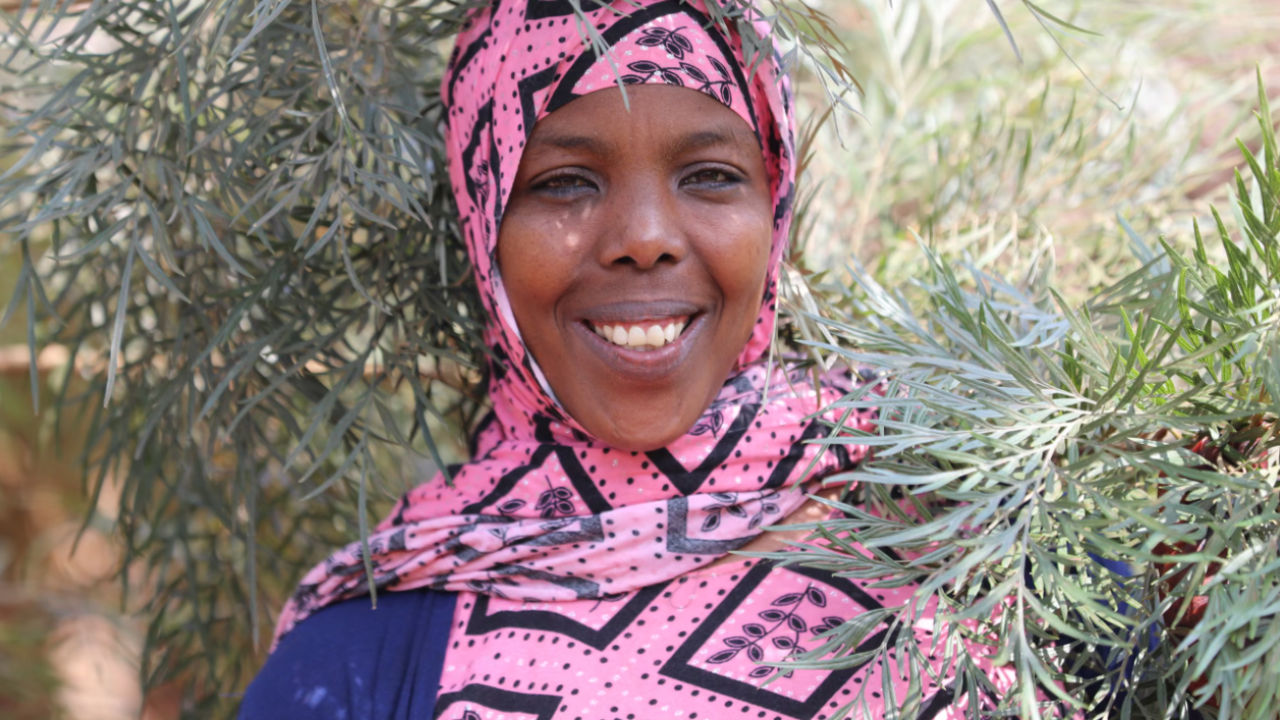
Halima Kedir, 35, from the Berbere district of Ethiopia's Oromia region, was mocked and discouraged by her neighbours when she first began planting trees. Years later, her garden is lush with banana, olive and grevillea trees, and the same neighbours who doubted her are now following her lead. Her story sits within the UN's wider Green Legacy Initiative, a national tree-planting drive aiming for 50 billion trees by 2030. Here's how one woman's persistence helped shift attitudes in her community, and where Ethiopia's broader reforestation effort stands today. Nationally, the campaign has coincided with Ethiopia's deforestation rate falling by nearly two-thirds over the past decade.
Get breaking news anytime, anywhere. Download the TOI app now!

How Halima Kedir's tree planting was first met with mockery in Berbere
When Kedir first began planting trees, she told The Guardian her neighbours discouraged her outright. "They thought I was striving for nothing, but with time, many are realising that trees can be part of the solution to our problems as a way to fight climate change and food insecurity," she said. Kedir has lost count of how many trees she has planted, becoming an accidental environmentalist in the process. Despite severe water shortages in her area, she has had to walk for about an hour to fetch water to keep her seedlings alive.
Kedir's persistence changed her neighbours' minds
As Kedir's trees took root and her surroundings grew greener, attitudes in the community began to shift. She has said that everything has changed since those early days, with the very people who once tried to dissuade her now said to be envious of her effort and commitment. Her neighbour, Fate Abdulahi, was later drawn into tree planting after seeing what Kedir had achieved, saying she proved the doubters wrong and has become a role model, someone willing to find local solutions to community issues. Kedir's bond with her trees has also been described in maternal terms, rooted in the Oromo tradition of guddifachaa, the practice of adopting a child into the community; a connection captured in her own words, that just as children are adopted in that tradition, her trees are seen much the same way, like her own.
Ethiopia's Green Legacy Initiative and the scale of national tree planting
Kedir's efforts form part of a much larger national picture. According to The Guardian, between 2000 and 2025, Ethiopia lost 560,000 hectares of tree cover to agricultural expansion, commercial logging and charcoal use. In response, the government launched the Green Legacy Initiative in 2019, and the deforestation rate has since slowed, falling from 92,000 hectares annually in 2013 to 27,703 hectares in 2023, while forest cover rose from 15.5% to 23.6% over the same period. The government says it has planted 48 billion trees in seven years, including a reported 353 million seedlings in a single day, with a target of 50 billion by 2030.
Questions over seedling survival rates and what comes next
Long-term success depends on how many planted trees actually survive, and reliable data remains scarce. A government-backed committee reported average seedling survival rates of 83.4% in 2019 and 79% in 2020, though these figures have drawn scepticism; separate research found nearly half of reforestation trees in parts of Asia failed to survive beyond five years, and 10 of 15 Ethiopian tree-planting schemes examined by researchers fell short of 50% success. Yitebitu Moges of the UN Environment Programme in Ethiopia told The Guardian the highlands have seen the greatest success and that a systematic survival study is now under way, adding that even partial survival still delivers gains in moisture retention, soil health and carbon sequestration. Ethiopia is set to host the Cop32 UN climate summit in Addis Ababa in November 2027.