
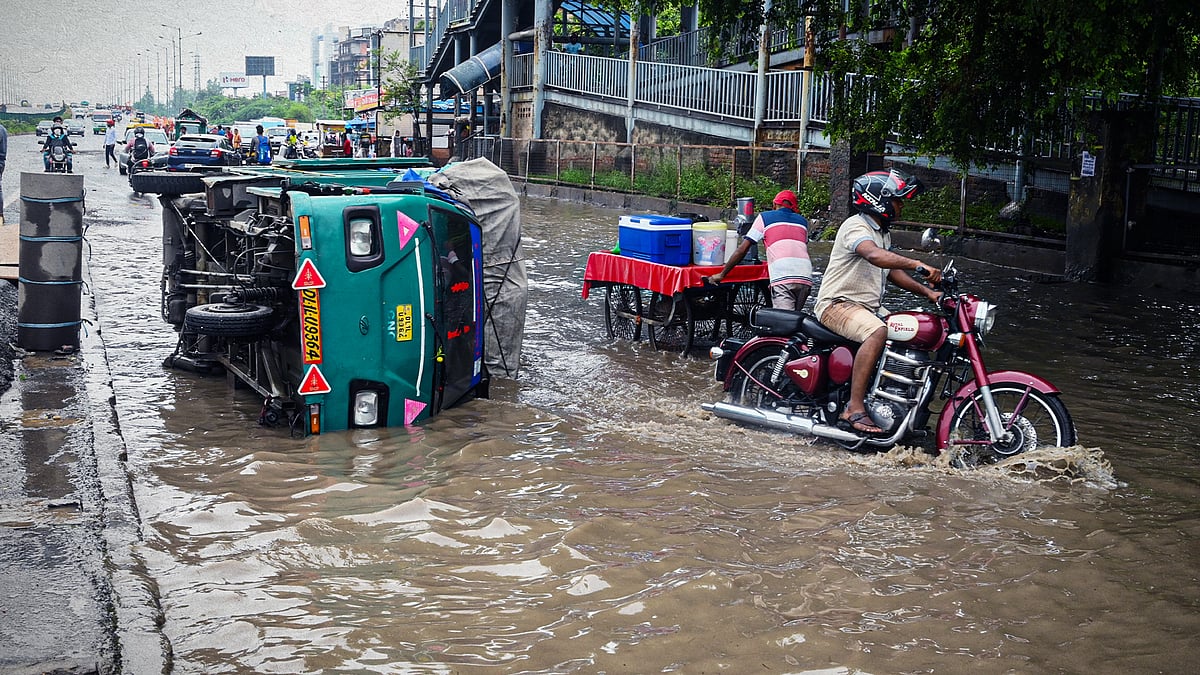
After heavy rain on Monday, Gurugram – Delhi’s neighbour and India’s “millennium city” – was thrown into chaos. Waterlogged roads caused traffic jams that lasted hours, and vehicles, including cars, buses, autos and two-wheelers, were submerged. Social media filled with images of flooded homes, school buses submerged in water and children stranded on roads. Even TV channels, usually busy with noisy debates, woke up for a moment, citing public interest.
Gurugram’s plight isn’t limited to its waterlogging. It also ranks among the world’s worst cities for air pollution. In 2018, it was ranked as the most polluted city in an international survey and during the winters the AQI index would often go above 500. When I was reporting from Gurugram before the 2019 assembly elections, I found that several residential societies didn’t have any electricity connection and ran on generators, adding to air pollution. The ground water quality too fares no better – Gurugram is one of Haryana’s 16 districts with the worst water quality.