
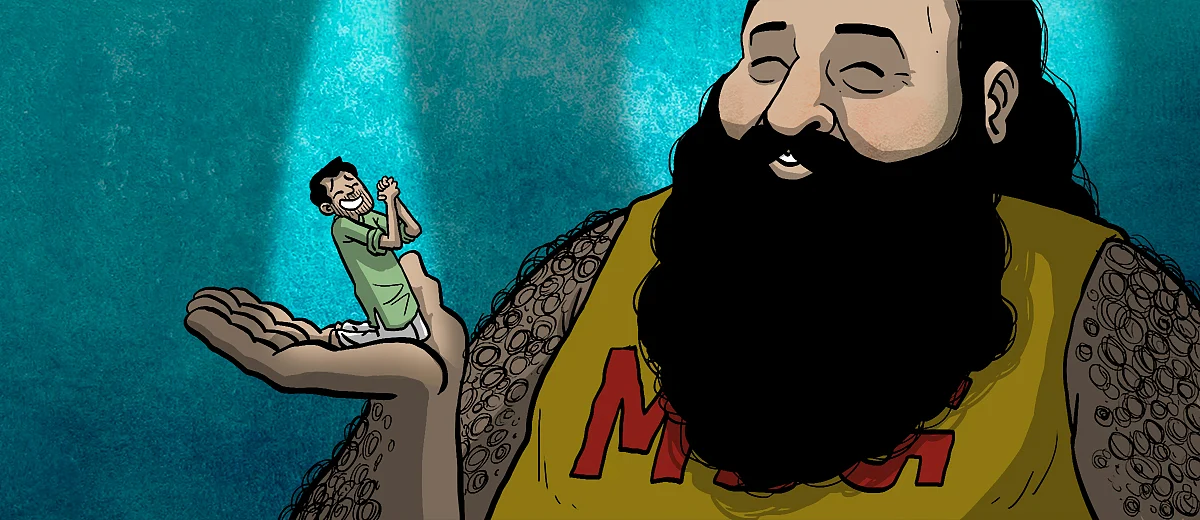
Today saw an another episode in what has been the biggest story in India for the last week. After declaring Gurmeet Ram Rahim Singh Insan, leader of the social and religious Dera Sacha Sauda sect, guilty of two counts of rape on August 25, a court in Panchkula in Haryana sentenced him to 20 years in prison. The days since the judgment was passed have seen Haryana racked by large-scale collective violence carried out by the followers of the sect, resulting in 38 dead, nearly 300 injured, and massive damage to property. On the day of the judgment, Ram Rahim Singh was brought to court in a 200-car cavalcade and taken to jail by chopper with state officials serenading him. Today, the guru was reduced to tears, sobbing in court on receiving news of his sentence.
The discussions in the Indian and international media and in public media spaces have proceeded along a few distinct lines. On social media, journalists Sankarshan Thakur and Barkha Dutt rightly drew attention to the dismaying fact that there had been no similar mass outrage over the deaths of scores of children in Uttar Pradesh in Gorakhpur recently. The heroism of the rape survivors (and of other alleged victims of the powerful guru) and their lawyers who fought a hard and lonely battle for 15 years has been lauded. People have also paid tribute to the courage of journalist Ram Chander Chhatrapati who had broken the story about the rapes in 2002, only to be murdered shortly after. Accustomed to cases in which wealthy and powerful defendants walk free by subverting Indian institutions or intimidating witnesses, the dispensation of justice, even if slow, has been welcomed by the Indian public.












