Get all your news in one place.
100’s of premium titles.
One app.
Start reading
Budget and the Bees
Budget and the Bees
Latrice Perez

Gun Owners Alert: 6 States May End Concealed Carry Reciprocity This Month

Concealed Carry Reciprocity
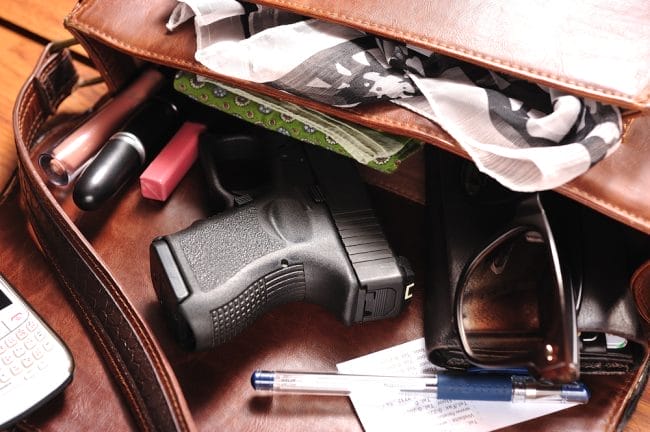
Image source: shutterstock.com

For law-abiding gun owners, a state line is often more than just a geographic marker—it is a legal landmine. You might have a permit that is recognized in thirty states today, but a single legislative shift could turn your commute into a felony tomorrow. Across the country, the patchwork of reciprocity agreements is changing as specific states review their safety statutes and training requirements.

This isn’t just bureaucratic shuffling; it is a fundamental shift in how your Second Amendment rights travel with you. Here are 6 states where reciprocity rules are evolving and why you need to check your route immediately.

1. Washington’s Background Standards

Washington maintains a strict list of recognized out-of-state permits. Under state law, the Attorney General only honors licenses from states that do not issue to individuals under 21 and require mandatory fingerprint-based background checks of criminal and mental health history.

Because Washington periodically audits other states’ compliance with these specific background standards, reciprocity can change without a major headline. If your home state modifies its background check process, your permit could lose its status in the Pacific Northwest. Always check the official DOJ list before you cross the border.

2. Virginia’s Reciprocity Review (SB115)

Virginia is currently a focal point for reciprocity changes. A new legislative proposal, Senate Bill 115 (2026), aims to overhaul how the state recognizes out-of-state permits. If enacted, the bill would require the Superintendent of State Police, in consultation with the Attorney General, to conduct a comprehensive review of all existing agreements by July 1, 2026.

The goal is to ensure that other states’ qualifications match Virginia’s stringent standards. If a state’s laws are deemed inadequate, reciprocity could be revoked effective July 1, 2027. This means your right to carry in the Old Dominion is currently under a microscope.

3. New Mexico’s “Substantially Similar” Rule

New Mexico recognizes permits only from states with licensing standards that are “substantially similar” to or more restrictive than its own. This includes a firearms safety program that covers safe handling, marksmanship, and the legal use of deadly force.

The Department of Public Safety has the authority to grant or deny reciprocity based on whether another state’s system matches these requirements. If your state’s training requirements are downgraded or shifted, New Mexico may drop the agreement. It is one of the most protective states regarding its borders and out-of-state firearms.

4. Pennsylvania’s Residency Restriction

Pennsylvania has a specific legal trap for those carrying out-of-state licenses. While the Commonwealth grants reciprocity to several states, it generally only honors those permits for residents of the issuing state who are 21 or older.

If you are a resident of one state but carry a non-resident permit from a state like Arizona or Utah, Pennsylvania will not recognize it. This creates a massive gap for travelers heading through the Northeast corridor. Always confirm that your residency matches your permit type before carrying in PA.

5. Nevada’s Frequent List Updates

Nevada is known for its detailed training and qualification rules, including a live-fire requirement. The state maintains a formal list of recognized out-of-state permits that it updates based on changes in other states’ testing and background check laws.

In recent years, states like Oklahoma have been added while others, like Michigan, have been removed. Nevada is strict about these technicalities. If you carry a permit from a state with changing testing formats, verify that the agreement hasn’t been quietly suspended.

6. Delaware’s “Similar Protection” Standard

Delaware honors permits from states that afford a “reasonably similar degree of protection” as its own licensure. Delaware’s own process is rigorous, requiring live-fire exercises with at least 100 rounds of ammunition.

As more states adopt “Constitutional Carry” laws, Delaware leans on this “similar protection” clause to decide which permits to honor. If your home state does not require a permit or has significantly lower training hurdles, don’t assume your license is valid in Delaware.

Know Your Map Before You Move

The legal landscape for gun owners is volatile. These 6 states represent a growing trend of rigorous oversight that can punish an uninformed traveler. Do not rely on old maps or word-of-mouth. Your freedom depends on your ability to stay ahead of these shifts. Always verify with the state’s Attorney General website before you hit the road.

Have you ever had to change your travel plans because of a sudden reciprocity change? Let us know in the comments.

What to Read Next…

The post Gun Owners Alert: 6 States May End Concealed Carry Reciprocity This Month appeared first on Budget and the Bees.

Sign up to read this article
Read news from 100’s of titles, curated specifically for you.
Already a member? Sign in here
Related Stories
Top stories on inkl right now
One subscription that gives you access to news from hundreds of sites
Already a member? Sign in here
Our Picks
Fourteen days free
Download the app
One app. One membership.
100+ trusted global sources.