
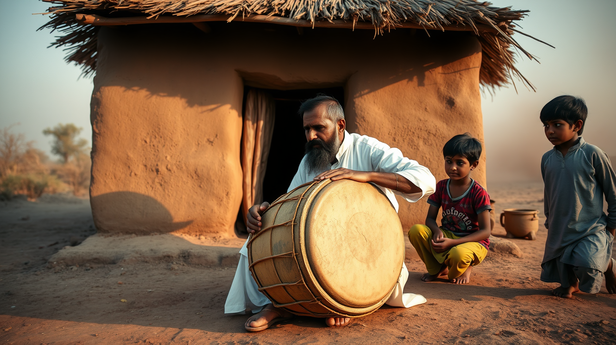
The Drum That Crossed the Ocean
The Goma drum does not sound like anything else in Gujarat. It is lower, older, more insistent, the kind of sound that gets into the sternum before the ear has caught up. In Jambur village, about 65 kilometres from Junagadh, the Sidi community brings it out for the Goma ritual: a ceremony of music, trance, and invocation that has been performed in this corner of India for roughly four hundred years. The Sidis are the descendants of Africans, Bantu-speaking peoples from the East African coast, who arrived in the subcontinent as sailors, soldiers, merchants, and enslaved people from at least the 13th century onward. Some served in the navies of the Deccan Sultanates. Some were brought by Arab and Portuguese traders. Some came as free men and rose to positions of considerable power: Malik Ambar, a Sidi who became regent of Ahmadnagar in the early 17th century, held off the Mughal empire for decades. The ones who stayed in Gujarat settled into villages, married into local communities, converted to Islam, and did the one thing that kept them coherent as a people: they kept playing.