
Get all your news in one place.
100’s of premium titles.
One app.
Start reading
Radio France Internationale
World
RFI

Growing demand for local products in Africa's €1bn baby food market

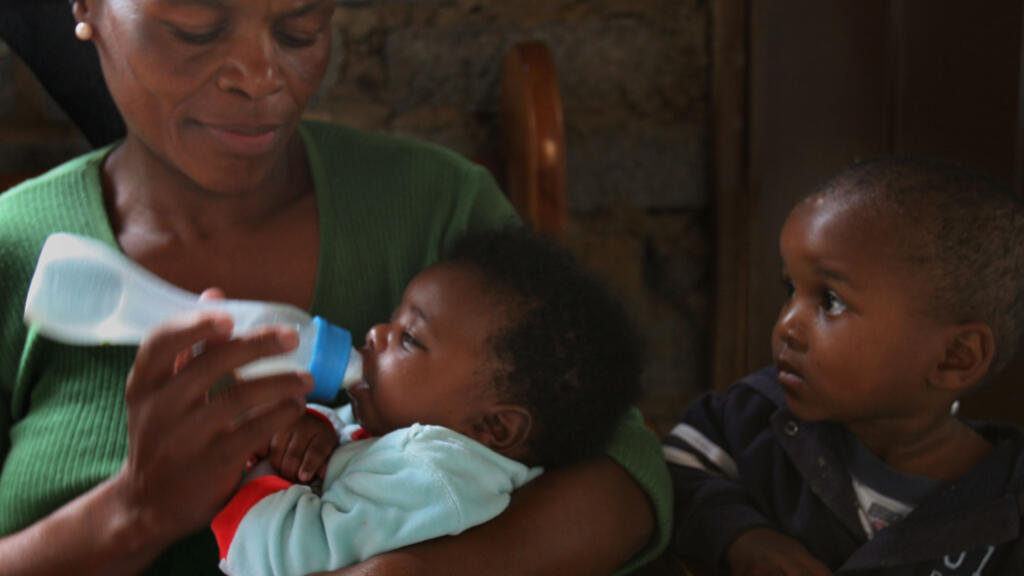
Baby food is a growing sector in Africa, expected to exceed €1 billion this year. © AP - Denis Farrell

Across Africa, a third of children under the age of five suffer from chronic malnutrition, according to Unicef, while in recent years the baby food industry has been rocked by a series of scandals, many involving major multinationals. But a growing number of local agri-food companies are moving into the baby food market.

Ivorian Marie-Ange Ehounou is a nutritionist, a state-certified early childhood educator and a mother of young children.
In 2018, she fed her baby boy Kylian with commercially available foods. She thought she was doing the right thing, and could never have imagined what was to come next.

"He suffered from infant malnutrition and nearly died," she told RFI.

It was then that she decided to train as a nutritionist, and – finding there was high demand for information, as well as quality products – started a blog on the subject, and a company producing flour.

Tackling child malnutrition in the DRC through cooking classes

Pooyou now has 10 employees and works with almost 100 Ivorian female farmers producing more than 40,000 tonnes of flour locally per year.

But despite the growth of her business, challenges remain.

"Especially when it comes to finding funding," she explains. "Because for a start-up like mine, where the market is already established – it's reliable, viable and growing rapidly – you need money right away to be able to boost the business."

Poorer children hit hardest as scurvy makes a comeback in France

A market worth €1 billion  

Last September in Cotonou, Benin, Unicef launched the First Foods Africa initiative – with one of its objectives to support a local agro-industry dedicated to high-quality baby food.

"We want to engage local companies that are seeking to improve nutrition for young children. Once we have identified this type of company, we facilitate investment," explains Mauro Brero, a Unicef nutrition specialist.

He cites the example of medium-sized companies “that do not have easy access to financing because they cannot access microcredit, as they are too large for microcredit”.

They also don't have access to "traditional financing from banks, because they cannot provide sufficient guarantees – that's what we're targeting too,” he adds.

UN food agency forced to halt aid in Ethiopia for 650,000 women and children

This sector also cannot move forward without significant political support.

"We are working with governments to improve standards and regulatory policies, because it is important to have a political environment that is favourable to local production and business and, at the same time, complies with the highest standards," explains Brero.

"Sometimes it's not easy because we face very strong lobbying from certain multinational companies, but governments can move in this direction. We have evidence that in some countries, it's working."

Purchasing power and consumer awareness are driving an increasingly strong demand, with the market, valued at €600 million in 2022, expected to exceed €1 billion this year.


This article has been adapted from the original version in French by Charlotte Cosset.

Sign up to read this article
Read news from 100’s of titles, curated specifically for you.
Already a member? Sign in here
Related Stories
Top stories on inkl right now
One subscription that gives you access to news from hundreds of sites
Already a member? Sign in here
Our Picks
Fourteen days free
Download the app
One app. One membership.
100+ trusted global sources.