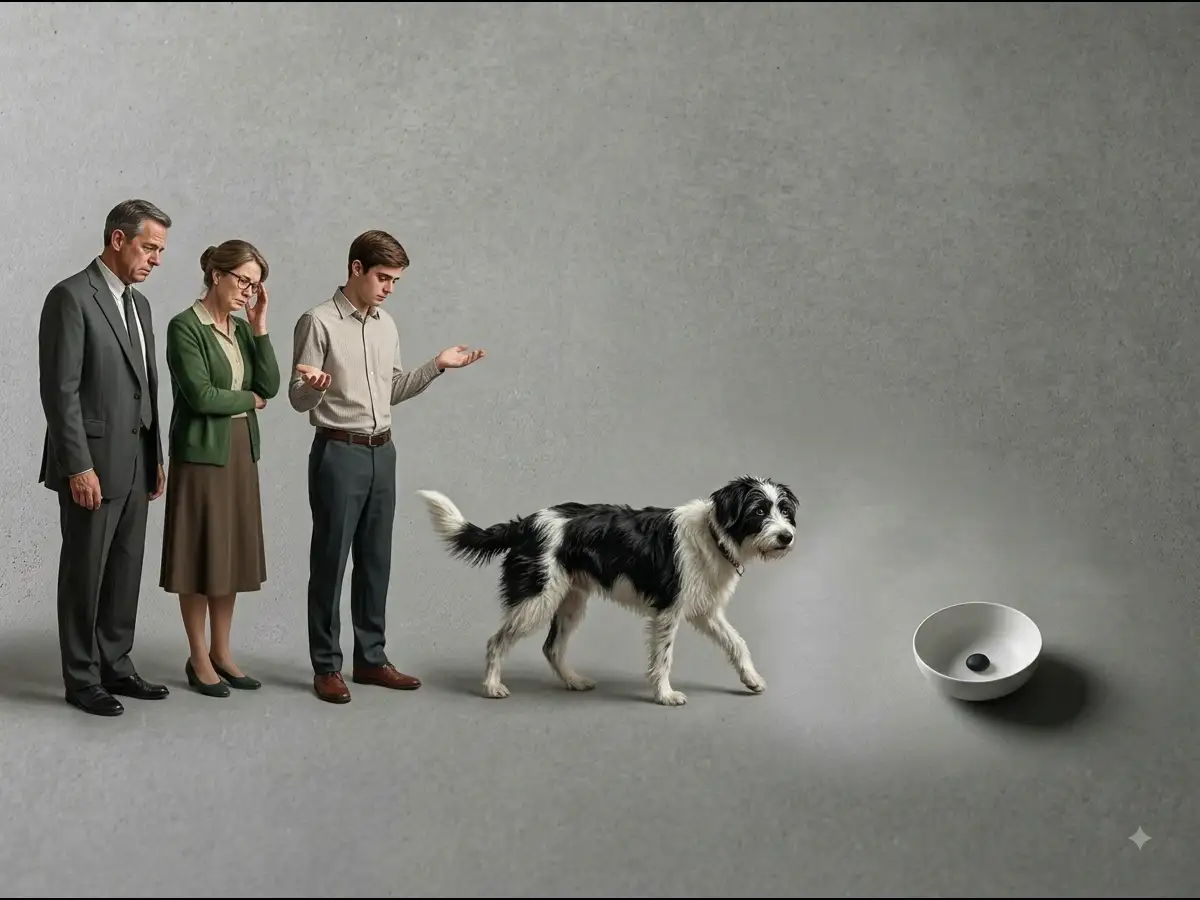
Have you ever watched a simple request travel from one person to another until nobody seems responsible for it? Sometimes, the more people an instruction passes through, the less likely it is to reach the person who can actually act on it.
Why do people pass responsibility instead of taking care of something themselves? And how quickly can a straightforward message become meaningless when everyone expects someone else to deal with it? A humorous Greek saying offers a memorable way to understand this everyday habit.
Greek proverb of the day: “I said this to my dog and my dog said it to its tail” (Εγώ το είπα στον σκύλο μου και ο σκύλος στην ουρά του)
What this proverb means
The proverb’s image is deliberately absurd. A person gives a message to a dog, and the dog supposedly passes it to its own tail. The instruction keeps moving, but there is no meaningful action at the end.
The deeper meaning is about passing responsibility to someone else instead of dealing with a task yourself. It can describe a situation where one person gives an instruction to another, who passes it on again, creating a chain of excuses and shifting responsibility. The humour comes from showing how such behaviour can eventually become completely pointless.
Significance of the proverb in real life
The saying can easily apply to family life. A parent may ask one child to complete a chore, only for that child to tell a sibling to do it. The sibling may then pass the request to someone else. By the time everyone has been asked, the original task may still be unfinished. The proverb turns this familiar frustration into a memorable joke.
The same problem appears at work. A manager assigns a task, an employee passes it to a colleague, and the colleague assumes somebody else is handling it. When nobody clearly owns the responsibility, mistakes and delays become more likely.
The proverb's simple lesson is useful: if something is your responsibility, do not keep passing it down the line. Clear ownership is often the quickest way to get things done.