Get all your news in one place.
100's of premium titles.
One app.
Start reading
The Conversation
The Conversation
Michelle Grattan, Professorial Fellow, University of Canberra

Grattan on Friday: As Labor struggles with budget backwash, One Nation surfs a wave

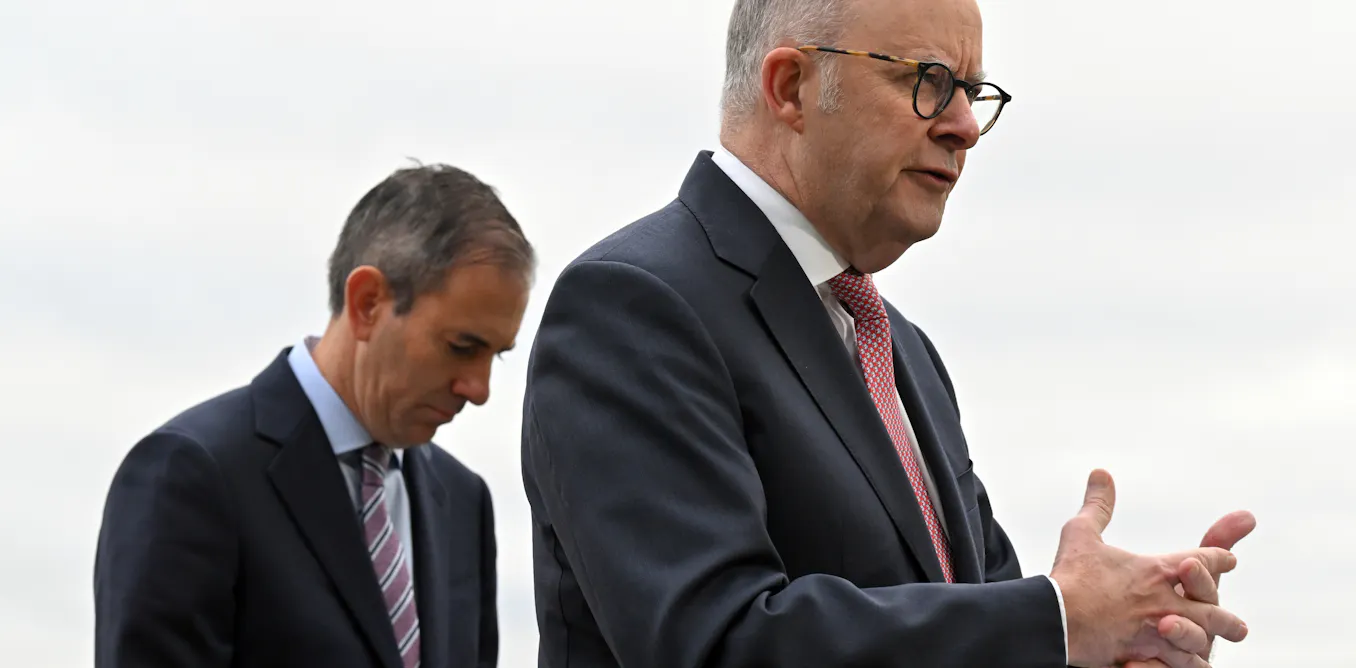
One way the Albanese government has recently tapped into social media audiences for its budgets is by inviting “influencers” to Canberra for the event. This broadens the audience and often garners favourable publicity.

This year, the prime minister gave a promo at the start of Toilet Paper Australia’s budget podcast, Talking Sh!t, “Hi I’m Anthony Albanese – make sure you’re following Toilet Paper Australia”.

But social media, of course, is a horse for hire. Post this budget the government was rattled by memes used to effect by critics. Albanese was digitally inserted into small businesses objecting to the capital gains tax hike, with lines such as “He’s having a great time with his new 47% equity,” and “We’re very pleased to welcome Albo to the @_checkonchain team as our new 47% co-owner of the business we’ve built!”

Albanese sought to play it cool. “I have seen some of the memes which are there and the memes are very flattering, I must say, some of them. So, thank you to those who’ve made me look rather good.”

Before the budget, Albanese and Treasurer Jim Chalmers knew they’d be hit by criticism for its broken promises. But they underestimated the extent and ferocity of the backlash, which has gone not only to broken promises but deep into the weeds of individual measures, notably relating to CGT and trusts.

The government pitched this budget as one about intergenerational equity, and housing. But younger people have been critical on the grounds that some, not having the money for a home deposit, use shares and the like to build wealth. Chalmers says it is only a small proportion, but that doesn’t stop them having a loud voice.

Savvy campaigning has thrust into the public eye young entrepreneurs, many of them women, to amplify the objections to the CGT changes.

On Thursday, ten female founders of businesses issued a statement deploying the gender argument in their call for a rethink.

“It is already harder for women to access capital, secure loans, raise investment, and attract senior talent. Many female founders begin with fewer resources, smaller networks, and more family responsibilities than their male counterparts. The proposed CGT changes would make an already difficult path even harder,” they said.

The statement was targeting a vulnerable spot in a government that prides itself that it delivers for women.

Much of the present debate is the old story of budgets. The “losers” – or those who fear they might become losers – can cause a government a lot of grief.

Comparisons have been made of this budget’s unpopularity with that of the Keating government’s budget in 1993, and the Abbott government’s 2014 one. These were condemned by critics not just for their measures, but for their breaches of trust because they broke promises.

In political terms, however, we should be careful of pushing the parallels too far. This budget will undermine people’s trust in Albanese but he has considerable political capital as a buffer.

And the government’s circumstances are different. In 1993, though Keating had only been prime minister since 1991, Labor had been in power for a decade. Its time was running out. In 2014, while Tony Abbott led a new government with a large majority, he was being stalked by Malcolm Turnbull.

As it fended off criticisms of the budget, the Albanese government was less than pleased with the contribution of New South Wales Premier Chris Minns, who highlighted how much working people are paying in income tax, with the top marginal rate at 47%.

“You work Monday, Tuesday, half of Wednesday for yourself and then Wednesday, Thursday and Friday for the government – that’s a tough burden for a lot of families to hit,” Minns said. “Whether it’s now or in the future, we do need to make sure we’re taking urgent action when it comes to personal income taxes, because at the moment a lot of working families are getting stung.”

Chalmers responded by saying, in essence, that Minns didn’t understand how the tax system worked. To say the federal government regards Minns as a pain in the neck is probably an understatement.

Given the government’s troubles, Opposition Leader Angus Taylor has had a much better post-budget time than he might have expected, including a reasonable reception for his plan to index income tax to inflation, which he announced in his budget reply.

His humiliation in Farrer has been somewhat submerged. But on the other hand One Nation’s win there is reverberating, and further energising the “disruptor” party.

As the Farrer byelection is being formally finalised ahead of its new House of Representatives member David Farley taking his seat, One Nation appears to be hyperactive, preparing its future moves, or playing the tease, or both.

One Nation has its tail up with post budget polls showing rises in its support.

According to analyst Kevin Bonham, aggregating federal polls, Labor leads the Coalition 52.3%–47.7%; it has an estimated 52.9%–47.1% lead against One Nation. Those are remarkable figures. One Nation, a party with two House of Representatives seats, can be seen as the alternative opposition.

Pauline Hanson wants to set up a second office, in Yeppoon (near Rockhamption) where Nationals leader Matt Canavan lives. Yeppoon is in the electorate of Capricornia, held by the Nationals’ Michelle Landry. If Landry retires at the next election, Canavan may stand for the seat.

Meanwhile Hanson has left the option open of standing for a Queensland lower house seat (Blair or Wright have been speculated), Barnaby Joyce doesn’t rule out recontesting his seat of New England rather than running for a NSW Senate seat, as he originally planned.

One Nation is working on setting up a branch structure. One party adherent says this would see One Nation “move from a dictatorship to a democratic party like the Liberals and the Nationals”.

On Thursday, Hanson released her policy on gas. It would scrap the Petroleum Resource Rent Tax, replacing it with a 10% “wellhead” royalty on all offshore gas and oil production, and have the government taking equity in new exploration and drilling projects.

Strong arguments may be mounted against the content of the policy. But politically, it could hit the spot with some voters. Remember the pre-budget push for more tax on gas exports. Both government and opposition are dismissing the Hanson policy, which she can use to argue they’re not listening to the people.

One Nation is currently a very large political balloon. State elections in Victoria (November) and NSW (March) could prick that balloon. If they don’t, the Coalition will be terrified, and Labor will start to worry.

This article was originally published on The Conversation. Read the original article.

Sign up to read this article
Read news from 100's of titles, curated specifically for you.
Already a member? Sign in here
Related Stories
Top stories on inkl right now
One subscription that gives you access to news from hundreds of sites
Already a member? Sign in here
Our Picks
Fourteen days free
Download the app
One app. One membership.
100+ trusted global sources.