
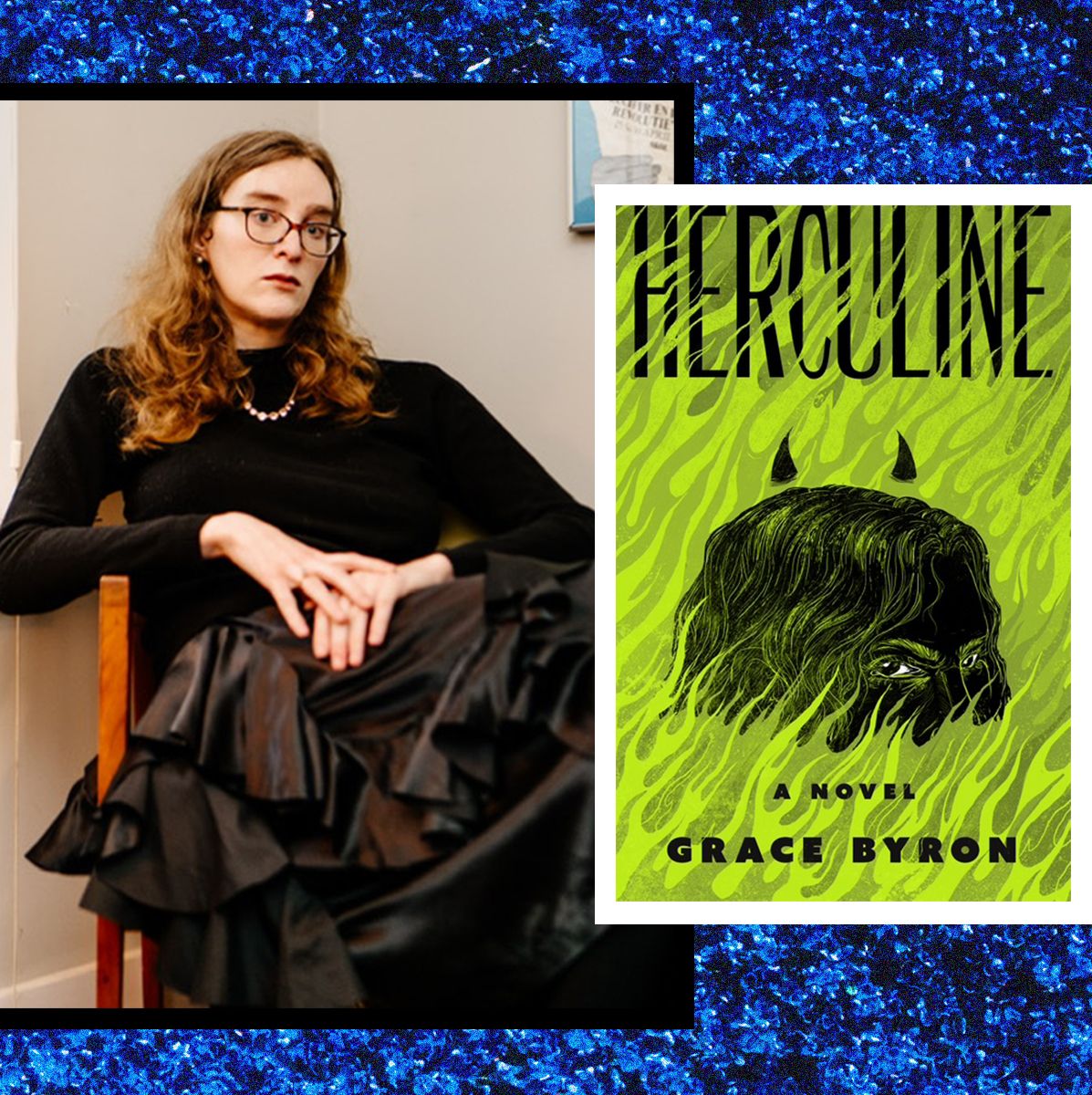
In Grace Byron’s, Herculine, the unnamed narrator is a bitingly funny critic of New York culture. She speaks of “hot freelance girls,” a specific media breed seemingly made in a lab with a “cloud of Santal 33 and secondhand Prada” to incite envy. Byron's own time in the freelance trenches—she made a name for herself in the media world penning incisive cultural criticism for outlets like The New Yorker, Vulture, and on her Substack—makes her know these kinds of girls all too well.
So reading Herculine feels like a natural extension of Byron’s work. In it, her unnamed heroine is living adrift in Brooklyn; her demons literally accompayning her as she works at a children’s clothing store while dreaming about being a writer. As she unearths her various traumas, she reconnects with her ex-girlfriend, Ash, who has started an all-trans girl commune (named Herculine) near her hometown in Indiana. The pull of both Ash and the ideal of trans community brings the narrator there, where it becomes clear that her demons aren’t the only ones at the commune.