
Get all your news in one place.
100's of premium titles.
One app.
Start reading
Bangkok Post
Bangkok Post
National

Govt reviews power deals

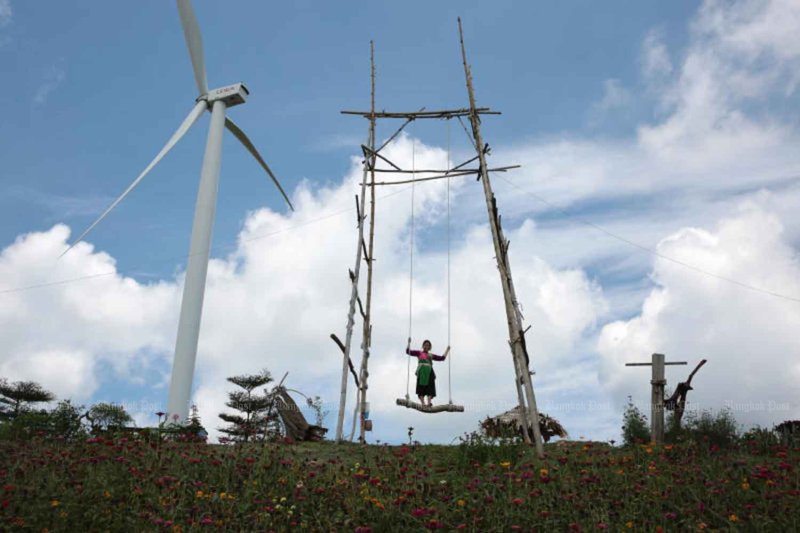
In 2018, an ethnic Lahu villager plays on a swing in Thung Kang Han (wind turbine field) in Khao Khor, Phetchabun, which was developed into a tourist attraction. The wind farm, covering 350 rai, could produce 60 megawatts of electricity. (Bangkok Post file photo)

The government is reviewing long-term power purchase agreements (PPAs) with private producers as part of efforts to lower electricity prices, Deputy Prime Minister Pakorn Nilprapunt said on Sunday.

Mr Pakorn, who chairs a committee reviewing issues arising from private power purchases, said the National Energy Policy Council (NEPC) approved negotiations on the agreements on July 17.

The decision allows state electricity authorities to begin talks with private operators immediately without seeking further cabinet approval, he said.

Mr Pakorn said the priority was to complete negotiations on the long-term contracts, arguing that agreements spanning several decades should be reviewed periodically.

"In practice, no contract should remain unchanged throughout a 50-year term," he said. "Reviews should be made periodically for long-term contracts, for example every 10 years, to reflect inflation, production costs and changing conditions."

The current average purchase price is about 2.16 baht per unit, while the cost of generating electricity using some technologies continues to decline, he said.

The contracts must therefore be reviewed to determine whether the purchase price reflects actual production costs and is fair to consumers, he added.

The committee is also examining the "availability payment", which ensures power plants are ready to operate even when they are not generating electricity and forms part of overall electricity costs.

"The negotiations are not intended to terminate existing contracts or undermine investor confidence, but rather to bring them into line with international practice," he said.

Mr Pakorn said lowering electricity prices required a comprehensive review of the entire power system, rather than a focus solely on purchase contracts.

The power development plan (PDP) must be based on realistic scientific data, not projections that overestimate the risk of future power shortages, he said.

The government needs a clearer assessment of available energy sources, including natural gas, wind, solar power and other alternatives, to support long-term planning.

It must also prepare for rising electricity demand from data centres, reduce transmission costs and monitor the development of small modular reactors (SMRs) -- nuclear power units with a capacity of up to 300 megawatts, roughly one-third that of traditional reactors.

Mr Pakorn warned that Thailand's long-term competitiveness could suffer if neighbouring countries benefit from lower labour costs and new energy resources while the kingdom relies heavily on imported energy and faces high electricity prices.

"The government must ensure we have sufficient power and at reasonable prices. People in remote areas must also have access to electricity without unnecessary regulations," he said.

The committee was appointed by Prime Minister Anutin Charnvirakul to study the electricity pricing structure and ensure fairness for consumers.

Rising costs arising from power purchase agreements with private producers have become a major concern among the public and private sectors.

They include the availability payment and the energy payment, which cover electricity generated and supplied to the system based on the amount produced.

Sign up to read this article
Read news from 100's of titles, curated specifically for you.
Already a member? Sign in here
Related Stories
Top stories on inkl right now
One subscription that gives you access to news from hundreds of sites
Already a member? Sign in here
Our Picks
Fourteen days free
Download the app
One app. One membership.
100+ trusted global sources.


