
Get all your news in one place.
100's of premium titles.
One app.
Start reading
The Independent UK
The Independent UK
Emily Beament

Government to ‘double down not back down’ on clean energy in face of gas spike

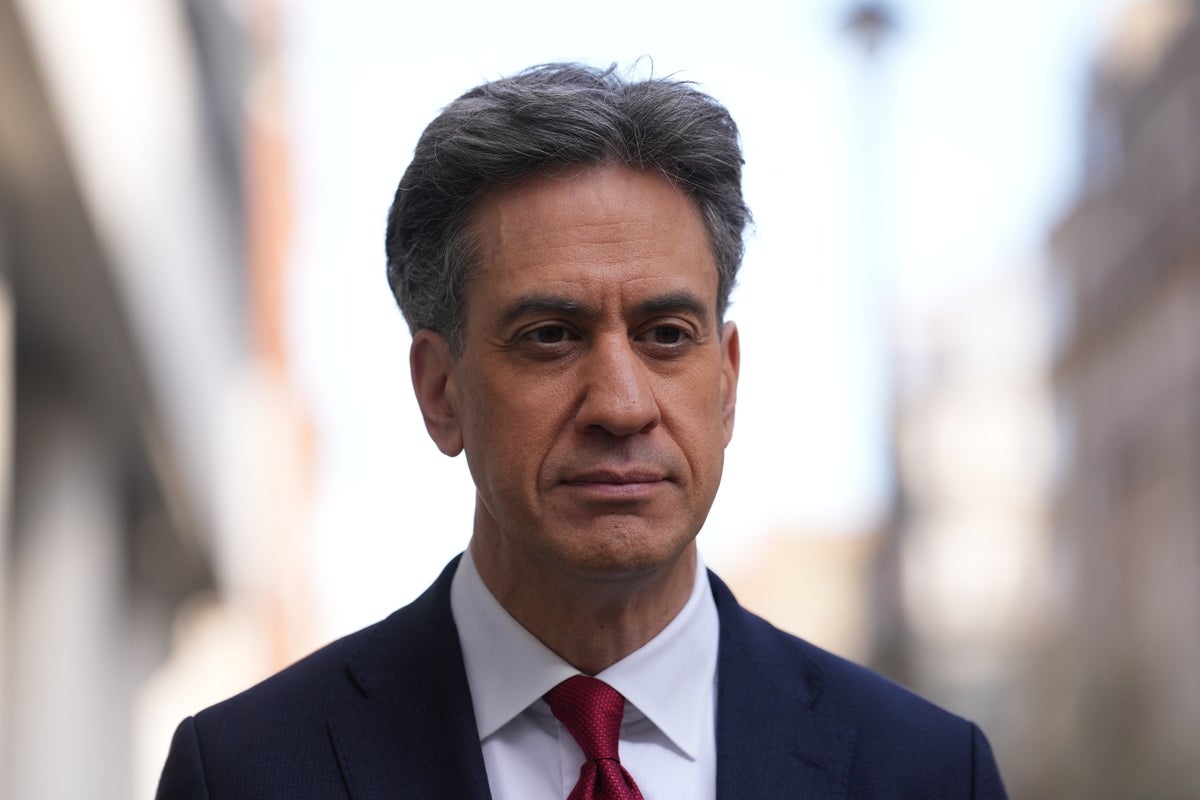
Energy Secretary Ed Miliband - (PA Wire)

The government will announce plans to decouple electricity and gas prices, aiming to shield households and businesses from future gas price spikes. Energy Secretary Ed Miliband is expected to outline these measures on Tuesday, signalling a firm commitment to accelerating the shift to clean energy.

Mr Miliband's speech will reportedly declare a commitment to "double down not back down" on green power, accelerating renewable energy deployment and electrifying heating and transport to reduce fossil fuel reliance. Specific steps include expanding renewables on publicly owned land, like solar panels near railway lines, and simplifying green tech installation, such as EV chargers without driveways.

Addressing a "national growth debate", Mr Miliband will challenge critics pushing for a net zero rethink and more North Sea drilling. He will reportedly warn that ignoring two fossil fuel crises in five years "would be completely irresponsible." Consumers currently face high petrol prices and looming July energy bill rises, driven by global market disruptions from the US-Israeli war on Iran. This latest pressure follows an energy spike three years ago, triggered by Russia’s invasion of Ukraine.

Key to the plans is breaking the link between gas and electricity prices, in the face of volatile fossil fuel prices setting the cost of wholesale electricity the majority of the time.

Gas plays an outsized role in the cost of electricity in Britain, setting the wholesale price of power around 60% of the time, down from around 90% at the beginning of the decade, despite supplying a much smaller and decreasing share of power.

That is because of the marginal pricing system, in which the most expensive source of energy brought on to the grid to meet demand sets the price for all generators, apart from those on other types of contract.

That price-setting source is often gas, leaving British consumers at the mercy of volatile wholesale gas prices, while delivering a windfall for generators such as nuclear and older renewables that are not on fixed contracts.

So the Government is proposing a voluntary move by “legacy” clean power generators, which supply around a third of Britain’s power, on to fixed-price contracts, with the Treasury expected to provide tax incentives to encourage them to switch.

It is hoped the new contracts will deliver benefits on consumers’ bills over the next 12 months, though officials are not yet able to say what savings could be delivered.

Mr Miliband is expected to tell the Good Growth Foundation event: “As we face the second fossil fuel shock in less than five years, the lesson for our country is clear: The era of fossil fuel security is over, and the era of clean energy security must come of age.

“For Britain and so many other countries, clean energy is now the only route to financial security, energy security and national security.

“While some have said we have gone too far and too fast, I profoundly disagree.

“In response to recent events, our action must now be faster, deeper and more wide-ranging.

“That is why we will double down not back down on our mission for clean energy.”

The plans include making it easier for people to switch to electric vehicles and heat pumps, getting them off oil and gas, with deregulation to make it easier and quicker to install clean tech.

These including permitted development rights for people to install cross-pavement facilities for on-street charging, and making it easier for renters and leaseholders to request and install chargers.

Officials say it will support surging demand for heat pumps, solar panels and electric cars, boosted by the Iran war.

Plans to “massively” expand renewables across the public estate, using brownfield land, industrial sites and railway land to host solar panels and wind turbines, could unlock up to 10 gigawatts (10GW) of capacity – powering the equivalent of five million homes – officials say.

There have been calls from the Tories and Reform UK to increase supplies of oil and gas from the North Sea, and to bring down bills by scrapping measures to help the UK shift to a “net-zero” clean economy, such as new renewables and heat pump subsidies.

Ed Miliband (PA)

In his speech on Tuesday, Mr Miliband will say: “To ignore one fossil fuel crisis and carry on with business as usual, as some wanted to do, was wrong.

“To ignore two in less than five years would be completely irresponsible.

“And it would be even more irresponsible because unlike the twin fossil fuel shocks of the 1970s, there is now a compelling alternative in the form of clean energy.

“An alternative that cannot be disrupted by foreign wars because it comes from our own wind, sun and nuclear resources.”

Holly Brazier Tope, director of politics at the Green Alliance think tank, said: “The Government’s renewed focus on clean energy is a necessary and welcome response to the hard lessons of the latest fossil fuel crisis.

“The Energy Secretary is right to prioritise accelerating electrification and clean power as the surest path to security and long-term economic resilience.”

Friends of the Earth’s Mike Childs backed the move but called for a stronger windfall tax on excess profits of the fossil fuel industry and extra financial support for vulnerable people to pay their bills.

Scottish Conservative energy spokesman Douglas Lumsden said it “beggars belief” that Mr Miliband is “doubling down on his anti-oil and gas stance when it’s doing untold damage to our economy and energy security”.

He added: “When household fuel bills are going through the roof, it’s lunacy to turn our back on a plentiful energy source under our own seabed.”

Liberal Democrat energy spokeswoman, Pippa Heylings MP said: “For more than a year, the Liberal Democrats have been warning that families and businesses are being failed by an energy market that keeps bills tied to the volatile price of gas.

“We have consistently argued that if Britain is generating more and more cheap renewable electricity, households should feel the benefit in lower bills.

“Instead, people are still paying the price of a broken system.

“The Government should now act on what we have been calling for since last year: break the link between gas and electricity prices, bring bills down, and give people the energy security they deserve.”

Sign up to read this article
Read news from 100's of titles, curated specifically for you.
Already a member? Sign in here
Related Stories
Top stories on inkl right now
One subscription that gives you access to news from hundreds of sites
Already a member? Sign in here
Our Picks
Fourteen days free
Download the app
One app. One membership.
100+ trusted global sources.







