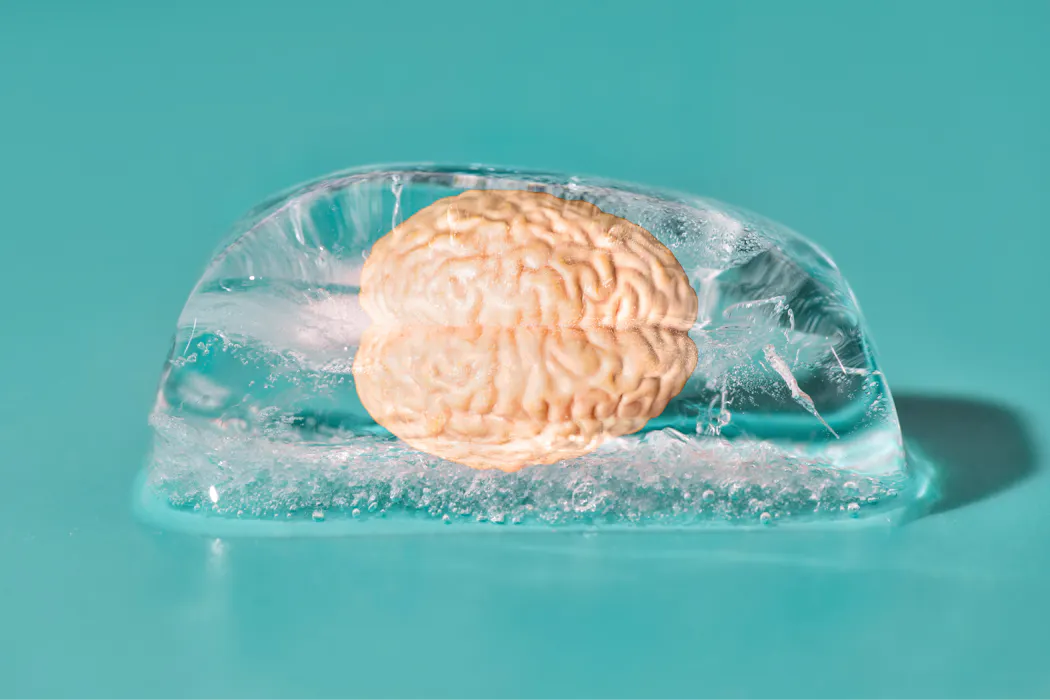
With temperatures forecast to reach around 37°C in places, reaching for an ice cream or an icy drink might seem like an excellent idea. There is, however, one small hazard to eating your frozen treat with too much enthusiasm: brain freeze.
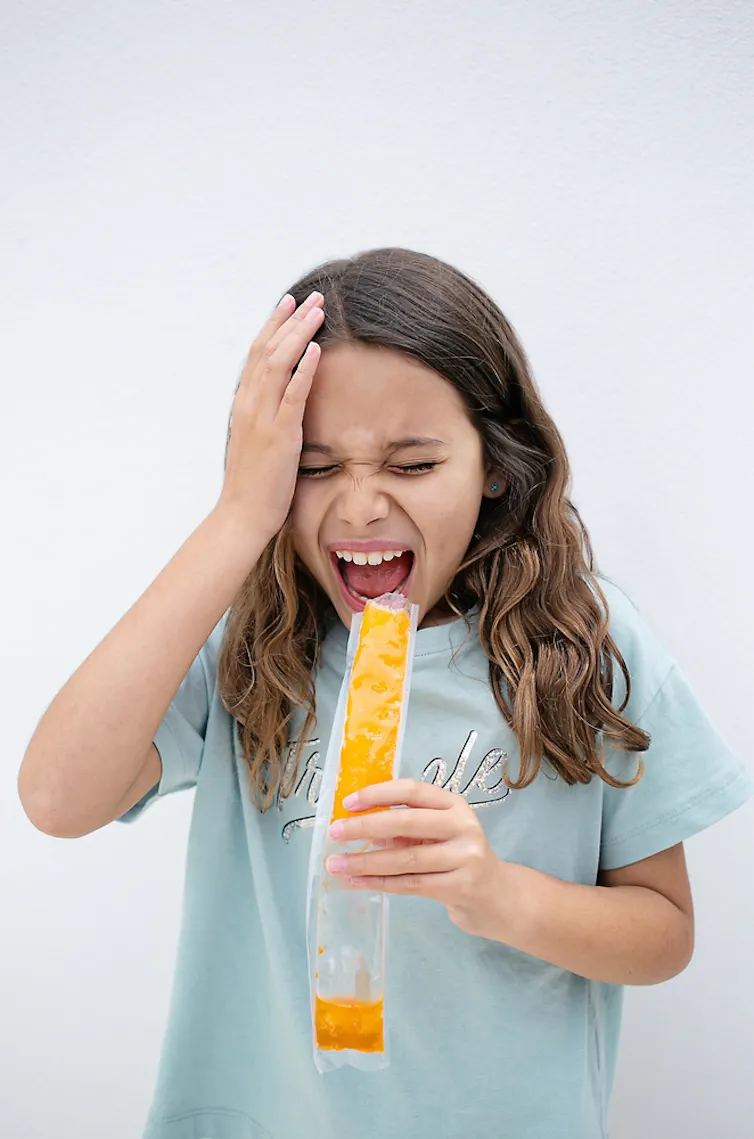
That sudden, stabbing pain is officially classified as a cold-stimulus headache. The International Headache Society describes it as a headache caused by eating, drinking or inhaling something very cold. “Ice-cream headache” and “brain freeze” are much easier to say while clutching your forehead.
And it is surprisingly common. In one study of 618 people aged 17 to 63, just over half said they had experienced brain freeze.
Scientists still do not know exactly what causes it, partly because a headache that disappears almost as quickly as it arrives is difficult to study.
Very cold food or drink touching the roof of the mouth or the back of the throat can trigger the pain. One important player seems to be the trigeminal nerve, a large nerve that carries information about sensations, including pain and temperature, from the face and parts of the mouth to the brain.
When the roof of the mouth is suddenly chilled, researchers think the cold activates pathways involving this nerve. That may help explain one of the strangest things about brain freeze. The cold is in your mouth, but the pain is commonly felt in the forehead or temples and can sometimes be felt around the eyes.
This is often described as referred pain, where pain is felt somewhere other than the place that triggered it. That may be why brain freeze can make your forehead hurt even though the cold is in your mouth.
Blood flow may also be involved, although the story is more complicated than was once thought. In one study that deliberately triggered brain freeze with ice water, researchers recorded changes in blood-flow velocity in an artery supplying the brain. Other experiments have also found evidence of changes in the brain’s circulation during brain freeze.
So the familiar explanation that cold simply makes blood vessels narrow and then rapidly widen is probably too tidy. Current research points towards an interaction between nerve signalling and changes in blood flow, but the precise mechanism is still uncertain.
What about migraine?
The relationship between brain freeze and migraine is also less straightforward than it might appear.
Some research suggests a connection. In one study of 669 women, those who had experienced migraine during the previous year were about twice as likely to develop a headache after drinking ice-cold water as women who had never had migraine.
Other studies have produced different results. A 1992 experiment triggered ice-cream headaches less often in people with migraine than in its comparison group. And a larger 2020 study found that people with migraine were no more likely to experience brain freeze, although those who did tended to report more intense pain.
For some people with migraine, brain freeze may occasionally trigger a migraine attack. The 1992 study found a small number of people for whom this appeared to happen, although the researchers concluded that ice-cream headache was not a common migraine trigger.
The two types of headache may share some pain pathways, but the relationship between them is still not fully understood.
Why do children seem to get it so often?
Brain freeze is common among children and teenagers, although research in younger people is still relatively limited. A large survey of 8,359 adolescents found that 41% had experienced an ice-cream headache.

How quickly they eat may be part of the explanation. In a wonderfully simple Canadian experiment involving 145 schoolchildren, children were given 100ml of ice cream. One group had to eat it in less than five seconds, while the other took more than 30 seconds. About 27% of the fast eaters developed brain freeze, compared with around 13% of those who took their time.
There is therefore some scientific justification for the instruction usually delivered by parents while watching a child demolish an ice cream: slow down.
Can you stop brain freeze?
Prevention appears to be easier than cure. In the Canadian experiment, eating ice cream quickly more than doubled the likelihood of developing brain freeze. In another study, 73% of people who experienced brain freeze said eating or drinking cold things more slowly reduced how often it happened or how intense it was.
Most attacks are over very quickly. In the study of 618 people, 93% of brain-freeze headaches lasted less than 30 seconds. But some last longer. One experimental study found a less common form that lasted an average of almost four minutes, while the International Headache Society’s diagnostic criteria allow for the headache to take up to ten minutes to disappear after the cold stimulus is removed.
There is little good research showing that popular tricks such as pressing your tongue against the roof of your mouth make the headache disappear faster. Fortunately, brain freeze usually resolves on its own.
So during the heatwave, there is no need to fear the ice-cream van. Just resist the temptation to eat your purchase as though someone is about to take it away from you. Eating it slowly may help you enjoy it without the headache.
This article was originally published on The Conversation. Read the original article.